How Do Missed Oil Changes Affect Long-Term Vehicle Health?
## What Happens to Your Engine When You Skip a Scheduled Oil Change?
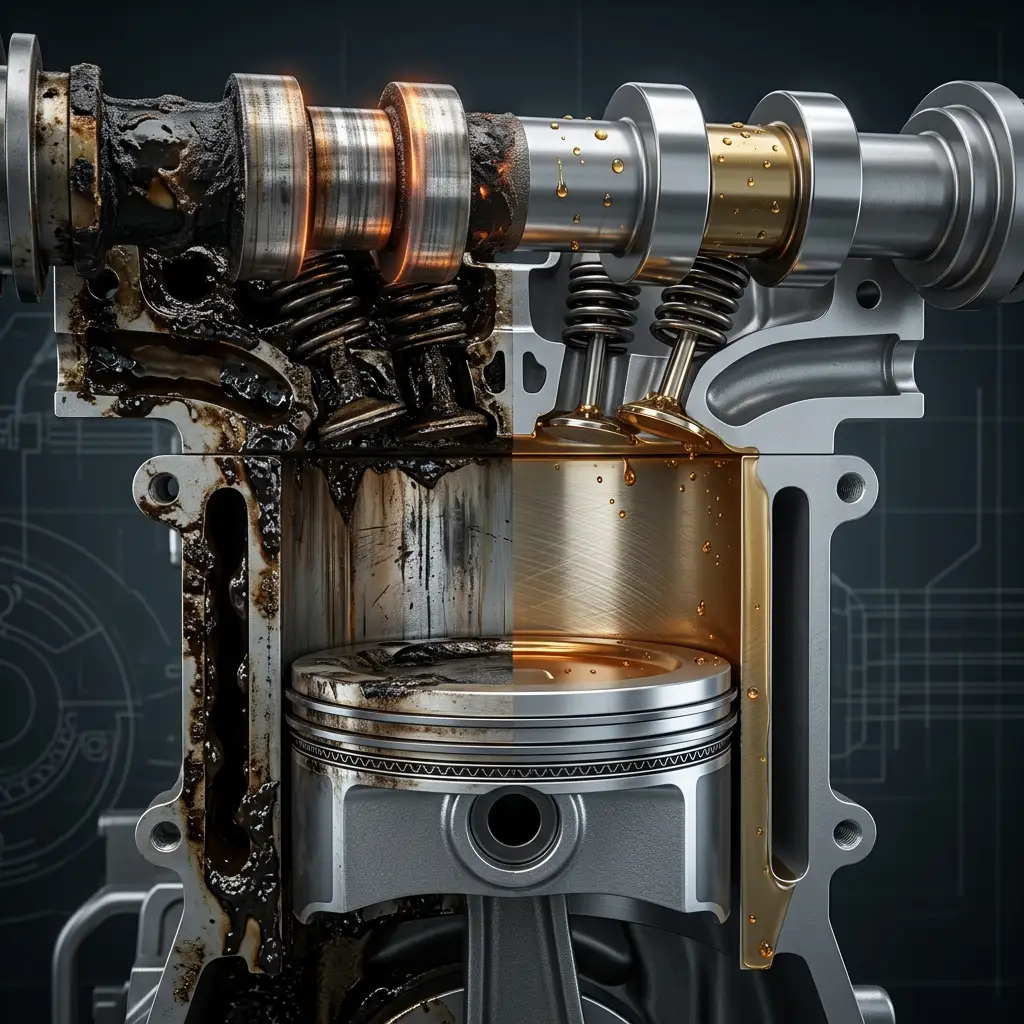
Skipping a scheduled oil change causes motor oil to lose its essential lubricating ability, break down thermal additives, and accumulate abrasive contaminants. Over time, this breakdown accelerates metal-to-metal friction, builds thick internal sludge, causes oil consumption, and can lead to severe engine component wear or total mechanical failure.
Motor oil does far more than just keep internal metal parts moving smoothly. It actively carries away intense combustion heat, suspends soot and dirt particles, and neutralizes harmful acids created during fuel combustion. When an oil change is delayed past its recommended schedule, the protective chemical additives in the fluid exhaust themselves. Modern engines rely on balanced multi-viscosity oils, such as 0W-20 or 5W-30, to maintain a microscopic film between fast-moving engine parts. Once those additives break down, that protective fluid layer thins out, leaving vital internal parts exposed to intense direct heat and mechanical wear.
As fresh oil circulates, it traps carbon debris and microscopic metal filings, holding them safely in suspension until the oil filter removes them. However, an oil filter has a limited capacity. When an oil change is skipped, the filter eventually becomes saturated and reaches full capacity. To prevent total oil starvation, modern filter assemblies open a bypass valve, allowing unfiltered oil to flow directly back into the engine block. Circulating dirty, contaminated fluid acts like fine liquid sandpaper, steadily scoring precision components like camshaft lobes, crankshaft main bearings, and cylinder walls.
Table of Contents
- What Is Engine Oil Sludge and How Does It Form Inside an Engine?
- How Degraded Oil Increases Internal Friction and Thermal Breakdown
- Why Overdue Oil Changes Lead to Excessive Oil Consumption Over Time
- What Is Defined as Severe Driving Conditions for Oil Change Intervals?
- How Many Miles Overdue Can You Safely Drive on Full Synthetic Oil?
- Can Skipping Oil Changes Lead to Complete Engine Failure?
- Do Manufacturers Require Maintenance Records for Engine Warranty Claims?
- Comparing Routine Maintenance Costs to Engine Oil Flush Services and Major Repairs
What Is Engine Oil Sludge and How Does It Form Inside an Engine?
Engine oil sludge is a dark, heavy, gel-like byproduct formed when degraded motor oil chemically oxidizes and mixes with moisture, unburned fuel, carbon debris, and combustion blow-by gases. As thermal oxidation breaks the oil down under high engine operating temperatures, these sticky deposits settle onto internal components, coat the valve train, and restrict critical oil passages.
The process of sludge formation begins at a microscopic level. Whenever an internal combustion engine runs, small amounts of unburned gasoline and water vapor escape past the piston rings into the crankcase. Under normal driving conditions, motor oil absorbs these compounds, and normal engine heat vaporizes the moisture so the engine ventilation system can expel it. However, when oil stays in an engine too long, it loses its detergent capacity. Thermal oxidation causes the base oil molecules to join together, creating heavy polymer chains that turn from liquid fluid into a gelatinous black paste.
Once engine sludge starts forming, it creates a dangerous chain reaction inside the crankcase. Sludge sticks to cooler internal surfaces like the valve covers, oil pan, and timing cover channels. More importantly, it settles inside the narrow oil pickup screen at the bottom of the engine. As this mesh screen clogs with thick debris, the oil pump struggles to draw fluid, drastically reducing internal oil pressure. Precision engine parts located at the top of the engine—such as variable valve timing actuators, hydraulic lifters, and overhead camshafts—are the first to suffer from severe fluid starvation.
Preventing oil sludge requires adhering to consistent fluid service intervals and using motor oil that meets original manufacturer specifications. When sludge accumulates, standard oil drain procedures cannot fully remove the heavy deposits stuck inside the upper valve deck or lower oil passages, making prevention through routine service the single most effective way to protect internal engine components.
How Degraded Oil Increases Internal Friction and Thermal Breakdown
Degraded motor oil loses its dynamic viscosity and protective fluid film, allowing internal engine components to rub directly against each other. This direct metal-to-metal contact drastically increases mechanical friction, creating intense localized heat that accelerates thermal breakdown and bakes residual oil onto internal engine surfaces.
Inside a healthy engine, motor oil creates a continuous liquid barrier known as hydrodynamic lubrication. This micro-thin layer prevents moving steel and aluminum surfaces—such as pistons traveling inside cylinder bores or connecting rods spinning on crankshaft journals—from physically touching. Motor oil relies on specialized chemical polymers called viscosity index improvers to maintain proper thickness across extreme temperature changes. Over thousands of operating miles, high mechanical shear forces physically chop these polymer chains into smaller pieces, thinning the oil and destroying its load-bearing capability.
When thin, worn-out oil fails to cushion engine components, mechanical friction spikes instantly. Higher friction generates intense secondary heat inside the crankcase, driving engine temperatures far beyond normal operating windows. This extreme thermal environment triggers severe thermal breakdown, accelerating the rate at which remaining oil oxidizes and burns off.
The combination of friction-induced heat and depleted fluid protection places extreme mechanical stress on modern engine technology:
- Camshaft lobes and tappets: Suffer rapid surface scoring and premature metal pitting due to lost fluid film strength.
- Crankshaft rod bearings: Experience localized overheating, which can scuff bearing surfaces and cause deep rotational play.
- Turbocharger center bearings: Exposure to breakdown temperatures bakes static oil into hard carbon deposits, starving high-speed turbine shafts.
- Hydraulic valve adjusters: Trapped varnish and oxidized debris prevent hydraulic lifters from maintaining correct valve clearances.
As thermal breakdown continues, the engine loses mechanical efficiency. Drivers often notice reduced power output and elevated operating temperatures on the dashboard gauge long before mechanical hardware suffers permanent damage.
Why Overdue Oil Changes Lead to Excessive Oil Consumption Over Time
Overdue oil changes cause oxidized, degraded oil to bake into sticky carbon deposits on internal piston rings. When piston rings become restricted or stuck in their grooves, they fail to maintain a tight mechanical seal against cylinder walls, allowing motor oil to seep directly into the combustion chamber where it burns off.
Modern engines use multiple specialized rings wrapped around each piston, including compression rings to seal combustion power and an oil control ring to scrape excess fluid off cylinder walls. Fresh motor oil keeps these flexible metal rings moving freely within their precision grooves. When oil service is delayed, degraded oil cooks inside these hot piston channels. The resulting carbon buildup locks the rings in place, preventing them from expanding outward against the cylinder wall surface.
When oil control rings can no longer wipe cylinder walls cleanly, a fine layer of motor oil remains exposed to active cylinder combustion during every engine stroke. The burning fuel mixture consumes this residual fluid, exhausting it out through the catalytic converter as invisible vapor or grey tailpipe smoke. Over thousands of miles, this constant fluid loss drops crankcase oil levels dangerously low, forcing the engine to operate on less total oil volume, which in turn causes the remaining fluid to break down even faster.
Furthermore, burning motor oil damages secondary emissions components. Oil ash coats the internal honeycomb structure of the catalytic converter and fouls sensitive oxygen sensors, triggering check engine light warnings and failing local vehicle inspection standards. Once ring sticking occurs, resolving high oil consumption often requires extensive engine disassembly or intensive chemical cleaning treatments.
What Is Defined as Severe Driving Conditions for Oil Change Intervals?
Severe driving conditions refer to common daily driving patterns that prevent engine oil from reaching or maintaining optimal operating temperature, including frequent short trips under 5 miles, stop-and-go commuting, freezing winter starts, prolonged idling, or driving in heavy dust.
Many vehicle owners assume that severe service labels apply strictly to commercial tow trucks, police cruisers, or vehicles hauling heavy trailers across mountain passes. In reality, typical suburban daily driving around Boardman Township often fits the automotive industry's standard definition of severe service. A standard 4-mile morning commute to school drop-offs or shopping trips at Boardman Plaza does not allow engine oil to reach its full operating temperature of roughly 200 degrees Fahrenheit. When oil stays cold, moisture and raw combustion gases accumulate inside the crankcase rather than vaporizing harmlessly away.
Understanding whether your daily routine falls under standard or severe service schedules involves reviewing several everyday driving factors:
- Short-distance driving: Repeated trips under 5 miles in moderate weather, or under 10 miles in freezing temperatures.
- Stop-and-go traffic: Extended idle times during heavy commuter congestion, where engine hours accumulate without moving mileage.
- Extreme ambient temperatures: Operating vehicles in severe winter cold or intense summer heat waves.
- Corrosive environments: Driving regularly on roads treated with winter de-icing salts or traveling across unpaved, dusty rural routes.
- Heavy load hauling: Frequently pulling utility trailers, carrying roof-top cargo boxes, or driving fully loaded with passengers.
Automaker maintenance manuals account for these stresses by recommending shorter time and mileage intervals for severe driving. While a standard vehicle schedule might suggest changes every 7,500 to 10,000 miles under ideal highway conditions, a vehicle operated under severe conditions usually requires oil service closer to 5,000 miles or 6 months to maintain long-term reliability.
How Many Miles Overdue Can You Safely Drive on Full Synthetic Oil?
Driving up to 1,000 to 1,500 miles past a full synthetic oil change interval in mild conditions is generally manageable without immediate mechanical breakdown, but there is no safe margin for continuous neglect. Pushing past synthetic service thresholds risks additive depletion, thermal oxidation, and accelerated engine wear.
Full synthetic motor oils are engineered from uniform chemical base stocks that offer superior resistance to thermal breakdown compared to conventional oils. Synthetic fluids maintain stable viscosity across extreme heat and contain robust detergent packages designed to handle heavy contaminant loads. However, synthetic oil is not immune to mechanical degradation. While the synthetic base oil resists breaking down, microscopic contaminants, fuel dilution, and combustion acids continue to accumulate in the crankcase regardless of oil quality.
Once synthetic oil exceeds its designed lifespan, detergent additives saturate and lose their ability to neutralize combustion acids. Moisture and unburned fuel begin to dilute the oil, lowering its flash point and flash viscosity. If a vehicle equipped with an automated oil life monitoring system reaches 0% remaining life, driving another few hundred miles to schedule service will not instantly ruin an engine. However, making a habit of running synthetic oil thousands of miles past due leads directly to premature valve guide wear, timing chain stretch, and seal degradation.
Rather than relying on generic mileage estimates, vehicle owners should follow their vehicle's built-in maintenance minder system or consult their owner's manual. Factors like aggressive acceleration, short winter drives, and engine age all speed up synthetic additive depletion, making timely oil service essential for protecting modern high-compression and turbocharged engines.
Can Skipping Oil Changes Lead to Complete Engine Failure?
Yes, repeatedly skipping oil changes can cause complete engine failure when severe fluid breakdown starves moving internal components of lubrication. Without a protective fluid layer, internal bearings, camshafts, and pistons overheat, scuff, and eventually seize up completely under operating friction.
Complete engine failure usually occurs through one of two primary pathways caused by fluid neglect: mechanical seizure or catastrophic oil starvation. When dirty motor oil breaks down into heavy sludge, it chokes off the oil pump intake screen. Deprived of pressurized oil, precision rod and main bearings suffer instant direct metal-to-metal contact. Within seconds of losing oil pressure, bearing shells weld themselves to the spinning crankshaft, causing what technicians call a spun bearing. This creates severe engine knocking noises and quickly locks up the rotating assembly completely.
The second common failure path involves internal mechanical breakage caused by excessive friction and thermal stress:
- Seized pistons: Overheated pistons expand beyond cylinder clearances, scoring cylinder walls and welding themselves to the engine block.
- Broken connecting rods: Extreme friction places immense fatigue on connecting rod bolts, causing rod failure that can punch physical holes through the aluminum engine block.
- Snapped timing chains: Abrasive sludge wears down timing chain links and hydraulic tensioners, causing the chain to skip teeth or break, resulting in pistons colliding directly with open intake and exhaust valves.
Replacing a completely failed engine requires installing a costly brand-new engine assembly or a factory-remanufactured engine unit. Routine oil changes remain the single least expensive form of mechanical insurance available to protect against total powertrain loss.
Do Manufacturers Require Maintenance Records for Engine Warranty Claims?
Automakers and warranty coverage administrators routinely require documented maintenance records to verify that major mechanical engine failures were not caused by fluid neglect before approving covered warranty repairs.
When a vehicle experiences an internal engine failure during its factory warranty period, the dealership or manufacturer must investigate the root cause of the breakdown. Under federal warranty guidelines, auto manufacturers cannot arbitrarily deny warranty coverage simply because maintenance work was performed at an independent shop or by the owner. However, if inspection reveals heavy oil sludge, severe internal varnish, or scorched metal components, the manufacturer has the legal right to request complete service documentation showing that routine fluid changes were completed according to the owner's manual intervals.
To maintain valid warranty coverage, vehicle owners should establish a clear, traceable maintenance trail for every service performed:
- Itemized service invoices: Professional repair receipts showing vehicle VIN, date of service, exact mileage, fluid specification, and filter part number.
- Parts purchasing receipts: Dated store receipts for oil and OEM filters if maintenance is performed privately, accompanied by a written service logbook.
- Oil specification verification: Documentation confirming the fluid used met specific manufacturer approvals, such as dexos1 or specific API SP standards.
If an owner fails to produce maintenance records when an engine suffers sludge-related failure, the manufacturer can attribute the damage to user neglect rather than a factory defect. In those situations, the cost of major engine repair or replacement falls entirely on the vehicle owner.
Comparing Routine Maintenance Costs to Engine Oil Flush Services and Major Repairs
Routine oil changes represent a minor ongoing maintenance expense compared to specialized engine oil flush procedures or complete engine replacements, which can cost thousands of dollars. Spending modest amounts on timely fluid updates preserves total vehicle value and prevents expensive emergency repair shop visits.
A standard routine oil and filter service is one of the most affordable maintenance items on any vehicle schedule. When performed regularly, a basic change replaces worn fluid, installs a clean filter, and allows technicians to perform multi-point safety inspections. Over a typical 100,000-mile ownership period, total routine oil change costs represent a small fraction of overall operating expenses.
When oil changes are repeatedly missed, simply draining the old oil and adding fresh fluid is often insufficient to clean out heavy internal deposits. In those cases, technicians may recommend a professional engine oil flush service. An oil flush involves adding specialized chemical detergents to the crankcase, running the engine at idle to dissolve varnish and soft sludge, and then flushing out the contaminated mixture before refilling with fresh synthetic fluid. While an oil flush can restore flow through lightly restricted passages, heavy sludge buildup risks breaking loose in large chunks, which can permanently clog the oil pump screen or timing tensioner ports.
If neglect progresses to structural mechanical failure, repair expenses escalate dramatically:
- Routine Oil Change Service: Low-cost preventative maintenance performed every 5,000 to 10,000 miles.
- Professional Engine Flush Treatment: Moderate chemical service required when light sludge and varnish accumulate.
- Upper Engine Component Repair: High-cost mechanical replacement for damaged camshafts, timing chains, or variable valve phasers.
- Complete Engine Replacement: Major overhaul expense requiring brand-new or remanufactured engine installation following catastrophic failure.
For daily commuters taking the Mahoning Valley corridor into Youngstown, consistent oil care protects your daily transportation investment against unexpected engine breakdowns. Our experienced customer care team is always ready to answer maintenance questions; give our team a quick call today to help keep your engine running smoothly for years to come.
© 2026 Ken Ganley Buying Center Boardman. All rights reserved.
While every effort has been made to ensure the accuracy of the information displayed on this website, the vehicle values, offers, and listings shown may not reflect all accurate vehicle details or current market conditions. Vehicle photos may be representative only and may not match the actual vehicle. All offers, appraisals, and transactions are subject to vehicle inspection, verification, and prior sale. Final purchase amounts may vary based on condition, equipment, history, and market factors. Please contact the Dealership for complete details and confirmation.