Protect Your Investment: Expert Secrets to Safeguard Your Car During Long-Term Storage
What Does Ford Recommend Before Storing a Vehicle for 30 Days or Longer?
For storage lasting 30 days or longer, manufacturer guidance specifies parking in a dry, ventilated area, changing the engine oil and filter beforehand, filling the fuel tank completely, setting tire pressures to the door-jamb placard recommendation, keeping the 12-volt battery maintained or disconnected, releasing the parking brake, and running the engine for 15 minutes every 15 days to circulate fluids.
As Customer Relations Manager at Ken Ganley Buying Center Boardman, I have spent 14 years helping vehicle owners keep their cars, trucks, and SUVs running properly through seasonal downtime. Many vehicle owners who store a car during winter months in Boardman Township assume parking a vehicle in a driveway or garage is enough. However, mechanical components deteriorate faster when sitting idle without proper preparation. Following official manufacturer protocols prevents thousands of dollars in unexpected mechanical damage when bringing a vehicle back onto the road.
When prepping a vehicle for extended inactivity, baseline steps protect vital mechanical systems. Fresh engine oil removes acidic combustion byproducts before they sit against internal engine bearings. Filling the fuel tank completely reduces air space inside the tank, preventing moisture condensation and internal corrosion. Inflating tires to the specified door-jamb cold pressure prevents severe casing deformation. If you have questions about prepping your vehicle for extended downtime, feel free to give us a call at (330) 427-3656 or stop by our Boardman location on Market Street for expert guidance.
Table of Contents
- How Should You Prepare a Car Engine and Fluids for Long-Term Storage?
- Is It Better to Disconnect the Battery or Use a Trickle Charger?
- What Mechanical Steps Prevent Tire Flat-Spotting and Brake Damage During Storage?
- What Should You Inspect Before Driving a Vehicle After Long-Term Storage?
How Should You Prepare a Car Engine and Fluids for Long-Term Storage?
Preparing an engine and fluid system for long-term storage requires changing the engine oil and filter immediately beforehand, topping off all fluid reservoirs, adding a high-quality fuel stabilizer to a full tank of fuel, and running the engine long enough to circulate the treated fuel through the entire fuel delivery system.
Engine oil accumulates moisture, unburned fuel, and acidic contaminants during normal operation. When an engine sits idle for months, these acidic compounds settle onto metal surfaces, causing micro-pitting on cylinder walls, camshaft lobes, and bearings. Flushing out old oil and replacing it with fresh synthetic engine oil before parking the vehicle creates a protective barrier across internal engine tolerances.
Fuel degradation presents another major vulnerability during extended downtime. Modern ethanol-blended gasoline begins to oxidize and absorb ambient humidity in as little as 30 days, creating heavy varnish and gum deposits that clog fuel injectors and fuel pumps. Adding a gasoline fuel stabilizer to a full tank prevents phase separation and ethanol breakdown for up to 12 months. Cooling systems also require attention before winter storage; verifying that antifreeze protection reaches the proper sub-zero threshold prevents cracked engine blocks and frozen radiator cores during severe cold spells.
Is It Better to Disconnect the Battery or Use a Trickle Charger?
Using a smart trickle charger or battery maintainer is significantly better than disconnecting the battery cable because it delivers a continuous micro-charge that preserves battery health without erasing engine control unit memory, security systems, or electronic settings.
Modern vehicles constantly pull a small electrical draw to maintain internal clock memory, keyless entry receivers, and engine control module data. A vehicle left sitting for three to four weeks without maintenance can drain a standard battery completely, leading to plate sulfation and permanent capacity loss. Connecting an automatic smart battery tender monitors battery voltage and cycles on only when needed, maintaining optimal charge state safely throughout storage.
Disconnecting the negative battery terminal is an acceptable low-tech alternative if electrical outlets are unavailable in your storage area. However, disconnecting power clears stored drive cycles, radio presets, and vehicle sensor calibration data. When reconnecting the terminal months later, the vehicle's computer system may experience rough idling or delayed shift patterns while re-learning operational parameters. For long-term vehicle storage, maintaining steady voltage via an automatic maintainer keeps electrical components fully operational and ready for immediate startup.
What Mechanical Steps Prevent Tire Flat-Spotting and Brake Damage During Storage?
Preventing tire flat-spotting and brake damage during storage requires setting cold tire pressures to the manufacturer's recommended door-jamb specifications, leaving the parking brake disengaged while securing the vehicle with heavy-duty wheel chocks, and keeping brake rotors completely dry.
Tire flat-spotting occurs when the static weight of a parked vehicle flattens the rubber footprint against the floor over extended periods. Cold garage floors aggravate this issue, causing temporary or permanent vibration in performance and low-profile tires. In areas like Canfield where seasonal vehicles sit parked on concrete or asphalt surfaces throughout winter, maintaining proper inflation pressure is critical. Moving the vehicle about 25 feet every two to three weeks rotates the weight distribution and prevents permanent belt deformation within the tire carcass.
Brake maintenance during storage requires avoiding the parking brake. Engaging parking brake cables or electronic parking actuators holds brake pads pressed against metal rotors for months. Ambient humidity causes flash rust to bond pad material directly to the rotor surface, causing pitted rotors or stuck calipers upon release. Securing the vehicle with solid wheel chocks on a level surface allows brake assemblies to remain free, preventing rotor surface corrosion and costly brake system overhauls.
What Should You Inspect Before Driving a Vehicle After Long-Term Storage?
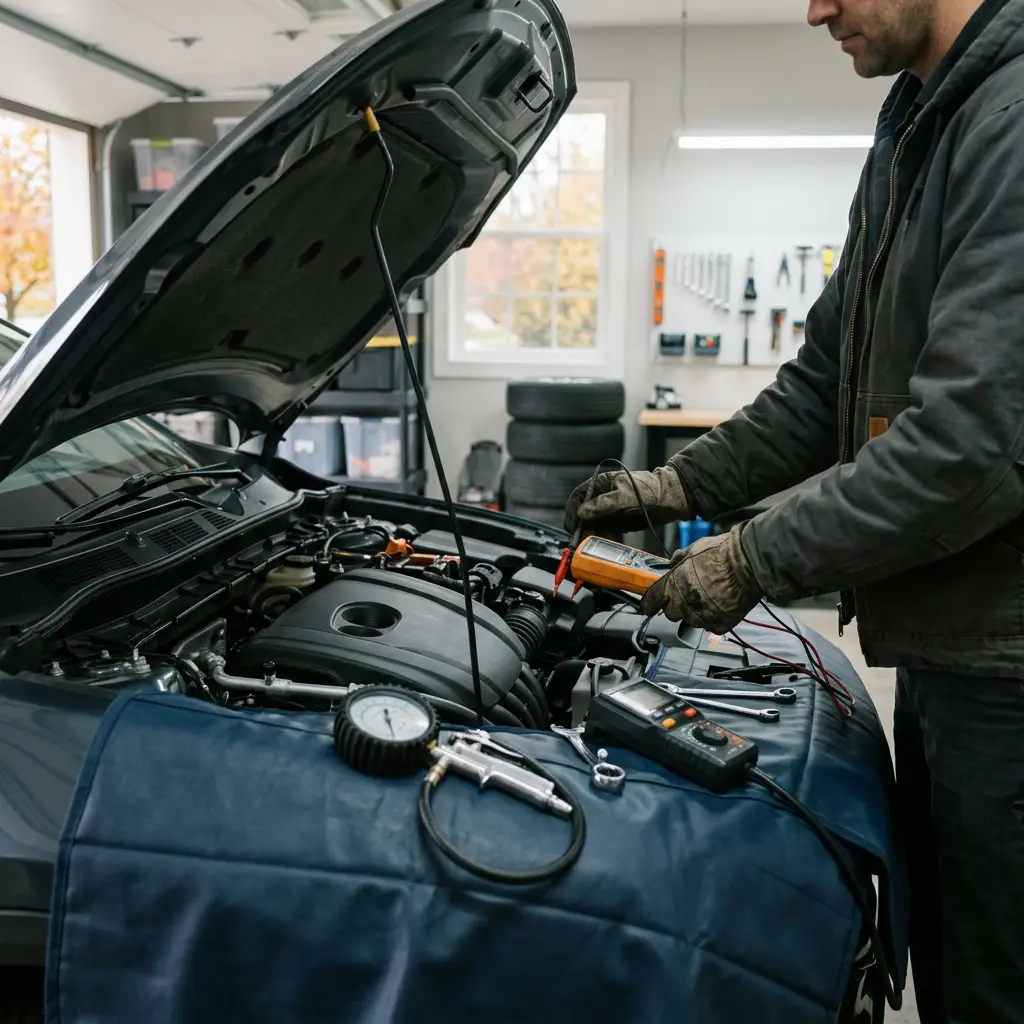
Before driving a vehicle out of long-term storage, perform a thorough inspection under the hood for rodent nests and chewed wiring, check all engine fluid levels and tire pressures, verify battery voltage, and test brake performance at low speeds in a safe area.
Rodents frequently seek shelter inside warm engine bays, air intake boxes, and cabin air filter housings during cold months. Chewed wiring harnesses, shredded insulation, and blocked air intakes can cause serious electrical shorts or engine overheating if not caught before starting the vehicle. Checking beneath the vehicle for fresh fluid leaks—such as transmission fluid, engine oil, or engine coolant—ensures seals have not dried out or cracked while sitting idle.
After completing under-hood checks, adjust tire pressures back to driving specifications and verify battery terminal tightness. When starting the engine for the first time, allow it to idle until reaching normal operating temperature while monitoring dashboard indicators for warning lights. Test brake pedal feel and execute a low speed stop in a driveway before entering traffic. If you notice persistent vibrations, unusual engine noise, or soft brake pedal response after taking a vehicle out of storage, reach out by giving our desk a call at (330) 427-3656
© 2026 Ken Ganley Buying Center Boardman. All rights reserved.
While every effort has been made to ensure the accuracy of the information displayed on this website, the vehicle values, offers, and listings shown may not reflect all accurate vehicle details or current market conditions. Vehicle photos may be representative only and may not match the actual vehicle. All offers, appraisals, and transactions are subject to vehicle inspection, verification, and prior sale. Final purchase amounts may vary based on condition, equipment, history, and market factors. Please contact the Dealership for complete details and confirmation.