What 14 Years of Car Appraisals Taught Me About AI Estimators vs In-Person Valuations
## How Do Traditional In-Person Appraisals Compare to AI Estimators in Accuracy?
Traditional in-person vehicle appraisals deliver significantly higher accuracy and reliability than AI estimators because physical inspections capture hidden structural damage, exact mechanical wear, tire tread depth, paint consistency, and local market demand. While automated online tools offer quick preliminary numbers with a typical 10% to 15% variance on minor cosmetic damage, they regularly misprice vehicles with unseen reconditioning needs or high-value options.
During my 14 years as Customer Relations Manager at Ken Ganley Buying Center Boardman, I have evaluated thousands of pre-owned vehicles. Instant online algorithms compute valuations strictly from user photos, VIN databases, and regional transaction averages. They process data in seconds, but a digital camera cannot feel transmission hesitation, smell cabin odor, or inspect frame rails for alignment shifts. When sellers bring an online estimate to our Boardman showroom on Market Street, we frequently find that computer models either under-credit rare factory packages or overlook expensive reconditioning issues.
An algorithm relies entirely on self-reported condition ratings like “Good” or “Excellent.” In real-world evaluations, one owner’s idea of minor wear includes curb-rash wheels and thin brake pads that cost over $600 to recondition. A physical evaluation verifies actual tire tread using a depth gauge scale, inspects OBD-II diagnostic trouble codes, and road-tests the powertrain. If you want a firm cash offer rather than an unverified estimate, give our team a quick call at (330) 427-3656 to discuss your vehicle’s specific details.
Table of Contents
- What Is the Step-by-Step In-Person Vehicle Appraisal Process?
- How Do Appraisers Use Diagnostics and Paint Gauge Readers to Calculate Value?
- How Does a Local Buying Center Offer Compare to Centralized Corporate Algorithms?
- What Documentation Should You Bring to Ensure Maximum Appraisal Accuracy?
- Do You Need an Appointment for an In-Person Vehicle Appraisal in Boardman Township?
What Is the Step-by-Step In-Person Vehicle Appraisal Process?
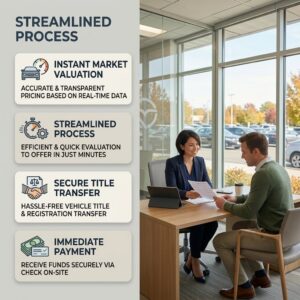
A professional in-person appraisal follows a structured five-step process: VIN and documentation verification, an exterior and structural body walk-around, an interior electronics check, a short road test, and a live wholesale market analysis to generate a binding written cash offer.
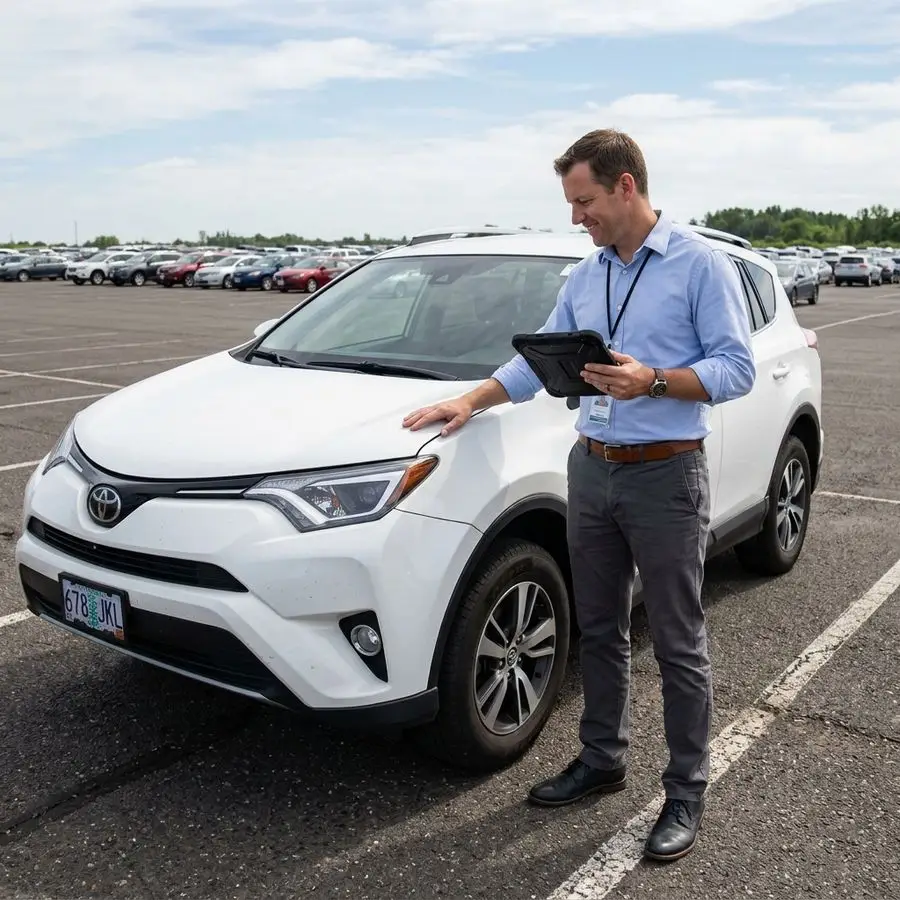
The process begins at the desk where our appraisal team verifies the VIN, mileage, and title credentials against official vehicle history reports. This step confirms single-owner history, service logs, and absence of salvage or flood indicators. Next, the appraiser conducts a complete exterior physical walk-around, measuring body panel gaps, inspecting glass for stress cracks, and checking tire tread depth across all four wheels. Wear items like tires below 4/32-inch tread depth require immediate replacement for safety standards, which adjusts reconditioning calculations directly.
Inside the cabin, the appraiser verifies functional equipment including climate control, touchscreens, power windows, and advanced driver-assist sensors. A brief 5-minute road test assesses engine performance, brake feel, suspension noise, and transmission shifts under load. Finally, the appraiser enters the vehicle’s precise trim level, optional packages, and verified physical condition into real-time market software to compare live wholesale transactions. Sellers looking to trade into our current used vehicle inventory receive an itemized summary showing exactly how the final figure was calculated, and you can schedule an appraisal appointment to walk through the process in person.
How Do Appraisers Use Diagnostics and Paint Gauge Readers to Calculate Value?
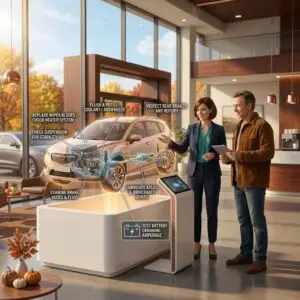
Professional appraisers use magnetic-induction paint depth gauges and OBD-II diagnostic scanners to identify concealed frame damage, prior body filler work, and hidden mechanical fault codes that visual checks miss. Inconsistent paint thickness readings pinpoint collision repairs, while electronic diagnostics ensure hidden powertrain errors do not distort the final trade-in offer.
Factory automotive paint typically measures between 3.5 mils and 5.5 mils in thickness across steel and aluminum body panels. When our appraisal team runs an electronic paint depth gauge along doors, fenders, and quarter panels, a reading jumping above 10.0 mils or 12.0 mils signals secondary respray work or heavy body filler density beneath the clear coat. Vehicle owners showing me online quotes often ask why a digital scan missed prior paint work, and I demonstrate how an electronic gauge spots underlying panel repairs that high-resolution photographs fail to capture.
Beyond exterior finish, mechanical health relies on an OBD-II diagnostic scanner plugged directly into the vehicle port. This tool reads stored powertrain fault codes, pending engine misfires, and emissions monitor status even if a seller or prior technician cleared the dashboard instrument cluster light. Identifying these electronic signals during the physical evaluation protects both the seller and our inventory standards, guaranteeing that structural integrity and mechanical health are accurately reflected in the final valuation.
How Does a Local Buying Center Offer Compare to Centralized Corporate Algorithms?
A local vehicle buying center offer delivers greater accuracy and flexibility than centralized corporate algorithms by tailoring valuations to immediate regional market demand, local inventory needs, and physical vehicle condition rather than rigid nationwide computer averages.
Corporate car-buying platforms rely on automated pricing algorithms that evaluate inventory through centralized national databases. If a national retailer accumulates excess sedan inventory in another region, its automated system may drop purchase offers on similar models nationwide regardless of local popularity. In contrast, evaluating vehicles at our buying center homepage allows our valuation team to price vehicles based on actual Youngstown driving preferences, where all-wheel drive platforms and light trucks hold higher practical value.
Sellers researching their options often review resources comparing national corporate buyers with a local vehicle buying center to understand why physical appraisal offers differ from online estimates. National buyers often reduce initial online bids upon vehicle drop-off due to minor scratch fees or rigid deduction tables. A local team provides direct face-to-face explanations, walking you through every line item so you leave with a clear, reliable transaction backed by immediate payment.
What Documentation Should You Bring to Ensure Maximum Appraisal Accuracy?
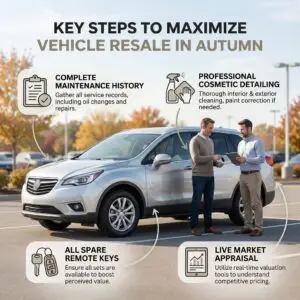
Bringing a clean physical title or lien payoff statement, valid government identification, complete routine maintenance records, all factory key fobs, and original owner manuals guarantees maximum appraisal accuracy and prevents administrative value deductions.
Complete documentation removes guesswork from the appraisal process. Presenting clean maintenance receipts proves that fluid intervals, brake services, and scheduled inspections were performed on time. Verified service history reduces estimated reconditioning costs because our team does not have to budget for precautionary mechanical service before retail placement.
Hardware items matter just as much as paperwork. Modern electronic key fobs feature embedded transponders and proximity remote start capabilities that cost between $250 and $450 per key to replace and program. Missing a second factory fob results in a direct valuation adjustment to cover replacement key costs. Bringing owner manuals, wheel lock keys, and original trunk accessories ensures your vehicle receives full credit for every factory inclusion.
Do You Need an Appointment for an In-Person Vehicle Appraisal in Boardman Township?
No appointment is strictly required for an in-person vehicle appraisal in Boardman Township, as walk-in valuations are welcomed during standard business hours; however, scheduling ahead guarantees that an appraisal manager is immediately dedicated to evaluating your vehicle without waiting.
Walk-in sellers can drop by our dedicated facility at 7871 Market St, Boardman, OH 44512 anytime during regular operating hours. Our team completes physical inspections in approximately 20 to 30 minutes. Setting a quick appointment ahead of time ensures our senior appraiser has your vehicle’s background report pulled and pre-market comparisons ready before you step through the doors.
Whether you are completing a lease turn-in, upgrading your household commute, or simply selling an extra car for cash, an in-person appraisal provides transparency and security that online algorithms cannot match. If you have questions about required payoff documents or want to reserve a specific evaluation window, give our customer relations team a call at (330) 427-3656 and we will prepare everything for your visit.
© 2026 Ken Ganley Buying Center Boardman. All rights reserved.
While every effort has been made to ensure the accuracy of the information displayed on this website, the vehicle values, offers, and listings shown may not reflect all accurate vehicle details or current market conditions. Vehicle photos may be representative only and may not match the actual vehicle. All offers, appraisals, and transactions are subject to vehicle inspection, verification, and prior sale. Final purchase amounts may vary based on condition, equipment, history, and market factors. Please contact the Dealership for complete details and confirmation.