Why Keeping an Extra Vehicle in Your Driveway Is More Expensive Than You Think
As a Customer Relations Manager here at Ken Ganley Buying Center, Boardman with over 10 years of experience helping local drivers navigate the financial realities of vehicle ownership, I see a common pattern every year as the seasons begin to shift. Many families hold onto an extra car, truck, or SUV, thinking it costs next to nothing just to let it sit. Whether it is an older sedan formerly used for a short daily commute or a secondary family vehicle parked outside, the assumption is that an idle car is a free backup. In reality, letting an unused asset sit on your pavement during a late summer driveway clearout often drains hundreds of dollars from your household budget through quiet, ongoing expenses.
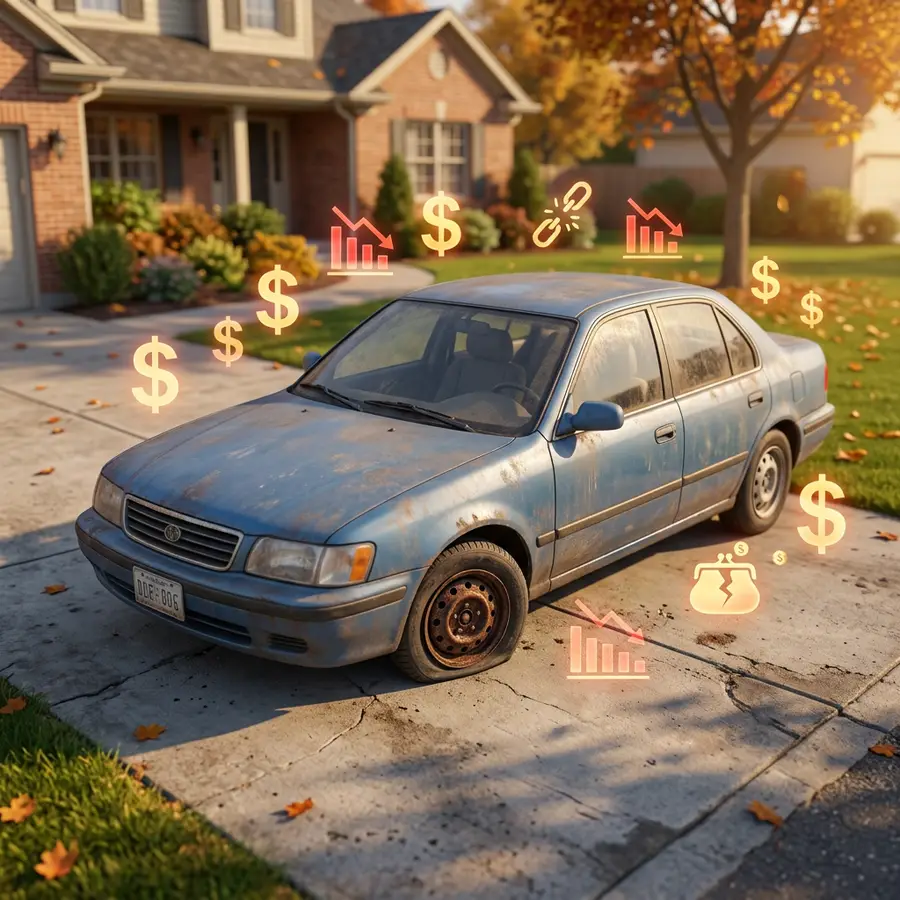
Many residents who park an extra vehicle outside do not realize that the local environment and daily overhead are actively working against their wallets. If you are keeping a spare vehicle in Youngstown, the local weather patterns and humidity changes in the Mahoning Valley can accelerate mechanical wear on a car that does not move. From moisture buildup in the exhaust to rusted brake rotors and flat-spotted tires, physical degradation happens much faster when a vehicle sits idle than when it is driven regularly.
Before you let another season pass with an extra set of keys hanging on the hook, it is worth evaluating if that vehicle is truly earning its keep. If you want to discuss your options or need help assessing what your vehicle might be worth in today’s market, you can find our convenient location on Market Street to stop by for a quick, transparent evaluation. Our team is always ready to help you look at the numbers, or you can give us a quick call at (330) 427-3656 to talk through your situation with one of our buying specialists today.
How to Calculate the Real Annual Cost of Keeping an Extra Car
Let me explain how the true cost of vehicle ownership is rarely limited to what you paid at the time of purchase. To calculate the real annual cost of keeping an extra vehicle that mostly sits in your driveway, you have to look past the lack of a monthly finance payment and add up the fixed overhead. Even if a vehicle is completely paid off, the baseline expenses required to keep it legal and parked on your property do not disappear.
To build an accurate assessment, you should create a simple ledger that tracks every dollar spent on the vehicle over a 12-month period. Start with the annual registration fees and any local emissions or safety inspections required to keep the plates current. Next, look at your insurance declarations page to find the exact premium dedicated to that specific vehicle. Finally, factor in the preventative maintenance that must be performed regardless of mileage, such as annual oil changes, battery replacements, and tire preservation.
Another hidden financial drain is depreciation, which represents a continuous loss of equity. While a parked car does not accumulate miles, it still loses market value simply by aging. When you combine this depreciation with insurance, registration, and routine upkeep, the annual holding cost of an idle vehicle often exceeds several thousand dollars. If you realize the math no longer makes sense for your budget, you can easily sell your vehicle directly to us and stop these quiet expenses immediately. For any questions about how we evaluate vehicles or to start the process, feel free to contact our team online at any time.
Table of Contents
- Why Insurance and Local Permissive Taxes Make Idle Vehicles Expensive
- How to Assess Your Actual Vehicle Usage Before a Late Summer Driveway Clearout
- A Simple Decision Framework for Choosing Which Vehicle to Keep
- Skip the Private Sale Hassle and Turn Your Spare Car into Cash Today
Why Insurance and Local Permissive Taxes Make Idle Vehicles Expensive
A common misconception worth correcting is that an idle vehicle is cheap to keep because it is not burning gasoline. In reality, insurance premiums and localized public fees represent some of the largest fixed costs of vehicle ownership, and they must be paid whether you drive 10,000 miles a year or zero. Insurance companies charge a baseline premium to cover comprehensive risks like theft, vandalism, fallen tree branches, and weather damage, meaning you cannot simply pause coverage on a vehicle parked in your driveway without risking registration suspension or significant financial liability.
In addition to insurance, local regulatory fees add up steadily over time. Under Ohio Revised Code, counties, municipalities, and townships can levy up to six local motor vehicle registration permissive taxes of $5 each, creating a maximum of $30 per vehicle registration annually in any single taxing district. These permissive tax revenues are legally designated for planning, constructing, maintaining, and repairing public roads, streets, and bridges. For residents in the Mahoning Valley, Mahoning County adds its own local levies, which means registering a standard passenger car in Boardman typically carries a combined registration cost of $51 per year once the base fee and permissive taxes are calculated.
Furthermore, if your spare vehicle is an alternative powertrain model, Ohio imposes additional registration surcharges to offset the lack of fuel tax revenue. Owners of plug-in hybrid vehicles must pay an additional annual registration fee of $100, while battery-electric vehicles carry an annual surcharge of $200. When you add these specialized registration fees to your annual insurance premiums, keeping a spare vehicle registered and legal becomes a highly expensive proposition. If you want to learn more about how local registration rules or vehicle types affect your ownership costs, you can browse our frequently asked questions page for more detailed insights.
How to Assess Your Actual Vehicle Usage Before a Late Summer Driveway Clearout
Are you actually using your spare vehicle, or are you keeping it out of habit? To determine whether a secondary car is a genuine necessity or a costly driveway ornament, it helps to conduct a simple, objective usage audit over a 30-day to 60-day period. Many households discover that the trips assigned to a backup vehicle could easily be consolidated, handled by a primary car, or covered by occasional alternative transportation.
To run a usage audit, place a small notebook in the glove box of your secondary vehicle and log the date, purpose, and mileage of every single trip. At the end of the month, review the log to categorize the usage:
- Primary Commuting: Essential trips for work, school, or medical appointments that cannot be completed any other way.
- Convenience Overlap: Occasional trips made simply because two family members wanted to run errands at the exact same time.
- Unique Utility: Specific tasks like hauling large cargo or towing, which might be better handled by a rental or a more versatile primary vehicle.
If the log shows that the vehicle is only driven once or twice a month for non-essential errands, the utility of the vehicle is likely far lower than the annual cost to insure and register it. For more tips on managing vehicle ownership costs and maximizing your household budget, you can read through our expert automotive blog where we regularly share practical advice for local drivers.
A Simple Decision Framework for Choosing Which Vehicle to Keep
Imagine you have committed to clearing out your driveway, but you are torn between which of your vehicles to keep and which one to sell. Making this choice requires a logical framework that balances the physical condition, safety features, and long-term reliability of each vehicle against your family’s daily needs. Rather than relying on emotional attachment, you should evaluate both options across a few critical practical categories.
First, compare the safety technologies and passenger space of both vehicles. If one car features advanced driver-assist systems like blind-spot monitoring or lane-keeping assist, it should generally be prioritized as the primary family vehicle. Second, look at the upcoming maintenance requirements for each car. If one vehicle is approaching a major service interval that requires new brakes, a timing belt replacement, or a fresh set of tires, selling it now allows you to avoid those immediate out-of-pocket expenses while capitalizing on its current market value.
Finally, consider the overall efficiency and daily utility of each model. A fuel-efficient SUV or a reliable sedan is often the smarter keeper for daily commuting, while an older, specialized vehicle that sits idle is the ideal candidate for liquidation. Our customers consistently tell us that simplifying their driveways brings immense peace of mind. You can read our customer reviews online to see how other local families have successfully streamlined their household fleets by working with our team.
Skip the Private Sale Hassle and Turn Your Spare Car into Cash Today
Selling a vehicle privately often turns into a time-consuming chore, involving online listings, answering endless messages, and coordinating test drives with strangers. At Ken Ganley Buying Center Boardman, we believe the process should be completely straightforward and stress-free. We want to buy your car today, regardless of its make or model, and we pride ourselves on delivering real cash offers with no waiting and no games.
If you are ready to clear out your driveway and stop paying unnecessary local taxes and insurance premiums, we invite you to bring your vehicle to our facility. Our professional appraisers will conduct a fast, transparent physical inspection and present you with a competitive offer in minutes. If you accept, we handle all the paperwork, title transfers, and administrative details on the spot so you can walk away with your payment on the very same day.
To get started, you can find our Boardman buying center located right on Market Street, making it easy to drop in after work or on the weekend. If you would prefer to schedule an appointment or speak with an appraiser before driving over, please call us directly at (330) 427-3656. Let us help you turn that unused vehicle into real financial savings at your convenience.
© 2026 Ken Ganley Buying Center Boardman. All rights reserved.
While every effort has been made to ensure the accuracy of the information displayed on this website, the vehicle values, offers, and listings shown may not reflect all accurate vehicle details or current market conditions. Vehicle photos may be representative only and may not match the actual vehicle. All offers, appraisals, and transactions are subject to vehicle inspection, verification, and prior sale. Final purchase amounts may vary based on condition, equipment, history, and market factors. Please contact the Dealership for complete details and confirmation.
While every effort has been made to ensure the accuracy of the information displayed on this website, the vehicle values, offers, and listings shown may not reflect all accurate vehicle details or current market conditions. Vehicle photos may be representative only and may not match the actual vehicle. All offers, appraisals, and transactions are subject to vehicle inspection, verification, and prior sale. Final purchase amounts may vary based on condition, equipment, history, and market factors. Please contact the Dealership for complete details and confirmation.