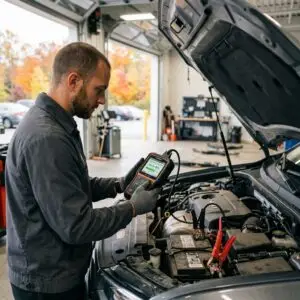
When you decline recommended car service, the identified maintenance or repair task is documented in your vehicle’s permanent database record as unapproved. While deferring service avoids an immediate out-of-pocket expense, it leaves existing wear unaddressed, increases the risk of progressive mechanical damage, creates a clear diagnostic trail that can impact future warranty claims, and often leads to higher total repair bills later when failing components cause secondary system damage.
When a technician flags a maintenance item or necessary repair during a routine checkup and you choose not to proceed, that item is officially logged on your work order as a declined service. Industry research shows that roughly 41% of vehicles on the road are overdue for at least one major service item, including brake system service, steering and suspension inspections, transmission fluid flushes, or air filter replacements.
Choosing to defer service keeps your initial invoice lower on that specific day, but the unaddressed issue remains. In fact, automotive repair data indicates that between 60% and 70% of vehicle owners who decline a technician’s initial recommendation end up paying for that exact repair within 3 to 12 months. Postponing the work frequently increases the overall expense because minor mechanical wear progresses into widespread component failure. Additionally, every declined recommendation becomes part of your vehicle’s permanent diagnostic history. If a deferred service directly causes a breakdown later on, that entry can complicate future factory warranty claims.
Understanding the true urgency behind recommended care allows you to make informed decisions for your vehicle. If you ever have questions regarding a recent inspection report or want to clarify which items require immediate attention, you can reach our team at (330) 427-3656 or visit our service center on Market Street in Boardman Township.
Table of Contents
- Which Critical Vehicle Components Pose the Highest Safety and Repair Risks When Deferred?
- How Does Declining Scheduled Maintenance Impact Your Factory Warranty Coverage?
- What Maintenance Services Can Be Safely Deferred for 30 to 60 Days?
- Common Questions About Declined Vehicle Service and Maintenance Records
- Protect Your Vehicle Reliability and Performance in Boardman Township
Which Critical Vehicle Components Pose the Highest Safety and Repair Risks When Deferred?
Deferring service on safety-critical components like brake pads and rotors, steering linkages, tires, drive belts, and cooling system hoses presents severe driving hazards and severe financial risks. Delaying minor maintenance allows mechanical friction, excessive heat, and fluid contamination to compound until vital engine or chassis systems suffer total failure.
When minor maintenance items like engine oil changes or coolant services are delayed, friction and heat rapidly degrade the internal engine environment. Engine oil breaks down over time, turning into thermal sludge that starves internal bearings and camshafts of lubrication. What begins as a routine oil service can quickly escalate into a major overhaul involving blown head gaskets or full engine seizure. Similarly, ignoring a worn serpentine belt risks sudden snapped belts, leading to immediate power steering loss, engine overheating, and alternator failure while driving through Youngstown traffic.
Federal safety data reveals that roughly 30% of vehicles subject to safety recall campaigns remain unrepaired, leaving millions of automobiles operating with known structural or mechanical defects. Key components that should never be deferred when flagged on an inspection report include:
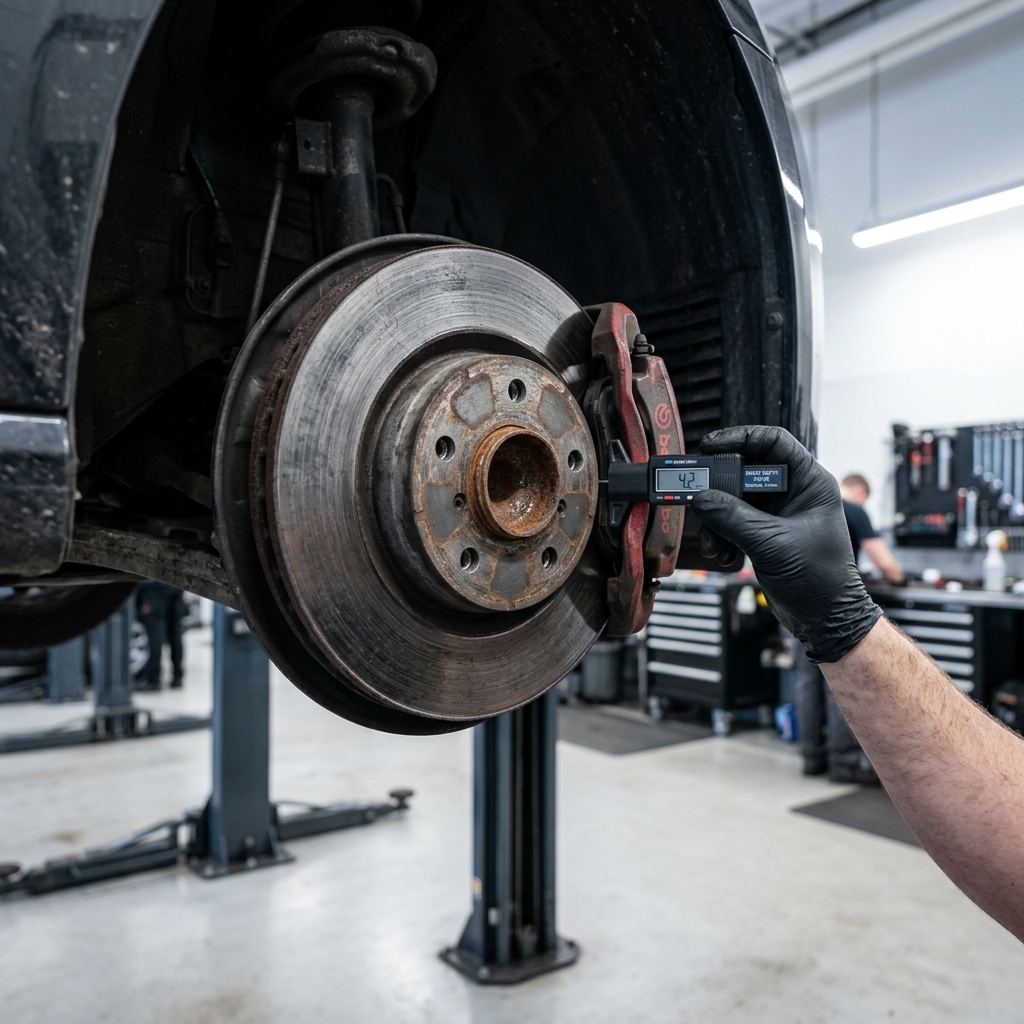
- Brake system components: Worn brake pads below 3 millimeters, thin or warped rotors, and leaking hydraulic lines drastically increase stopping distances and compromise pedal feel.
- Tires and suspension: Bald or unevenly worn tires lose wet-weather traction, while failing ball joints or tie rods jeopardize directional steering control.
- Engine drive belts and hoses: Cracked serpentine belts or swollen radiator hoses can snap or rupture without warning, causing immediate engine failure.
- Fluid leaks near hot exhausts: Leaking engine oil or transmission fluid dripping onto hot exhaust manifolds poses a severe fire hazard.
How Does Declining Scheduled Maintenance Impact Your Factory Warranty Coverage?
An auto manufacturer cannot legally void your entire vehicle warranty simply because you decline a recommended service, but they can deny warranty coverage for specific component failures caused directly by neglected maintenance. Under federal warranty guidelines, manufacturers must prove that the lack of routine care directly caused the mechanical failure before rejecting a claim.
If a technician recommends replacing a worn engine timing belt or flushing contaminated brake fluid and you decline that work, a permanent record is created in the database. Should the timing belt subsequently snap and cause valve-to-piston contact, the manufacturer can legitimately deny warranty coverage for the resulting engine rebuilding costs. However, that same declined timing belt recommendation cannot be used to deny a warranty claim on an unrelated component, such as a malfunctioning power window motor or a faulty infotainment screen.
Drivers reviewing their multi-point inspection reports usually ask about remaining brake pad lining and tire tread depth before deciding which flagged items require immediate action. Maintaining accurate service records and approving critical fluid changes at recommended manufacturer intervals ensures that your factory or extended warranty protections remain completely intact.
What Maintenance Services Can Be Safely Deferred for 30 to 60 Days?
Non-critical maintenance items such as cabin air filter replacements, engine air filters, minor drive belt noise inspections, and preventive tire rotations with healthy tread depth can typically be deferred for 30 to 60 days without immediate mechanical danger. These non-urgent services focus primarily on long-term efficiency and cabin comfort rather than structural safety or immediate drivability.
Technicians evaluate vehicle needs using color-coded inspection guidelines to help drivers prioritize necessary repairs:
- Red items (Immediate care): Heavily worn brake pads, active fluid leaks, damaged tire sidewalls, or fraying serpentine belts require prompt repair to maintain vehicle safety and prevent severe mechanical damage.
- Yellow items (Future care): Minor fluid discoloration, cabin filter buildup, or slight tire wear can safely wait 30 to 60 days or until your next scheduled maintenance visit.
- Green items (Satisfactory): Components meeting all factory specifications and operational standards.
Deferring a yellow-flagged engine air filter or holding off on an alignment check for a few weeks allows you to budget accordingly without risking sudden roadside breakdowns. However, setting a firm calendar reminder to address deferred yellow items within 60 days prevents them from escalating into urgent red-flagged safety risks.
Common Questions About Declined Vehicle Service and Maintenance Records
Q: What does “declined service” mean on a dealership maintenance report?
Declined service indicates that a certified technician identified a maintenance need or component repair during an inspection that the vehicle owner chose not to authorize during that specific visit. The designation serves as an official paper trail, documenting that the potential mechanical issue or maintenance requirement was clearly communicated to the driver.
Q: How do technicians document declined service on a multi-point inspection sheet?
Technicians document recommendations using color-coded inspection forms where red denotes urgent safety issues and yellow indicates items needing attention soon. Any red or yellow item that is not approved by the customer is recorded as declined in the electronic service software and printed directly onto the customer’s final invoice.
Q: How does a declined service record affect my vehicle’s diagnostic history?
A declined service record creates a permanent timestamped entry in the dealership database that future technicians can review during subsequent visits. This diagnostic history helps mechanics identify recurring symptoms faster and verifies whether previously deferred maintenance contributed to a new mechanical breakdown.
Q: Which automotive maintenance services are most frequently declined by vehicle owners?
Cabin air filters, engine air filters, brake fluid flushes, coolant flushes, and routine tire rotations represent the most frequently deferred maintenance items. While filter replacements impact cabin air quality or intake efficiency, deferred fluid flushes can eventually lead to internal corrosion or hydraulic degradation over time.
Q: Can I schedule a follow-up appointment to complete previously declined service items?
You can schedule a follow-up appointment at any time to complete previously declined services before minor wear turns into major damage. Revisiting deferred maintenance items promptly ensures your vehicle continues to operate safely and preserves its long-term reliability.
Protect Your Vehicle Reliability and Performance in Boardman Township
Addressing recommended maintenance before minor component wear develops into critical system failure is the most effective way to protect your automotive investment. Postponing urgent repairs like brake line maintenance or timing belt replacements leads to higher repair expenses, safety risks, and potential warranty claim disputes down the road.
© 2026 Ken Ganley Buying Center Boardman. All rights reserved.
While every effort has been made to ensure the accuracy of the information displayed on this website, the vehicle values, offers, and listings shown may not reflect all accurate vehicle details or current market conditions. Vehicle photos may be representative only and may not match the actual vehicle. All offers, appraisals, and transactions are subject to vehicle inspection, verification, and prior sale. Final purchase amounts may vary based on condition, equipment, history, and market factors. Please contact the Dealership for complete details and confirmation.