A vehicle’s real-world gas mileage is determined primarily by speed, driving behavior, tire pressure, cargo weight, ambient temperature, and powertrain efficiency. While standard EPA ratings use controlled laboratory cycles, everyday driving conditions—such as aggressive acceleration, highway cruising above 50 mph, underinflated tires, and cold winter weather—routinely push actual fuel economy 10% to 15% below published sticker estimates.
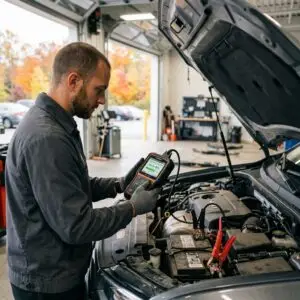
Vehicle weight directly impacts energy consumption during acceleration. Every extra 100 pounds carried in the cabin or trunk increases the workload on the engine, lowering overall fuel economy by about 1%. Aerodynamic resistance plays an equally vital role. As a vehicle pushes through the air, drag increases exponentially at higher speeds, requiring significantly more engine power to maintain momentum. Maintenance factors, including motor oil viscosity and engine calibration, also determine how efficiently fuel converts into forward motion.
Driving habits create the largest variance in daily fuel consumption. Rapid acceleration from a complete stop and hard braking burn gas unnecessarily compared to smooth, progressive throttle control. In suburban commercial corridors like Boardman Township, frequent traffic lights on Route 224 create continuous stop-and-go cycles that highlight the distinction between engine efficiency under load and energy wasted during idling. Keeping up with routine inspections and driving smoothly helps maintain optimum fuel efficiency across every trip.
If you have questions about maximizing your current vehicle’s mileage or evaluating a replacement, our team at Ken Ganley Buying Center Boardman is here to help. You can drop by our Boardman location or give us a quick call to learn how vehicle condition impacts overall market value.
Table of Contents
- Why Do Hybrid Vehicles Get Better Fuel Economy in the City Than on the Highway?
- How Do Speed, Tire Pressure, and Roof Racks Hurt Fuel Efficiency?
- How Do Idling, Cold Weather, and EPA Ratings Affect Real-World Efficiency?
- Questions Drivers Ask Most About Fuel Economy and MPG
- Finding Your Next Fuel-Efficient Vehicle at Ken Ganley Buying Center
Why Do Hybrid Vehicles Get Better Fuel Economy in the City Than on the Highway?
Hybrid vehicles achieve higher fuel economy in city driving than on the highway because stop-and-go traffic allows them to maximize electric motor operation and capture energy through regenerative braking. At lower speeds, the electric motor handles low-load acceleration and frequent stops, whereas sustained highway speeds force the internal combustion engine to run continuously against high aerodynamic resistance.
In conventional gasoline vehicles, city traffic represents the worst-case scenario for fuel efficiency. Stopping and accelerating repeatedly forces the engine to burn peak fuel in low gears, while idling at red lights wastes fuel without covering any distance. Gasoline-electric hybrids eliminate this inefficiency by shutting off the internal combustion engine during low-speed coasting and deceleration. When the driver applies the brakes, the hybrid’s electric motor acts as a generator, converting kinetic energy that would otherwise be lost as brake heat back into electrical energy stored in the high-voltage battery.
On the highway, the operational balance shifts. Maintaining speeds above 55 mph requires steady, continuous power output from the gasoline engine to overcome wind resistance. Because regenerative braking opportunities are rare during long highway stretches, the hybrid system relies predominantly on its combustion engine, resulting in highway fuel economy ratings that are often lower than its city mileage.
How Do Speed, Tire Pressure, and Roof Racks Hurt Fuel Efficiency?
Excessive speed, underinflated tires, and external roof racks reduce fuel economy by dramatically increasing mechanical rolling resistance and aerodynamic drag. Driving faster than 50 mph causes fuel efficiency to drop rapidly, while dropping tire pressure by 10 psi on all four tires cuts gas mileage by about 2% to 3%, and mounted roof cargo boxes can reduce highway fuel economy by 10% to 25%.
Aerodynamic resistance rises exponentially as vehicle velocity increases. While every model has a distinct efficiency peak—typically between 45 mph and 50 mph—fuel economy declines steeply above that range. Driving at 75 mph instead of 65 mph demands significantly more engine output simply to pierce through air resistance, turning a routine highway drive into an inefficient trip.
Tire maintenance directly influences rolling resistance. Underinflated tires flex excessively against the pavement, increasing friction and heat build-up. Maintaining correct tire pressure ensures the contact patch meets the road as designed. Furthermore, equipping a vehicle with low rolling resistance tires—which feature specialized tread compounds and casing structures—can improve overall fuel economy by 1% to 4%.
External cargo accessories create severe aerodynamic penalties. Large, blunt rooftop cargo boxes create turbulence that forces the engine to work much harder at high speeds. Rear-mounted cargo trays offer a far sleeker alternative, causing only a 1% to 5% reduction on the highway. In the hilly urban terrain of Youngstown, where elevation changes around Mill Creek Park already require extra engine torque, carrying unnecessary roof cargo or driving on soft tires compounds fuel waste.
Drivers preparing to upgrade their vehicle can begin by understanding Kelley Blue Book trade values to see how overall vehicle condition and maintenance history affect trade-in offers.
How Do Idling, Cold Weather, and EPA Ratings Affect Real-World Efficiency?
Excessive engine idling and cold weather significantly impair fuel economy, while official window stickers represent laboratory averages based on a 55% city / 45% highway weighting. Idling consumes 0.25 to about 0.5 gallons of fuel per hour, and winter temperatures around 20°F can cut fuel efficiency by 15% to 24% due to longer engine warm-ups and winter fuel blends.
Modern fuel-injected engines do not require prolonged warming periods. Idling in a driveway burns gasoline while yielding zero miles per gallon. Turning off the ignition during stops expected to last longer than 10 seconds saves fuel, which is why automatic engine stop-start technology has become standard on many modern vehicles.
Cold weather introduces several simultaneous efficiency drains:
- Engines require more time to reach optimal operating temperatures, during which fuel mixture enrichment runs heavy.
- Cold ambient air increases air density, raising aerodynamic drag on the chassis.
- Tire pressure drops approximately 1 psi for every 10°F decrease in outside temperature, raising rolling resistance.
- Winter-blend gasoline contains slightly less energy per gallon than summer formulas.
First-time hybrid buyers who visit our floor during winter usually ask if cold weather permanently damages battery range before realizing that efficiency naturally recovers when spring temperatures return. Understanding these environmental factors helps drivers contextualize official window sticker ratings. Standard EPA ratings provide an objective baseline for comparing vehicles, but individual routes, ambient conditions, and driving styles ultimately govern real-world results.
Questions Drivers Ask Most About Fuel Economy and MPG
Q: How does tire pressure drop when the temperature changes in northeastern Ohio?
Outside temperatures directly impact tire pressure, dropping roughly 1 psi for every 10°F drop in air temperature. When seasonal cold snaps arrive, tires can easily drop 5 to 8 psi overnight, resulting in increased rolling resistance and reduced fuel economy. Checking inflation levels monthly and keeping tires set to the manufacturer’s recommended psi printed inside the driver’s door jamb helps prevent unnecessary fuel loss and uneven tread wear.
Q: Does using cruise control actually improve highway fuel economy?
Using cruise control on flat or gently rolling highway stretches generally improves fuel economy by maintaining a steady speed and eliminating subtle, unnecessary driver accelerations. Holding a constant velocity reduces fuel consumption compared to frequent manual throttle adjustments. However, in steep terrain, downshifting caused by cruise control can briefly increase fuel usage, so manual throttle control is preferred on severe inclines.
Q: Is replacing an air filter effective for boosting gas mileage on modern vehicles?
Replacing a dirty air filter on modern fuel-injected engines improves engine acceleration and performance, but it does not directly increase fuel economy. Computer-controlled engine management systems adjust the fuel-to-air ratio automatically to match reduced airflow. On older carbureted engines, a clogged filter would richen the fuel mix and waste gas, but on modern cars, clean filters primarily protect internal components and restore crisp throttle response.
Q: Why does aggressive acceleration waste so much gas in stop-and-go driving?
Hard acceleration forces the engine to operate at high RPMs in lower gears, burning significantly more fuel to overcome inertia rapidly. Rapid bursts of speed followed by sudden braking waste the kinetic energy just generated by the engine. Accelerating smoothly and anticipating traffic stops allows the transmission to shift into higher, more efficient gears earlier, preserving momentum and reducing overall fuel consumption by up to 40% in city environments.
Q: How can vehicle owners verify trade-in value when upgrading to a fuel-efficient model?
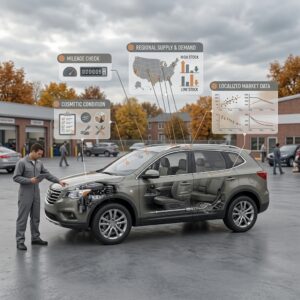
Vehicle owners can evaluate trade-in worth by gathering current vehicle details—including mileage, maintenance history, and trim level—and using online evaluation tools or bringing the car in for an appraisal. Knowing your current vehicle’s market value allows you to calculate total ownership savings accurately when transitioning to a fuel-efficient sedan, hybrid, or SUV. If you want to explore more common questions, feel free to review our online FAQ guide.
Finding Your Next Fuel-Efficient Vehicle at Ken Ganley Buying Center
Choosing a fuel-efficient vehicle is one of the most effective ways to lower daily driving expenses and reduce long-term ownership costs. Whether you are looking for a nimble commuter car, a spacious hybrid crossover, or a reliable pre-owned sedan, finding the right vehicle starts with clear information and competitive trade-in value for your current ride.
Our team at Ken Ganley Buying Center Boardman makes trading your vehicle straightforward. We buy all makes and models, offering real cash offers without high-pressure sales tactics. Stop by our showroom address on Market Street, call us directly at (330) 427-3656, or explore our main buying center website today to get a fast, accurate appraisal on your current vehicle.
© 2026 Ken Ganley Buying Center Boardman. All rights reserved.
While every effort has been made to ensure the accuracy of the information displayed on this website, the vehicle values, offers, and listings shown may not reflect all accurate vehicle details or current market conditions. Vehicle photos may be representative only and may not match the actual vehicle. All offers, appraisals, and transactions are subject to vehicle inspection, verification, and prior sale. Final purchase amounts may vary based on condition, equipment, history, and market factors. Please contact the Dealership for complete details and confirmation.