Seasonal Vehicle Care Q&A: Why Fall Is the Best Time for Vehicle Evaluation with Andrew Wilding
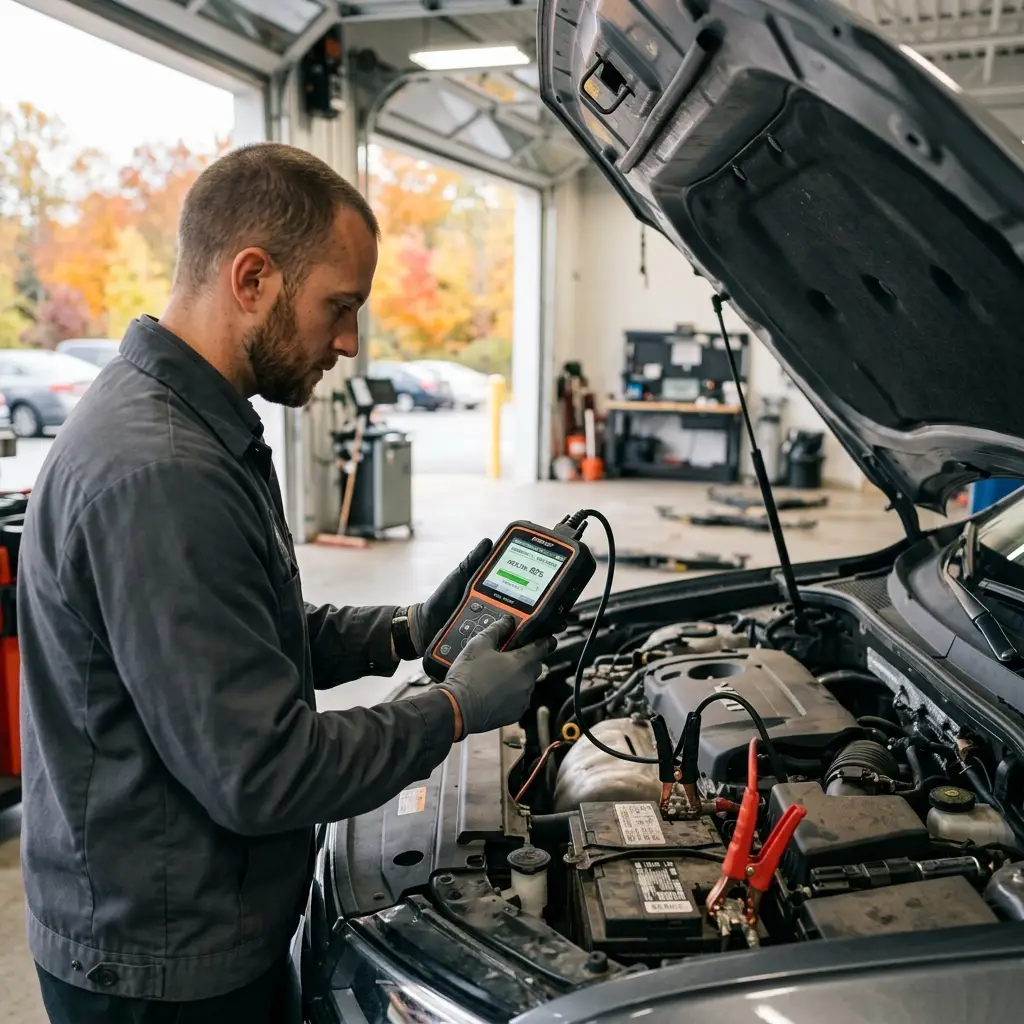
Fall is the ideal time to test car battery health because moderate autumn temperatures provide an accurate baseline reading before winter freezing temperatures drop cranking capacity by up to 50 percent and double the power needed to turn over cold engine oil. Today, we sit down with Andrew Wilding, Customer Relations Manager at Ken Ganley Buying Center, Boardman, who brings 14 years of automotive experience to explain why seasonal vehicle evaluation is essential for long-term reliability and safety.
Q: Why is fall the ideal time to test and evaluate car battery health?
A: Moderate autumn temperatures reveal early battery degradation before sub-zero winter weather reduces chemical output and causes unexpected starting failure. Summer heat accelerates internal plate corrosion and fluid evaporation inside standard 12-volt batteries, but warm weather allows even a weakened unit to start an engine without obvious warning signs. When autumn arrives and ambient temperatures begin to decline, the chemical reactions inside the battery slow down significantly. A unit that is more than three years old may appear to operate fine in mild weather, yet it can lose nearly half of its starting capacity once cold weather sets in.
According to testing guidance from AAA, evaluating battery health and terminal connections during autumn ensures you identify a failing cell before the first severe frost leaves you stranded. At our Boardman buying center location, we emphasize checking battery reserve capacity early so vehicle owners maintain complete confidence in their daily transportation. If you ever have questions regarding your vehicle's starting system, you can easily reach our team by giving us a quick call to discuss preventative steps before winter arrives.
Q: How can you test your car battery voltage at home before winter?
A: You can test your car battery voltage at home by connecting a digital multimeter set to DC volts across the battery terminals while the engine is turned off. A fully charged standard 12-volt automotive battery should read between 12.6 and 12.8 volts when static. To perform the test accurately, ensure the vehicle has been turned off for at least an hour to eliminate any residual surface charge from the alternator. Connect the red positive multimeter lead to the positive battery terminal and the black negative lead to the negative terminal.
If your multimeter displays a reading between 12.4 and 12.5 volts, the battery is holding roughly a 75 percent charge, which indicates moderate health but suggests it should be monitored closely. Any reading below 12.2 volts indicates a charge level of 50 percent or lower, signaling that the battery is significantly discharged or reaching the end of its typical three-to-five-year lifespan. While a static voltage test provides a helpful initial snapshot, it does not measure how the battery performs under a heavy electrical load, such as cranking a cold engine on a freezing morning. Professional diagnostic equipment applies a simulated load to measure cold cranking amps, giving a much clearer picture of overall cell health.
Q: How does coolant and antifreeze concentration affect winter engine performance?
A: Proper coolant and antifreeze concentration prevents the engine fluid from freezing, expanding, and cracking vital components like the engine block, radiator, and heater core during freezing temperatures. Engine coolant relies on a specific ratio of ethylene glycol or propylene glycol mixed with water to manage thermal expansion and internal heat transfer. A proper 50/50 mixture of engine coolant and distilled water lowers the freezing point of the liquid down to approximately minus 34 degrees Fahrenheit, while simultaneously elevating the boiling point during high-load driving. Over time, engine coolant can absorb moisture or suffer chemical breakdown, altering its protective threshold and allowing rust and corrosion to accumulate inside the cooling passages.
If the fluid ratio drops too low in glycol concentration, water inside the cooling system can freeze solid when temperatures plunge across Mahoning Valley. Frozen coolant expands within closed passages, creating immense hydrostatic pressure capable of cracking cast-iron or aluminum engine blocks, splitting radiator seams, and bursting internal heater cores. Checking coolant strength with a hydrometer during fall evaluation ensures that your vehicle maintains proper freeze protection and effective cabin heat throughout the cold season.
Q: What is the difference between all-season tires and winter tires for fall preparation?
A: The primary difference lies in the rubber compound and tread design, as winter tires remain pliable below 45 degrees Fahrenheit while all-season rubber hardens and loses traction in cold weather. All-season tires are engineered with a versatile rubber compound designed to perform reasonably well across a broad spectrum of moderate temperatures and road conditions. However, once ambient temperatures consistently fall below 45 degrees Fahrenheit, the tread compound in all-season tires begins to stiffen, reducing its ability to grip the road surface effectively. Winter tires utilize specialized flexible rubber compounds that remain soft in sub-freezing temperatures, combined with aggressive tread patterns featuring high sipe density to bite into packed snow and slush.
Evaluating tread depth during fall is critical for maintaining traction during rain, slush, and early snowstorms. While the federal minimum legal tread depth is 2/32 inch, safety guidelines from AAA recommend evaluating tire replacement when tread depth wears down to 4/32 inch for winter driving. Tires worn below 4/32 inch lose the deep channels required to evacuate slush and water, drastically increasing stopping distances and the risk of hydroplaning during wet late-autumn weather.
"Summer heat does the damage to your battery, but winter cold is what exposes it when you need starting power the most."
Q: What tire pressure should you maintain when cold weather drops temperatures rapidly?
A: You should always maintain the recommended cold tire inflation pressure specified on your vehicle's driver-side door-jamb placard rather than the maximum pressure stamped on the tire sidewall. As ambient temperatures decline during autumn, air molecules inside your tires compress, resulting in a predictable loss of pressure. Automotive tire pressure drops by approximately 1 psi for every 10°F decrease in outdoor temperature. Rapid cold fronts can easily cause tire pressure monitoring systems to trigger a warning light on your dashboard overnight simply due to natural thermal contraction.
To get an accurate measurement, always check tire inflation pressures early in the morning before the vehicle has been driven or after it has been parked for at least three hours. Driving generates friction and internal heat, which temporarily inflates air pressure and skews your readings. Inflating tires back to the vehicle manufacturer's door-placard specification restores the correct contact patch, preventing uneven tread wear, maximizing fuel economy, and maintaining proper handling dynamics on slick roads.
Q: Why is fall the overall ideal season to evaluate your vehicle in Boardman Township?
A: Fall offers a moderate climate window to identify heat-induced wear from summer driving and resolve mechanical issues before harsh winter weather creates hazardous driving conditions. Navigating daily routines through Boardman Township requires reliable transportation, whether commuting along major retail corridors or traveling through suburban residential neighborhoods. Summer driving subjects vehicle components to intense heat cycles, heavy air conditioning loads, and long highway trips that degrade fluids, belts, and rubber seals. Evaluating your car during autumn allows technicians to spot developing wear in a controlled environment before lake-effect snow and ice arrive across the region.
Beyond engine mechanics, fall evaluation focuses on critical visibility and climate control systems that directly impact driver safety. Inspecting wiper blades for tearing, filling washer reservoirs with non-freezing fluid formulas, and verifying that the cabin heater, front defroster, and rear-window defogger operate properly ensures clear vision during sudden autumn rainstorms and early frosts. Addressing these comfort and safety items early prevents inconvenient breakdowns and keeps your vehicle performing at its best.
Q: What is usually included in a professional multi-point winter prep inspection?
A: A professional multi-point winter prep inspection systematically evaluates your vehicle's battery, braking system, fluid conditions, tire health, suspension components, wipers, and heating systems. During a thorough inspection, certified technicians inspect the electrical system by testing battery reserve capacity, alternator output, and starter motor draw to ensure reliable ignition. The braking system undergoes a detailed check measuring brake pad thickness, rotor surface condition, and brake fluid moisture levels, ensuring dependable stopping power on icy surfaces. Technicians also evaluate underhood belts and cooling hoses for cracks, swelling, or soft spots that cold weather could aggravate into complete failures.
All vital automotive fluids—including engine oil, transmission fluid, brake fluid, coolant, and power steering fluid—are checked for level, concentration, and contamination against manufacturer specifications. Technicians measure tire tread depth across all four tires, inspect suspension bushings and shock absorbers for wear, and confirm that exterior lighting operates properly for darker autumn driving conditions. This comprehensive review delivers a complete health assessment, allowing owners to prioritize essential care.
Q: Is pre-winter vehicle evaluation worth the cost compared to post-winter repairs?
A: Pre-winter vehicle evaluation is significantly more cost-effective because minor preventative service costs a fraction of emergency towing, major engine repairs, or winter breakdown expenses. Proactive autumn maintenance addresses minor component wear before severe weather causes catastrophic failures. Replacing a weak battery or adjusting coolant concentration during a routine check prevents severe engine damage caused by frozen fluids or sudden mechanical breakdowns on freezing winter mornings. When owners skip seasonal care, minor issues frequently compound into expensive post-winter repair bills involving cracked components, damaged suspension, or failed electrical systems.
When drivers ask about maintaining long-term vehicle value, I explain that routine fall evaluations protect your financial investment by preventing costly secondary damage. Choosing trusted local care ensures your vehicle receives dedicated attention tailored to local driving conditions. If you are considering upgrading or trading in your automobile this season, comparing national options with a local center highlights the value of personalized, community-focused service. You can drop by our location at 7871 Market St, Boardman, OH 44512 or reach our team directly at (330) 427-3656 to schedule your comprehensive seasonal evaluation today.
© 2026 Ken Ganley Buying Center Boardman. All rights reserved.
While every effort has been made to ensure the accuracy of the information displayed on this website, the vehicle values, offers, and listings shown may not reflect all accurate vehicle details or current market conditions. Vehicle photos may be representative only and may not match the actual vehicle. All offers, appraisals, and transactions are subject to vehicle inspection, verification, and prior sale. Final purchase amounts may vary based on condition, equipment, history, and market factors. Please contact the Dealership for complete details and confirmation.