Avoid Winter Breakdowns: The Must-Do Car Checkup Every Ohio Driver Needs
A pre-winter vehicle inspection is absolutely worth the money because identifying a failing battery, diluted coolant, or worn brake pads before freezing weather sets in prevents hazardous roadside breakdowns and costly emergency towing fees. Addressing small maintenance issues during mild autumn weather keeps repair costs lower and ensures your car operates safely on slick, frozen roads. Today, we sit down with Andrew Wilding, Customer Relations Manager at Ken Ganley Buying Center Boardman, who brings 14 years of experience helping local drivers keep their vehicles reliable through every harsh winter season.
Q: Is a pre-winter vehicle inspection worth the money before freezing weather hits?
A: A pre-winter vehicle inspection pays for itself by catching minor wear items before sudden temperature drops turn them into expensive emergency repairs or leave you stranded in freezing conditions. When temperatures plummet below freezing, compromised components fail much faster under the added physical strain. Spending a small amount on a routine autumn checkup protects your pocketbook against unexpected towing bills, emergency service rates, and severe engine damage caused by frozen cooling systems or neglected mechanical failures.
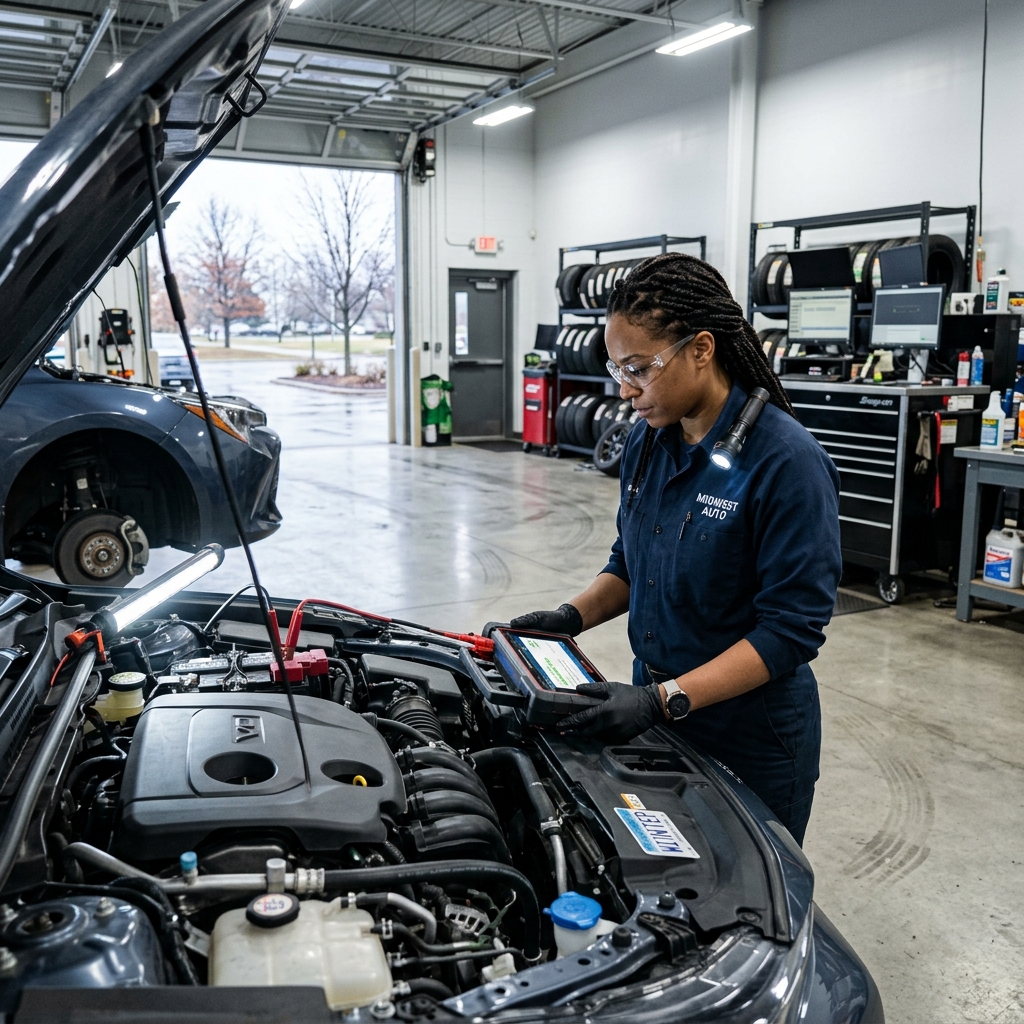
During a professional inspection, technicians evaluate every critical system that impacts cold-weather safety and vehicle operation. They test your battery's cranking capacity, measure brake pad thickness, check suspension components, evaluate drive belts, and verify that your heating and defrost systems clear windshield glass properly. Catching a weak battery or thin brake pads while your car is already in the shop allows you to schedule maintenance on your own terms rather than dealing with an unscheduled breakdown on a freezing morning.
Beyond preventing unexpected mechanical failures, an autumn inspection gives you complete peace of mind when navigating winter driving conditions. For drivers who regularly commute past Mill Creek Park or tackle icy morning highways, knowing that your brakes, tires, and vital fluids meet manufacturer standards is invaluable. You can easily reach our team by giving us a quick phone call or using our detailed location map to stop by for a comprehensive vehicle check.
Q: What should Boardman drivers prioritize in a fall winter-readiness check?
A: Drivers preparing for local winter weather should prioritize checking tire tread depth and pressure, testing battery health, inspecting brake components, and verifying antifreeze protection levels. These primary systems directly control your vehicle's traction, starting reliability, stopping ability, and engine temperature regulation during severe freezing spells. Leaving any one of these areas unchecked significantly increases the risk of cold-weather starting trouble or loss of vehicle control on slippery pavement.
Tires require close attention because cold rubber loses flexibility, and worn tread cannot channel slush or snow away from the contact patch. We recommend maintaining at least 4/32 inch of tread depth for safe winter travel, which is well above the legal minimum. Technicians also test the engine coolant to ensure you have a proper 50/50 mixture of antifreeze and distilled water, which protects the engine block against freezing down to -34 degrees Fahrenheit.
Visibility and braking performance complete the priority checklist. Technicians inspect brake pads and rotors for uneven wear that could cause pulling on icy roads, while replacing worn windshield wiper blades and topping off the washer fluid reservoir with freeze-resistant winter fluid. Whether running daily errands around Boardman Township or taking longer highway trips, having clear visibility and responsive brakes makes all the difference when sudden lake-effect snow squalls strike.
Q: How can you test if a car battery will survive the winter?
A: You can test if a car battery will survive the winter by conducting a professional conductance or load test that measures both static voltage and remaining Cold Cranking Amps capability. A simple voltage reading alone does not tell the full story, as a battery might show normal voltage at rest but collapse under the heavy electrical load required to turn over a cold engine. A healthy 12-volt battery should read at least 12.6 volts at rest and maintain above 9.6 volts while cranking.
Freezing temperatures severely degrade chemical activity inside the battery casing, causing an average unit to lose approximately 60 percent of its starting power at 0 degrees Fahrenheit. At the exact same time, cold engine oil thickens, requiring up to twice as much electrical energy to turn the crankshaft. If your battery is more than three years old or exhibits a Cold Cranking Amps output significantly below its factory rating, it is far more likely to fail during the season's first severe cold snap.
"A battery that starts your engine effortlessly on a mild autumn afternoon can lose more than half its starting power overnight when freezing weather arrives."
When local vehicle owners ask about battery performance during autumn service visits, we always walk them through the conductance test results so they see the exact remaining capacity. Checking terminal connections for corrosion and ensuring cable clamps are tightened down securely prevents power loss. Replacing a weak unit in the fall eliminates the frustration of clicking starters and delayed morning commutes when freezing weather takes hold.
Q: What is the correct tire pressure for cold winter driving?
A: The correct tire pressure for cold winter driving is the exact cold inflation figure listed on the driver-side door jamb placard, not the maximum pressure rating stamped on the tire sidewall. You should always check and adjust tire pressure when the vehicle has been sitting parked for at least three hours, as driving generates internal heat that artificially inflates pressure readings. Maintaining this factory-recommended specification ensures even tread contact and optimal grip on cold or snow-covered roads.
Ambient air temperature drops have a direct physical effect on internal tire pressure, causing air to contract and pressure to drop by roughly 1 psi for every 10-degree drop in outside temperature. As autumn transitions into winter, a driver who set their tires to 32 psi during warm weather may suddenly find themselves driving on underinflated tires at 27 psi after a sharp freeze. Underinflation causes excessive wear on tire shoulders, degrades fuel economy, and compromises handling response.
Checking your tire pressure monthly with a calibrated digital gauge is one of the easiest ways to maintain driving safety throughout the season. Remember to check your spare tire pressure as well, as cold weather causes it to lose inflation at the exact same rate. Keeping all four active tires inflated to the manufacturer's specification helps maximize tread lifespan and maintains predictable vehicle tracking on wet or frozen pavement.
Q: What is the difference between all-season tires and all-weather tires?
A: The main difference between all-season tires and all-weather tires is that all-weather tires use specialized rubber compounds and tread designs engineered to remain pliable in freezing temperatures, earning the official Three-Peak Mountain Snowflake rating for severe snow service. Standard all-season tires begin to harden and lose elasticity when ambient temperatures drop below 45 degrees Fahrenheit, which reduces grip even on dry pavement. All-weather tires bridging this gap offer genuine four-season capability without requiring semi-annual tire swaps.
All-season tires work exceptionally well during spring, summer, and mild fall conditions, but their tread patterns and harder rubber compounds are built primarily for rain and wet road performance rather than heavy snow or ice. In contrast, all-weather tires incorporate aggressive tread sipes, wider circumferential grooves, and flexible silica compounds that bite directly into packed snow and slush. This allows them to deliver significantly shorter stopping distances on frozen roads compared to traditional all-season tires.
For drivers who want enhanced snow traction without storing a second set of dedicated winter tires, all-weather tires represent a practical and effective solution. They handle summertime heat durable enough for year-round driving while delivering verified winter safety features when snow arrives. Choosing the right tire design depends on your annual mileage, typical driving routes, and comfort level when driving through winter storms.
Q: Should all-wheel drive vehicles still use winter tires in local snow?
A: Yes, all-wheel drive vehicles should still use dedicated winter tires or high-traction all-weather tires in snow because all-wheel drive only assists with acceleration and forward momentum, doing nothing to improve turning grip or stopping distance on ice. When you press the brake pedal or turn the steering wheel on a slick surface, an all-wheel drive vehicle relies entirely on the mechanical grip of its four tire contact patches to slow down or change directions.
Dedicated winter tires utilize specialized hydrophilic rubber compounds that remain soft in extreme cold, combined with thousands of microscopic tread sipes that trap snow and create biting edges on ice. Tests consistently demonstrate that a front-wheel drive car equipped with dedicated winter tires will stop significantly faster and corner more predictably on ice than an all-wheel drive vehicle riding on hardened, worn all-season tires. Relying solely on drive-wheel traction can create a false sense of security that leads to skidding or extended stopping distances.
If you frequently travel unplowed secondary roads or face hilly morning commutes, pairing an all-wheel drive system with winter-rated tires gives you the highest possible level of vehicle control. Understanding how different drivetrain configurations and tire technologies interact helps you make informed choices about your vehicle's winter setup. You can explore how local vehicle care compares to national chains by reviewing our guide on our local buying center advantages for additional ownership insights.
© 2026 Ken Ganley Buying Center Boardman. All rights reserved.
While every effort has been made to ensure the accuracy of the information displayed on this website, the vehicle values, offers, and listings shown may not reflect all accurate vehicle details or current market conditions. Vehicle photos may be representative only and may not match the actual vehicle. All offers, appraisals, and transactions are subject to vehicle inspection, verification, and prior sale. Final purchase amounts may vary based on condition, equipment, history, and market factors. Please contact the Dealership for complete details and confirmation.