Fall Driveway Clearout: Why Selling Your Spare Car Before Winter Makes Sense in Mahoning County
Why Selling Your Spare Vehicle Before Winter in Mahoning County Saves You Money
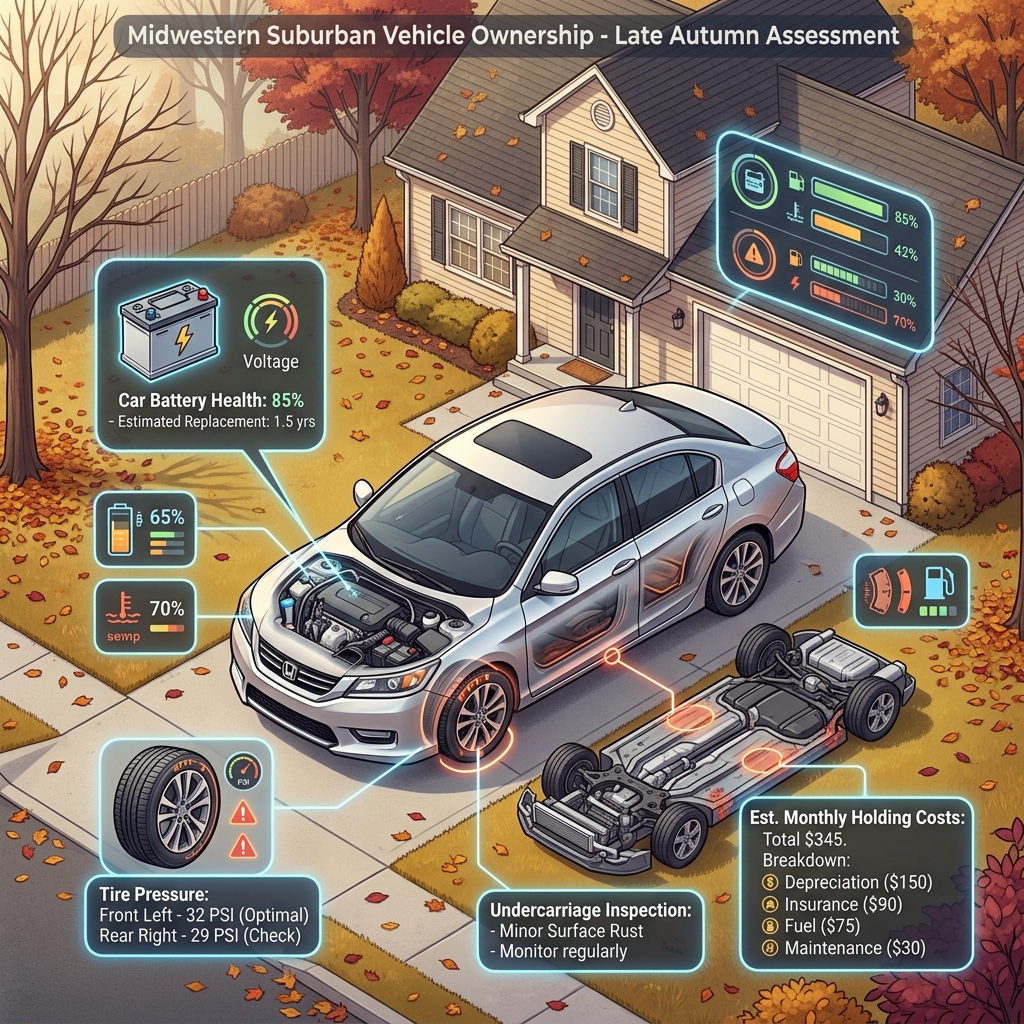
Selling a spare vehicle before winter eliminates immediate holding expenses, including seasonal insurance, registration fees, battery degradation, and rapid body corrosion from road salt exposure. Liquidating an unused vehicle during autumn locks in peak market value before winter weather increases depreciation, saving owners hundreds to thousands of dollars in total ownership costs compared to spring sales.
Holding onto an extra vehicle through the cold weather months presents a quiet drain on your household finances. Many vehicle owners assume that parking a spare sedan, truck, or SUV in the driveway for a few months costs nothing as long as it is not actively being driven. The reality is that fixed recurring costs continue month after month. Comprehensive and liability auto insurance premiums must be maintained to protect against falling tree limbs, heavy snow load damage, or accidental driveway slides. Registration renewal deadlines do not pause simply because a vehicle is parked, and state compliance costs accrue regardless of monthly mileage.
Beyond direct cash outlays for bills, vehicle depreciation continues uninterrupted throughout the season. Auto values naturally step down as the calendar turns over to a new model year in late fall and winter. When a car sits parked outdoors through freezing rain, heavy snow fall, and sub-zero temperature drops, its cosmetic condition deteriorates. Rubber door seals harden, battery chemistry breaks down, and minor surface scratches turn into active corrosion spots once ambient moisture freezes inside microscopic paint chips.
When you factor in the combined cost of ongoing insurance payments, registration fees, seasonal depreciation, and winter-induced mechanical upkeep, keeping an unused automobile on your driveway through the colder months rarely makes financial sense. Selling early allows you to convert a depreciating asset into liquid cash right when local used vehicle market demand remains stable. If you are ready to evaluate your vehicle before snow arrives, you can get step-by-step directions to our Market Street buying center or give our team a quick call at (330) 427-3656 to discuss your car’s valuation.
Table of Contents
- Is It Cheaper to Sell a Spare Car Before Winter or Store It Until Spring?
- Do Car Values Drop in the Winter?
- How Much Does Cold Weather Damage an Unused Parked Car?
- What Factors Lower a Car’s Appraisal Value the Most?
- Understanding Ohio Vehicle Title Laws and Paperwork Requirements
- Private Party Sale vs. Dealership Trade-In for Boardman Township Drivers
- How to Maximize Your Vehicle’s Cash Offer Before Winter Hits
Is It Cheaper to Sell a Spare Car Before Winter or Store It Until Spring?
Selling a spare car before winter is significantly cheaper than storing it until spring because storage costs, continuous depreciation, and cold-weather component wear outweigh potential spring price bumps. Storing a vehicle for four to five cold months incurs recurring insurance premiums, potential storage space fees, and mechanical risk without guaranteeing a higher resale payout later.
When evaluating whether to sell an extra vehicle in October or hold it until April, many vehicle owners calculate a best-case scenario where warmer weather brings out more buyers. What this calculation ignores is the baseline cash required to preserve a stored vehicle properly. Proper winter storage is not simply parking a vehicle in a gravel turn-around and walking away. Safe storage requires a sealed, well-ventilated enclosure to mitigate moisture accumulation. If indoor storage space is rented, monthly unit costs quickly erode any theoretical springtime price gain.
| Expense Category | Winter Storage Impact (4-5 Months) |
|---|---|
| Insurance & Registration | Continuous monthly out-of-pocket |
| Battery Maintenance / Replacement | High risk of cell failure/drain |
| Fuel System & Fluids Care | Requires stabilizers & additives |
| Seasonal Depreciation | Calendar year turn lowers base value |
Even when stored in a residential garage, a vehicle requires active preparation. Fluid levels must be verified, fuel systems require fuel stabilizer additives, and coolant freeze protection must be tested down to sub-zero levels to prevent cracked engine blocks or burst radiator reservoirs. Batteries left uncharged in cold environments lose voltage rapidly, leading to permanent sulfation on lead plates. Replacing a frozen battery or fixing dried-out engine seals in May consumes a substantial chunk of any seasonal market bump you hoped to capture.
When sellers review the math with our appraisal team, they realize that taking a competitive cash offer in early fall yields a higher net return than waiting. If you are debating between holding or selling, taking time to review options for comparing national online buyers with a local buying center provides clear insight into how local market demand provides more predictable cash returns right now compared to nationwide digital aggregators.
Do Car Values Drop in the Winter?
Vehicle values shift by seasonal vehicle type during winter, with two-wheel-drive sedans, convertibles, and rear-wheel-drive sports cars experiencing price drops while four-wheel-drive trucks and all-wheel-drive crossovers maintain or gain market value. Overall used car transaction activity slows down during winter months, leading to lower regional cash appraisals for non-winter-ready models.
Market demand directly governs trade-in and wholesale vehicle appraisals. During early autumn, regional vehicle buyers aggressively seek out inventory to satisfy local market needs before winter conditions arrive. In areas like Youngstown, where rolling valley topography and heavy lake-effect snow patterns make winter travel challenging, consumer demand tilts heavily toward all-wheel drive (AWD) crossovers, four-wheel-drive (4WD) pickup trucks, and vehicles equipped with high ground clearance. If your spare vehicle features a capable drive system, selling in early fall aligns perfectly with peak buyer interest.
Conversely, front-wheel-drive compact sedans, midsize commuter cars, and rear-wheel-drive sports cars face a seasonal demand slowdown as snow begins to accumulate. Private buyers rarely shop for lightweight commuter vehicles or summer leisure cars during active snowfall. As private buyer interest slows, retail market listings sit longer on dealer lots, which depresses wholesale trade-in offers for those specific vehicle categories.
| Vehicle Class | Early Fall / Winter Value Trend |
|---|---|
| AWD Crossovers & 4WD Trucks | Peak Demand / High Cash Offers |
| FWD Sedans & Compact hatchbacks | Moderate Demand / Steady Pricing |
| RWD Sports Cars & Convertibles | Seasonal Dip / Lower Cash Offers |
Timing your vehicle sale before severe weather settles into the region protects you from these seasonal demand drops. Cashing out your vehicle while retail inventories are turning over quickly ensures your vehicle appraisal is calculated against strong early-fall market benchmarks rather than sluggish mid-winter valuation curves.
How Much Does Cold Weather Damage an Unused Parked Car?
Freezing temperatures cause severe, compound damage to sitting vehicles, including complete battery discharge, tire flat-spotting, moisture condensation in fuel tanks, and accelerated frame rust from lingering road salt. Leaving a spare car stationary for three to four winter months can cause over $1,000 in mechanical degradation and required reconditioning.
Cold weather exerts continuous physical stress on automotive systems, especially when a vehicle remains stationary for extended periods. Automotive batteries suffer rapid power loss in cold ambient temperatures; a battery at 32°F loses approximately 30% of its electrical strength compared to its rating at 80°F, and at 0°F, power output drops by over 50%. When a vehicle sits unused, background electronic draws from powertrain control modules and security systems gradually deplete the battery voltage. Once a battery drops below 12.0 volts in sub-freezing temperatures, the internal water-and-acid electrolyte solution can freeze, expanding and buckling internal lead plates, resulting in permanent battery failure.
| Automotive System | Parked Cold-Weather Vulnerability |
|---|---|
| 12V Lead-Acid Battery | Parasitic drain & electrolyte freeze |
| Tires & Rubber Compounds | Flat-spotting & bead seal leaks |
| Fuel Tank & Intake Systems | Water condensation & line icing |
| Undercarriage & Brake Rotors | Surface rust & caliper binding |
Tires undergo severe physical changes during winter storage. Air pressure decreases by roughly 1 PSI for every 10°F drop in ambient temperature. As tire pressure leaks away, the weight of a sitting car presses down on under-inflated, cold-hardened rubber sidewalls, creating permanent flat spots across the tread carcass. Furthermore, moisture condensation accumulates inside partially empty fuel tanks during daily freeze-thaw cycles, leading to phase separation in ethanol-blended gas and potential ice blockages inside fuel lines when started months later.
Undercarriage rust accelerates silently on parked cars exposed to atmospheric winter moisture. Residual road salt dust from early snow treatments clings to subframe components, brake calipers, and exhaust piping. Without regular driving and underbody rinses to blast away corrosive compounds, moisture traps salt against raw metal surfaces, seizing brake sliders and rusting steel brake lines. If you want to avoid spending money fixing winter storage damage on an extra car you do not need, you can explore options to sell your car and browse our pre-owned vehicle inventory if you plan to upgrade to a primary vehicle better suited for winter commuting.
What Factors Lower a Car’s Appraisal Value the Most?
Unaddressed cosmetic damage, active dashboard warning lights, high mileage, incomplete maintenance history, and severe rust degrade an appraisal offer more than any other variables. Cosmetic defects and structural corrosion can reduce a vehicle’s wholesale cash value by 15% to 30% during a formal inspection.
When our vehicle acquisition specialists complete an physical vehicle inspection, we evaluate structural integrity, mechanical condition, cosmetic appearance, and historical documentation. Understanding how these factors impact your car’s bottom-line appraisal helps you prepare your vehicle for an accurate cash offer:
- Active Check Engine Lights & Fault Codes: A glowing diagnostic trouble light signal indicates unresolved engine, transmission, or emissions system faults, requiring immediate diagnostic reserve deductions during appraisal.
- Body Corrosion & Structural Rust: Frame rust or rusted-through quarter panels weaken vehicle structural rigidity, driving down wholesale valuation significantly due to safety and repair expenses.
- Cosmetic Body & Interior Damage: Deep paint scratches, heavy body creases, cracked windshields, and torn upholstery require professional reconditioning, which reduces the vehicle’s initial cash offer directly by the estimated repair cost.
- Unperformed Service & Missing Records: A lack of documented oil changes or fluid services signals potential internal component wear to appraisers, increasing risk allowances.
- Tire Tread Wear & Brake Condition: Tires below 3/32-inch tread depth or severely rusted brake rotors necessitate immediate replacement before re-sale, resulting in direct reconditioning deductions.
Addressing minor, low-cost cosmetic items—such as removing personal belongings, washing off dirt, and vacuuming cabin carpets—helps present your vehicle in its best light. Before coming in for an evaluation, you can value your trade online to establish an instant baseline estimate for your vehicle based on current regional market data.
Understanding Ohio Vehicle Title Laws and Paperwork Requirements
Selling a vehicle in Ohio legally requires a physical Ohio certificate of title signed by the legal owner in front of a certified notary public, accompanied by an accurate odometer disclosure statement. Private transactions require the seller to notarize the assignment block before the buyer takes the title to a county clerk of courts office for transfer.
Navigating vehicle sales documentation in Ohio involves precise legal administrative procedures. The seller must present a clean, physical Ohio Certificate of Title free of unreleased financial liens. If a bank or lending institution holds an active lien on your vehicle, the loan must be paid off, and a formal lien release statement must be recorded before the title can be officially assigned to a new buyer.
| Ohio Transfer Document | Legal Requirement / Purpose |
|---|---|
| Physical Certificate of Title | Must be free of unreleased liens |
| Notarized Seller Signature | Mandatory under Ohio BMV law |
| Odometer Disclosure Statement | Federal/State mileage verification |
| Bill of Sale | Records sale price, VIN & dates |
The seller’s signature on the reverse side of the Ohio title must be witnessed and sealed by an official notary public. Attempting to sign the title assignment block outside the presence of a notary invalidates the document, requiring the owner to apply for a replacement title at a county title office before the transaction can proceed.
When you sell your vehicle directly to our professional buying center, our certified notary staff handles all legal paperwork, title transfers, and payoff documentation on-site. This eliminates trips to the county clerk of courts office and ensures that all Ohio Bureau of Motor Vehicles (BMV) reporting requirements are completed correctly on the day of the sale.
Private Party Sale vs. Dealership Trade-In for Boardman Township Drivers
Selling directly to a dedicated buying center provides immediate payment, zero liability, and complete protection against buyer scams, whereas private sales offer slightly higher gross price potential at the cost of personal safety risks, delayed timelines, and title transfer hassles. Choosing a local professional buyer eliminates weeks of test-drive listings and negotiation headaches.
For residents in Boardman Township, deciding whether to list an extra vehicle on public classified sites or sell directly to a local buying desk boils down to convenience, safety, and speed. While listing a car online may theoretically land a slightly higher sale price, managing a private sale consumes substantial personal time and energy:
- Safety & Privacy Concerns: Private sales require inviting strangers to your home address or arranging meetings in parking lots along busy commercial corridors near Boardman Plaza.
- Payment Security Risks: Accepting personal checks, fraudulent cashier’s checks, or wire transfers from unknown private buyers introduces significant financial risk.
- Time & Communication Fatigue: Sellers often spend weeks answering messaging inquiries, managing low-ball offers, and waiting for buyers who cancel scheduled test-drive appointments.
- Post-Sale Legal Liability: Private sales can lead to uncomfortable disputes if a buyer encounters a mechanical issue days after taking delivery of a used vehicle.
In contrast, selling your spare vehicle directly to our established local buying center provides a streamlined, transparent process. We conduct a physical appraisal, issue a binding cash offer, handle all notarized title documentation, and provide immediate payment without any lingering liability or private sale headaches.
How to Maximize Your Vehicle’s Cash Offer Before Winter Hits
Maximizing a vehicle’s cash appraisal offer before winter requires thoroughly cleaning the interior and exterior, assembling all service records, rectifying basic low-cost maintenance issues, and bringing all physical keys and clear title documents. Presenting a well-documented, clean car allows appraisers to offer top dollar without deducting for reconditioning costs.
Preparing your car properly before arriving at our appraisal desk ensures you receive the maximum cash value possible. A clean, well-maintained vehicle signals to appraisers that the car received attentive care throughout its lifespan:
- Perform a Thorough Deep Cleaning: Wash the exterior, clean glass surfaces, clear out trunk clutter, and vacuum floor mats thoroughly to ensure the car shows well.
- Gather Maintenance Documentation: Organize receipts for past service work, oil changes, tire purchases, and brake inspections to demonstrate documented vehicle history.
- Fix Inexpensive Minor Issues: Replace burned-out interior or exterior light bulbs, top off fluid reservoirs, and fix loose trim pieces to prevent minor defect deductions.
- Locate All Spare Keys & Accessories: Bring all original remote key fobs, valet keys, owner’s manuals, and original floor mats, as missing fobs reduce appraisal offers due to replacement costs.
- Bring Valid Identification & Title Documents: Bring a government-issued photo ID, the original vehicle title or lien payoff information, and current registration documents to expedite notarization.
Taking an hour or two to organize these materials ensures our appraisal team can process your transaction efficiently and deliver a top-dollar offer on the spot.
If you are ready to clear your driveway before winter weather hits the area, our team is prepared to purchase your car, truck, or crossover today regardless of make or model. You can stop by visit our local buying center directly or call our acquisition team directly at (330) 427-3656 to schedule your quick, hassle-free vehicle appraisal.
© 2026 Ken Ganley Buying Center Boardman. All rights reserved.
While every effort has been made to ensure the accuracy of the information displayed on this website, the vehicle values, offers, and listings shown may not reflect all accurate vehicle details or current market conditions. Vehicle photos may be representative only and may not match the actual vehicle. All offers, appraisals, and transactions are subject to vehicle inspection, verification, and prior sale. Final purchase amounts may vary based on condition, equipment, history, and market factors. Please contact the Dealership for complete details and confirmation.