Fall & Winter Care Guide: Q&A With Expert Andrew Wilding
All-season tire rubber compounds start to stiffen and lose traction at 45°F, making early fall preparation essential for vehicle safety. We sat down with Andrew Wilding, Customer Relations Manager at Ken Ganley Buying Center Boardman, who brings 14 years of automotive experience to share practical advice on preparing your vehicle for changing seasonal weather.
Fall Tire Performance and Temperature Thresholds
Q: Andrew, at what temperature do all-season tire rubber compounds start to harden, and what factors affect seasonal changeover costs?
A: All-season tire rubber compounds begin to harden and lose elasticity when ambient outdoor temperatures drop below 45°F. As the rubber stiffens, the tire loses its ability to conform to the road surface, which reduces grip and increases stopping distances on dry, wet, or frosty pavement. Many drivers assume all-season tires remain flexible in severe cold, but their chemical design is optimized for moderate weather, meaning traction declines long before ice forms.
Beyond ambient temperatures, changing from summer or all-season tires to dedicated winter tires involves several cost factors that vehicle owners should plan for each fall. Swap costs depend heavily on whether tires are pre-mounted on dedicated winter wheels or require mounting, balancing, and resetting tire pressure monitoring sensors on a single wheel set. Maintaining a second set of pre-mounted wheels reduces labor charges twice a year and prevents extra wear on tire beads and alloy rims. Drivers can reach our staff by giving us a quick call to check tire tread depth or discuss seasonal changeover options before cold weather arrives.
Table of Contents
- Winter Battery Electrical Ratings and Engine Fluid Specs
- Pre-Winter Inspection Timing and Maintenance Milestones
- Long-Term Maintenance Value and Component Protection
Winter Battery Electrical Ratings and Engine Fluid Specs
Q: What cold-cranking amps battery rating and fluid specs ensure reliable winter starting?
A: Most passenger cars and crossovers require a battery rated between 600 CCA and 800 CCA to deliver dependable starting power when sub-freezing weather arrives. Cold weather slows down the internal chemical reactions inside a battery while simultaneously increasing engine cranking resistance due to thickened oil. Testing any battery older than three years prior to winter is critical because a weak battery can lose over half its starting capacity in freezing conditions.
Switching to full synthetic oil provides immediate lubrication during cold starts because synthetic formulations flow significantly faster than conventional oil at sub-zero temperatures, reducing wear on vital internal engine components. Engine coolant must also maintain a 50/50 mixture of antifreeze and distilled water to ensure freeze protection down to -34°F while preventing internal cooling system corrosion. Drivers should also fill windshield washer reservoirs with winter-formulated washer fluid rated to -20°F or lower so washer nozzles and lines do not freeze during morning commutes.
“All-season tire rubber starts losing flexibility at 45°F, which means safety is compromised long before the first snowflake hits the ground.”
Pre-Winter Inspection Timing and Maintenance Milestones
Q: When should drivers begin a seasonal maintenance check before colder weather arrives?
A: Drivers should schedule a fall seasonal maintenance check between late August and mid-September before outdoor temperatures consistently drop below 50°F. Completing inspections before late autumn arrives ensures that weak batteries, worn wiper blades, and underinflated tires are corrected before wet leaves and early frosts make roads slick. Getting ahead of the season also helps vehicle owners avoid the appointment rush that occurs after the first hard freeze.
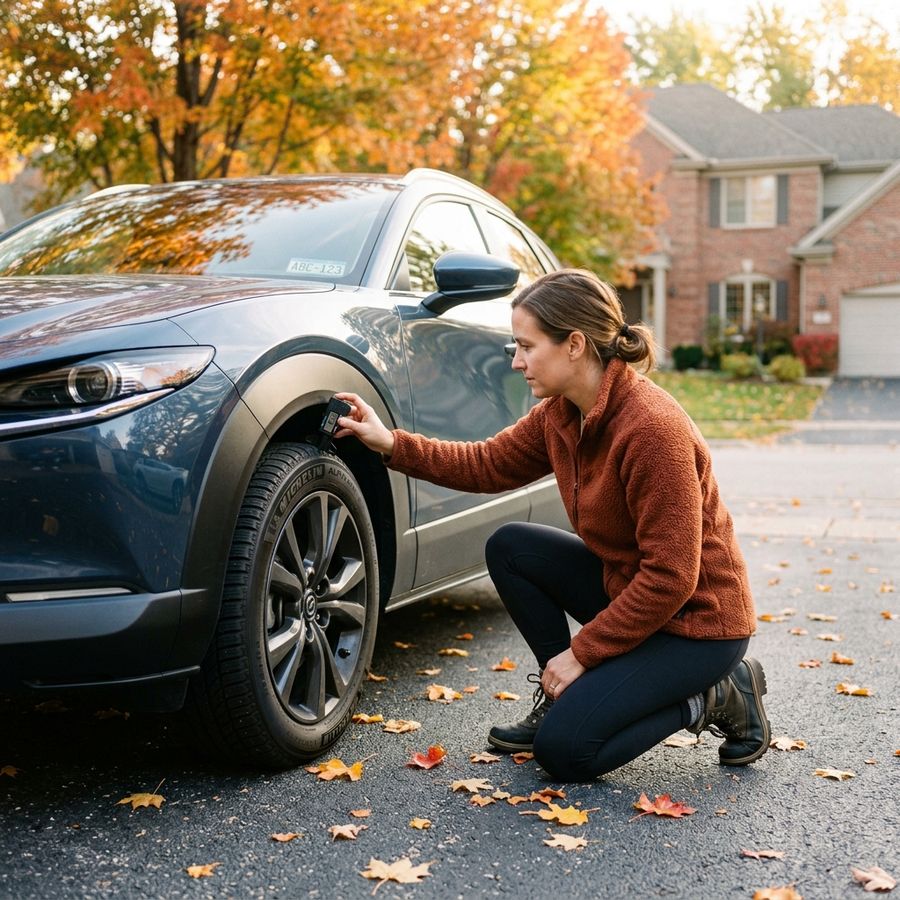
Suburban commuting through Boardman Township during early fall brings fluctuating morning temperatures that cause thermal contraction inside tires, dropping inflation pressure by roughly 1 PSI for every 10°F decrease in outside temperature. A comprehensive seasonal check includes measuring tread depth to confirm at least 4/32 inch remains for clearing standing water, testing HVAC defroster output, and evaluating battery reserve capacity. Inspecting serpentine belts and radiator hoses early prevents minor rubber cracking from turning into a sudden breakdown on cold mornings.
Long-Term Maintenance Value and Component Protection
Q: Does regular seasonal maintenance save money on long-term vehicle repair costs?
A: Completing low-cost seasonal maintenance prevents major mechanical component failures, saving vehicle owners thousands of dollars in major repair bills over the lifespan of a car. Routine checks identify minor issues—such as contaminated brake fluid, weak belt tensioners, or low coolant levels—before they escalate into engine overheating or severe brake system damage. Preventing cascading mechanical failures preserves total vehicle value and ensures long-term operational dependability.
Drivers navigating the urban hills around Youngstown rely heavily on responsive brakes and healthy suspension components during wet weather, where timely pad replacements and fluid flushes directly shorten stopping distances and prevent rotor scoring. Staying proactive with routine fluid changes and seasonal tire rotations maintains peak fuel economy and extends tire tread life across every season.
© 2026 Ken Ganley Buying Center Boardman. All rights reserved.
While every effort has been made to ensure the accuracy of the information displayed on this website, the vehicle values, offers, and listings shown may not reflect all accurate vehicle details or current market conditions. Vehicle photos may be representative only and may not match the actual vehicle. All offers, appraisals, and transactions are subject to vehicle inspection, verification, and prior sale. Final purchase amounts may vary based on condition, equipment, history, and market factors. Please contact the Dealership for complete details and confirmation.