Selling Your Car Before Winter: Expert Q&A with Andrew Wilding
Used car values generally decline during late autumn and winter due to reduced buyer foot traffic, holiday budget shifts, and seasonal preference changes away from two-wheel-drive vehicles. Today, we speak with Andrew Wilding, Customer Relations Manager at Ken Ganley Buying Center Boardman, who brings 14 years of automotive appraisal experience to explain how seasonal valuation cycles work and how vehicle owners can protect their trade-in equity before severe weather arrives.
Q: Why do used car prices drop during late autumn and winter?
A: Used car prices drop in late autumn and winter primarily due to a seasonal decrease in retail buyer traffic, shifting consumer spending toward holiday expenses, and declining demand for non-winterized vehicle configurations. Kelley Blue Book research indicates that retail pre-owned prices follow wholesale auction trends with a lag of roughly 6 to 8 weeks, meaning autumn wholesale adjustments create a noticeable downward trend in retail values as winter approaches. Furthermore, buyer interest in rear-wheel-drive sedans and sports cars compresses significantly once temperatures drop, impacting overall market momentum across those categories.
Sellers looking to transition out of a daily commuter around Youngstown often see sharper price adjustments on front-wheel-drive sedans once November arrives. When retail traffic slows during the holiday season, dealership carrying costs rise, leading professional buyers to adjust wholesale acquisition offers accordingly. Owners planning to upgrade can check our used vehicle inventory to gauge current market availability, visit our Boardman location for a physical evaluation, or give our appraisal team a quick call to discuss immediate vehicle timing.
Q: What do recent Ohio listing prices suggest about whether a seller should consider selling before winter?
A: Recent listing data across Ohio shows that while broader vehicle depreciation continues steadily through autumn, specific utility vehicle prices remain relatively stable, meaning sellers do not need to panic but may choose to act before winter weather sets in. Market tracking of pre-owned 2024 Ford Maverick models in Ohio revealed a median listing price of $29,103 in October 2026, reflecting a modest 1.1% adjustment compared to late 2025. This demonstrates that well-maintained utility vehicles hold solid equity, making a pre-winter sale advantageous for locking in value before seasonal mileage and road conditions add wear.
Rather than moving quickly into a low offer, vehicle owners benefit from reviewing real-time market data for their exact trim and odometer reading. Trim configuration and total mileage drive listing spreads far more than calendar months alone, with low-mileage examples commanding significant premiums over high-mileage counterparts. Sellers can start by exploring our buying center homepage to see how physical market evaluations help establish a firm baseline for their vehicle's current equity before seasonal weather impacts cosmetic presentation.
Q: Do online car buyers pay top market rates during winter?
A: Online car buying platforms generally maintain nationwide algorithmic cash offers, but their automated models often adjust downward for regional winter logistics, physical reconditioning risks, and seasonal holding costs. While national algorithms flatten local demand spikes, they frequently apply regional transport deductions or conservative condition buffers on vehicles located in cold-weather states to offset shipping delays and snow-related inspection challenges.
A physical appraisal by a local specialist factors in immediate regional demand and specific vehicle condition without deducting for national transport logistics or third-party flatbed shipping. In-person evaluations account for premium localized features like working all-wheel-drive systems, heated seating packages, and documented service history that automated online algorithms frequently overlook. Owners can evaluate the differences between automated national algorithms and physical evaluations by reviewing our breakdown on comparing national online buyers with a local buying center to ensure they receive full market value.
Q: Are SUV and truck values higher in the winter?
A: All-wheel-drive SUVs, crossovers, and four-wheel-drive trucks frequently maintain higher resale values during late autumn and early winter because regional consumer demand for winter-capable transportation increases significantly. As drivers prepare for hazardous road conditions, inventory for clean, multi-passenger utility vehicles tightens, allowing sellers of these specific vehicle types to command strong market pricing relative to two-wheel-drive sedans.
"Sellers are often surprised to learn that an all-wheel-drive crossover can hold peak equity right up to the first snowfall, while a rear-wheel-drive coupe loses momentum weeks earlier."
When owners bring in light-duty trucks or compact crossovers for appraisal in October, they are often surprised by how strongly seasonal demand supports their trade-in value compared to spring figures. The increased demand for ground clearance, winter traction, and functional cargo space creates a favorable selling environment for truck and SUV owners looking to liquidate or trade up before the end of the calendar year.
Q: What is the financial cost of storing a car through winter instead of selling?
A: Storing a car through winter typically costs vehicle owners between $500 and $1,500 in combined auto insurance premiums, maintenance preservation, ongoing loan interest, and standard calendar depreciation. Even when parked indoors, a vehicle loses roughly 2% to 5% of its market value over a four-month winter period simply due to advancing age and model year transitions, while battery degradation and tire flat-spotting can create unexpected mechanical expenses come spring.
Continuous registration and comprehensive insurance coverage remain necessary while storing a financed or titled vehicle, generating recurring monthly expenses without providing transportation utility. Additionally, winter storage in northern climates exposes body panels and brake components to ambient humidity and temperature fluctuations that can cause surface rust on exposed metal. Liquidating an unused vehicle before winter eliminates these holding expenses while converting latent vehicle equity into immediate cash reserves.
Q: How should Boardman Township owners check whether selling before winter is financially worthwhile?
A: Vehicle owners should evaluate whether selling before winter makes financial sense by obtaining a professional, inspection-backed appraisal and weighing immediate cash equity against four months of upcoming vehicle ownership expenses. In Boardman Township, where daily suburban commutes along commercial corridors put heavy wear on tires, brakes, and underbody components during winter months, getting a current appraisal establishes a clear financial benchmark before cold weather adds physical wear and seasonal depreciation.
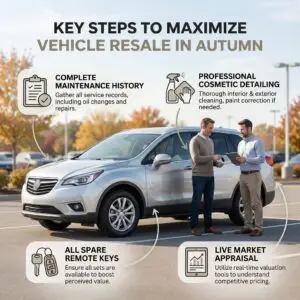
Gathering factory maintenance records, verifying tire tread depth, and detailing the vehicle cabin elevates an appraisal presentation from fair to good condition, which Consumer Reports notes can significantly increase net trade-in value. Comparing a firm written offer against remaining loan balances and projected winter insurance costs gives owners complete clarity on whether selling now yields a higher net return than waiting for the spring market rebound.
Q: Should you sell your car before winter or wait until spring?
A: Deciding whether to sell before winter or wait until spring depends primarily on your vehicle's drive configuration, its current mechanical condition, and your willingness to carry ownership costs through the winter season. While Kelley Blue Book indicates that peak used-car buying activity nationally occurs in March driven by tax refund liquidity, holding a vehicle until spring incurs four months of insurance, potential salt corrosion exposure, and natural depreciation that often erodes any anticipated spring price premium.
Sellers owning two-wheel-drive sedans, convertibles, or aging high-mileage vehicles typically achieve better financial outcomes by selling before winter, avoiding seasonal demand drops and cold-weather mechanical risks. Conversely, owners of clean, low-mileage all-wheel-drive crossovers may see steady demand into early winter, though completing the transaction before major snowstorms arrive simplifies logistics, avoids pre-sale detailing headaches, and secures verified cash payment immediately.
Q: How does Ken Ganley Buying Center help sellers maximize vehicle value before winter?
A: Ken Ganley Buying Center Boardman helps vehicle owners maximize their payout by providing cash offers subject to inspection and current market conditions based on real-time local market data without hidden reconditioning deductions or seasonal delays. Our physical appraisal team evaluates any make or model on the spot, processes active loan payoffs directly with financial institutions, and completes all state title paperwork so sellers can capture peak pre-winter equity without the safety risks or delays of private listings.
Our straightforward process ensures you receive payment after final verification, whether you owe money on an active loan or own your vehicle outright. Drivers ready to explore their options can stop by our Boardman showroom address for an in-person evaluation, speak directly with our appraisal team by calling (330) 427-3656, or review our Ohio vehicle selling guide to turn your car into cash today.
© 2026 Ken Ganley Buying Center Boardman. All rights reserved.
While every effort has been made to ensure the accuracy of the information displayed on this website, the vehicle values, offers, and listings shown may not reflect all accurate vehicle details or current market conditions. Vehicle photos may be representative only and may not match the actual vehicle. All offers, appraisals, and transactions are subject to vehicle inspection, verification, and prior sale. Final purchase amounts may vary based on condition, equipment, history, and market factors. Please contact the Dealership for complete details and confirmation.