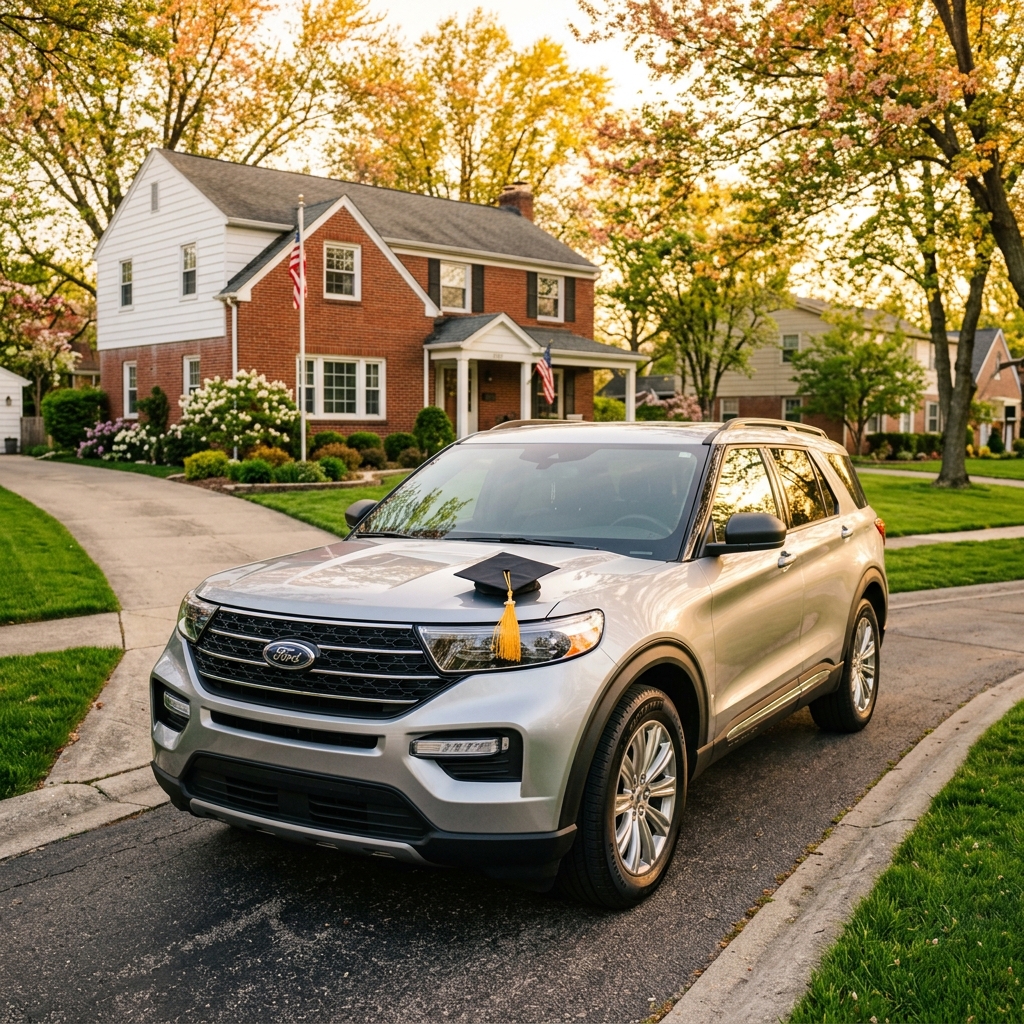
Expert Q&A: The Graduation Pivot and Selling Your Vehicle for Education Funds
As graduation season approaches, many families find themselves navigating the significant transition from high school to higher education or trade schools. To help clarify how an underutilized vehicle can be converted into a powerful financial asset for this next chapter, we sat down with an expert from Ken Ganley Buying Center Boardman. With years of experience in the local automotive market, he provides a professional perspective on maximizing resale value, navigating Ohio title laws, and ensuring a safe transaction. Readers will gain actionable insights into valuation tools, payment security, and the logistical steps required to turn a car into tuition coverage.
Q: How does the “graduation pivot” work for families looking to fund their student’s education?
A: When I speak with families in the Mahoning Valley, the conversation often centers on the practical shift in transportation needs once a student heads off to college. Many students moving into dorms find that having a vehicle on campus is either prohibited for freshmen or simply unnecessary due to walkable campuses. This creates a unique opportunity to liquidate a depreciating asset and convert it into liquid capital for tuition, housing, or books. At Ken Ganley Buying Center Boardman, we often see parents realize that the extra car sitting in the driveway represents thousands of dollars that could be better served in an education fund or a 529 savings plan.
A: The process starts with a realistic assessment of the vehicle’s role in your current lifestyle. If you find that the car is primarily used for short trips that could be consolidated, selling it can immediately eliminate recurring costs like insurance premiums, registration fees, and preventative maintenance. For those ready to move forward, you can sell your car directly to us to bypass the weeks of waiting often associated with private listings. If you prefer an in-person consultation, you can easily find our Boardman location right on Market Street. For a quick preliminary discussion about your vehicle’s specific features or condition, feel free to give our team (330) 427-3656 a call anytime during business hours.
Q: In what specific ways does selling an extra vehicle contribute to college or trade school costs?
A: It is important to view a vehicle as a significant piece of your overall financial portfolio rather than just a mode of transport. Converting a car into cash provides a non-debt source of funding, which is critical when trying to minimize student loans. According to IRS Publication 463, the tax implications of a sale are generally straightforward for personal-use vehicles, though it is always wise to consult a tax professional if the car was ever used for business. By selling, you are essentially taking the equity built up in the machine and applying it to an investment with a much higher long-term return: a degree or certification. This is particularly relevant for families in Youngstown, where the resilient community spirit often prioritizes practical, debt-conscious paths toward career advancement.
A: Beyond the initial sale price, the “shadow savings” of not owning the extra vehicle can add up to hundreds of dollars per month. These funds can be redirected toward a student’s monthly allowance or specialized equipment needed for trade programs. We take pride in being a transparent partner in this process, and we encourage local families to see what their neighbors have to say by reading our recent customer reviews. Our goal is to ensure that every seller feels supportive and informed, knowing that the value they receive for their vehicle is going toward a meaningful family milestone.
Q: Why is there usually a gap between private party values and dealer trade-in offers?
A: This is one of the most common points of confusion for sellers. Kelley Blue Book defines the Private Party Value as the amount an individual might pay another individual, which is typically higher because it represents a retail-level transaction. Conversely, a Trade-In Range is lower because a dealership must account for reconditioning costs, marketing expenses, and the risk of holding the inventory. While a private sale might net more profit, it also requires a significant investment of time, including detailing the car, managing listings, and meeting with strangers for test drives. For a deeper dive into market trends and how these values fluctuate seasonally, I recommend checking out our latest automotive articles.
“After fifteen years, the question I get most often is the one nobody asks until they’re already in the car.”
A: When evaluating your car’s worth, Kelley Blue Book suggests using online valuation tools to establish a baseline and then cross-referencing that with local listings for similar makes and models. Factors such as all-wheel drive or heated seating can carry more weight in the Mahoning Valley due to our winter climate. At our buying center, we aim to bridge that gap by offering competitive, real-time cash offers that reflect the current market demand without the typical “trade-in” pressure found at traditional dealerships. We focus on providing a straightforward, professional experience that respects the seller’s time and financial goals.
Q: What are the legal requirements for selling a vehicle in Ohio, specifically regarding the title?
A: Ohio law is very specific when it comes to transferring vehicle ownership. The most critical step is that the vehicle title must be notarized. Both the seller and the buyer must sign the document in the presence of a notary public. If you fail to do this correctly, the Bureau of Motor Vehicles will not recognize the transfer, leaving you legally liable for the vehicle. I always remind sellers to ensure the odometer reading is accurately recorded on the title at the time of the signature. If you have questions about specific documentation or unusual title situations, such as a deceased co-owner or an out-of-state title, we have compiled a list of common answers in our frequently asked questions section.
A: In addition to the notarized title, you should provide the buyer with a bill of sale that outlines the purchase price and the “as-is” nature of the transaction. This protects you from future claims regarding the vehicle’s mechanical condition. It is also a best practice to remove your license plates immediately after the sale is finalized. In Ohio, the plates stay with the owner, not the car. This prevents you from being associated with any traffic violations or parking tickets the new owner might incur before they register the vehicle in their own name.
Q: How can a seller ensure the payment they receive is safe and legitimate?
A: Safety should always be the priority when dealing with high-value transactions. Kelley Blue Book recommends clearly defining acceptable payment forms in your listing to deter scammers. For significant amounts, a cashier’s check or a certified check is generally safer than carrying large sums of cash. However, even these can be forged. I often suggest that the buyer and seller meet at the buyer’s bank so the seller can witness the check being issued by a bank teller. This provides an extra layer of verification and ensures the funds are actually available. If you find the prospect of managing these logistics overwhelming, you can always reach out to our team to discuss a direct, secure purchase where the payment is guaranteed and handled professionally.
A: Another modern option is using a secure, touchless online payment service or an escrow service, though these often come with small fees. Avoid any buyer who insists on using a personal check or asks to pay in installments. Once the title is signed over, you lose your leverage, so the payment must be fully verified before the keys change hands. By selling to a reputable institution like ours, you eliminate the risk of fraud or payment reversals, which provides significant peace of mind when those funds are earmarked for your student’s future.
Q: What final steps can a seller take to maximize the car’s value before the sale?
A: Presentation is everything in the used car market. A professional car detail can often increase the perceived value of the vehicle by more than the cost of the service itself. Beyond aesthetics, having a complete folder of maintenance records proves to the buyer that the car was well cared for. While a CARFAX report is not a legal requirement for a private sale, providing one voluntarily builds immediate trust and can justify a higher asking price. If you’re ready to see what your vehicle is worth in its current condition, stop by our Boardman showroom for a professional appraisal. We can often complete the process in under an hour, providing you with a check the same day.
A: Finally, make sure all small repairs are addressed. Replacing a burnt-out bulb or fixing a minor chip in the windshield removes “negotiation points” that a buyer might use to talk you down. We understand that this sale is about more than just a car; it’s about supporting your family’s next adventure. If you have any last-minute questions about how we evaluate specific features like safety technology or fuel efficiency, please call us at (330) 427-3656. We are proud to support the Youngstown community and help local families make the most of their automotive investments during these important life transitions.
While every effort has been made to ensure the accuracy of the information displayed on this website, the vehicle values, offers, and listings shown may not reflect all accurate vehicle details or current market conditions. Vehicle photos may be representative only and may not match the actual vehicle. All offers, appraisals, and transactions are subject to vehicle inspection, verification, and prior sale. Final purchase amounts may vary based on condition, equipment, history, and market factors. Please contact the Dealership for complete details and confirmation.