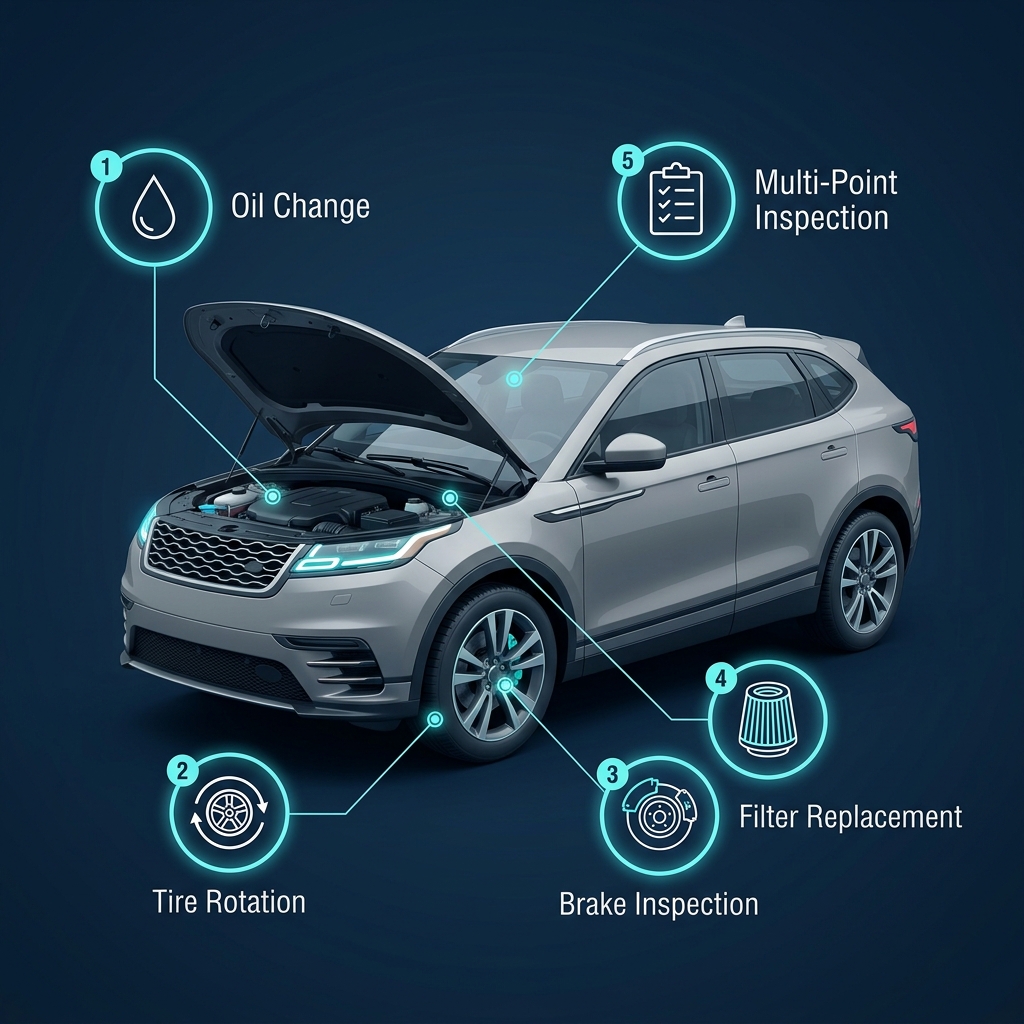
The most common vehicle maintenance services are routine engine oil and filter changes, tire rotations, brake inspections, multi-point vehicle checks, and filter replacements. These preventive services preserve mechanical reliability, maintain fuel economy, and catch component wear before minor deterioration turns into major system failures. Following a consistent maintenance schedule protects engine components, braking performance, and overall vehicle safety.
Scheduled preventive maintenance differs fundamentally from mechanical repair. Maintenance involves planned tasks—such as replacing engine oil, swapping cabin air filters, and rotating tires—designed to keep systems operating within manufacturer parameters. Mechanical repair occurs after a component like an alternator, water pump, or brake caliper suffers a complete or partial operational failure. Keeping up with routine maintenance avoids unexpected breakdowns and maintains the long-term value of your vehicle.
Table of Contents
- What Is Included in a Standard Multi-Point Vehicle Inspection and Fluid Check?
- What Exactly Happens During a Routine Oil Change and How Is Viscosity Selected?
- What Happens During a Tire Rotation and Brake System Maintenance Visit?
- How Frequently Should You Schedule Routine Vehicle Maintenance in Boardman Township?
- Common Vehicle Service Questions Answered
- Keeping Your Vehicle Reliable with Scheduled Care
What Is Included in a Standard Multi-Point Vehicle Inspection and Fluid Check?
A standard multi-point vehicle inspection evaluates critical safety and operational components, including brake pad thickness, tire tread depth, battery health, belt condition, and major fluid levels. Technicians check engine oil, coolant, brake fluid, transmission fluid, and power steering fluid for correct operating volume, clarity, and contamination.
A comprehensive inspection provides a complete evaluation of the vehicle’s underlying health through measurable checks:
- Engine and Drivetrain Systems: Inspecting belts, hoses, intake connections, and housing gaskets for cracking, fraying, or active oil leaks.
- Braking Components: Measuring inner and outer brake pad thickness, examining rotor surface condition, and checking hydraulic lines for corrosion or dampness.
- Tires and Suspension: Checking tread depth across three points on each tire, adjusting inflation pressure, and testing shocks, struts, ball joints, and tie rod ends for looseness.
- Electrical and Battery: Testing battery cold-cranking amps, checking terminal connections for oxidation, and confirming exterior lighting function.
- Underbody and Safety: Inspecting steering linkages, exhaust heat shields, frame crossmembers, and wiper blade integrity.
When evaluating fluid condition, mechanics look beyond simple fluid height on a dipstick. Dark, opaque engine oil suggests heavy carbon loading, while burnt-smelling transmission fluid indicates thermal breakdown. In urban environments like Youngstown, where stop-and-go commuting along the Mahoning Valley elevates engine bay temperatures, regular fluid evaluations prevent severe internal component scoring. Comparing service protocols through our local service guidance against national chain practices ensures your vehicle receives thorough, measurement-backed care rather than simple visual pass-throughs.
What Exactly Happens During a Routine Oil Change and How Is Viscosity Selected?
A routine oil change drains degraded engine oil, replaces the oil filter, inspects the pan and drain plug for leaks, and refills the crankcase with fresh oil matching the manufacturer’s exact viscosity specification. Modern synthetic engine oil lubricates moving parts, reduces internal friction, cools internal components, and sweeps combustion debris into the filter.
Selecting the proper oil viscosity grade is essential for internal engine protection. Oil viscosity labels, such as 0W-20 or 5W-30, define how fluid flows at specific temperatures:
| Viscosity Grade | Cold-Flow Rating (Winter) | Operating Temp Viscosity (100°C) | Common Engine Application |
|---|---|---|---|
| 0W-20 | Excellent low-temp flow (0W) | Lower viscosity (20) for efficiency | Modern fuel-efficient engines |
| 5W-30 | Moderate low-temp flow (5W) | Higher viscosity (30) for film strength | Turbocharged or higher-load engines |
| 10W-40 | Stiffer cold flow (10W) | Heavy thermal protection (40) | Older or high-mileage engines |
The number before the “W” indicates cold-weather flow capability during cold starts, while the trailing number represents film thickness at normal operating temperatures. Using an incorrect oil viscosity can restrict tight-tolerance oil passages, reduce fuel efficiency ratings, or cause variable valve timing actuators to function improperly.
Full synthetic oil changes are commonly performed every 5,000 to 7,500 miles, whereas conventional oil typically requires replacement every 3,000 to 5,000 miles. Adhering to the factory oil specification listed in the owner’s manual maintains oil film strength and protects sensitive engine components.
What Happens During a Tire Rotation and Brake System Maintenance Visit?
A tire rotation changes the physical position of each wheel on the vehicle to equalize tread wear, maximize tire longevity, and maintain consistent steering traction. During a brake maintenance visit, technicians measure remaining pad material, inspect rotor surfaces, verify caliper slide pin movement, and check hydraulic fluid integrity.
Front tires undergo higher cornering forces, weight transfer, and steering scrub, causing the front tread edges to wear faster than the rear tires. Rotating tires every 5,000 to 8,000 miles redistributes these physical forces across all four tires. Common rotation configurations include:
- Forward Cross Pattern: Front tires move straight to the rear, while rear tires cross over to the opposite front locations (standard for front-wheel-drive vehicles).
- Rearward Cross Pattern: Rear tires move straight to the front, while front tires cross over to the opposite rear locations (standard for rear-wheel-drive and four-wheel-drive vehicles).
- X-Pattern: All four tires cross diagonally from front to rear and side to side.
Brake maintenance focuses on friction components and hydraulic performance. Friction pads require replacement when lining thickness wears down to approximately 3 millimeters or less. Rotors are inspected for heat spots, deep grooves, or surface warping that causes pedal pulsation. Technicians also test brake fluid for water absorption; because brake fluid is hygroscopic, excess moisture lowers the fluid boiling point and degrades stopping performance, making fluid flushes necessary roughly every 2 to 3 years.
How Frequently Should You Schedule Routine Vehicle Maintenance in Boardman Township?
Routine vehicle maintenance should be scheduled every 5,000 to 7,500 miles or every six months, whichever comes first, following the guidelines in your owner’s manual. Short trips, winter road salt, and idling qualify as severe driving conditions, which shorten the recommended service intervals.
Daily suburban driving throughout Boardman Township—marked by frequent cold starts and short errands along commercial corridors—places extra demand on engine oil, battery reserves, and braking systems. Vehicles operating under these conditions benefit from checking air filters every 10,000 to 15,000 miles and testing 12-volt battery health annually once the battery reaches three years of age.
Common Vehicle Service Questions Answered
Q: How often should engine air filters and cabin air filters be replaced?
Engine air filters are typically replaced every 15,000 to 30,000 miles, while cabin air filters are usually changed every 10,000 to 15,000 miles. Driving in dusty areas or through heavy seasonal pollen restricts airflow faster, reducing HVAC efficiency and engine performance.
Q: What are the primary warning signs that a vehicle needs immediate brake service?
Key warning signs include high-pitched squealing, metallic grinding sounds during braking, steering wheel vibration while stopping, or a pedal that feels soft or spongy. Addressing these symptoms early prevents rotor damage and preserves stopping control.
Q: How long does a typical 12-volt automotive battery last before needing replacement?
Automotive batteries generally last 3 to 5 years under normal operating conditions. Summer heat accelerates internal grid corrosion, while winter cold increases the power required to start the engine, making annual load tests essential after the third year.
Q: Why is wheel alignment necessary when installing new tires?
Proper wheel alignment ensures tires contact the road at precise angles, preventing rapid, uneven tread wear and vehicle pulling. Checking alignment annually or with new tire installation protects your tire investment and maintains handling balance.
Q: How do technicians determine if brake fluid needs to be flushed?
Technicians use electronic testers or moisture test strips to measure water concentration and copper content in the fluid reservoir. When moisture content exceeds safe percentage limits, the fluid requires a flush to prevent internal corrosion and brake fade.
Keeping Your Vehicle Reliable with Scheduled Care
Establishing a consistent maintenance schedule is the most effective way to protect vehicle safety, efficiency, and overall lifespan. Routine oil changes, tire rotations, brake checks, and fluid inspections prevent minor mechanical wear from turning into major repairs. Following factory service intervals keeps critical vehicle systems operating dependably throughout daily commutes and seasonal weather shifts.
© 2026 Ken Ganley Buying Center Boardman. All rights reserved.
While every effort has been made to ensure the accuracy of the information displayed on this website, the vehicle values, offers, and listings shown may not reflect all accurate vehicle details or current market conditions. Vehicle photos may be representative only and may not match the actual vehicle. All offers, appraisals, and transactions are subject to vehicle inspection, verification, and prior sale. Final purchase amounts may vary based on condition, equipment, history, and market factors. Please contact the Dealership for complete details and confirmation.