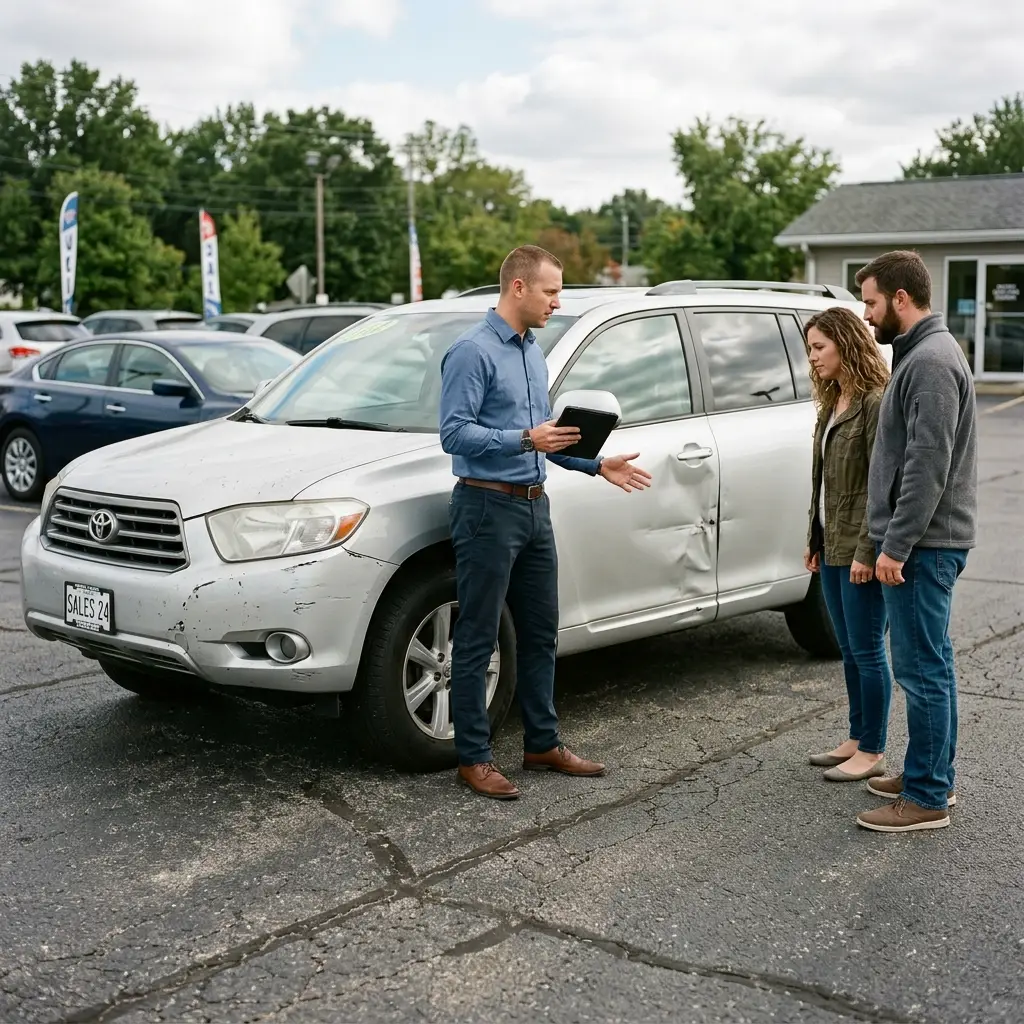
Expert Interview: Selling a Damaged Vehicle at Ken Ganley Buying Center Boardman
In this exclusive Q&A session, we sit down with our Sales Consultant at Ken Ganley Buying Center Boardman to discuss the complexities of trading in or selling a vehicle with significant wear or accident history. With years of experience helping local drivers navigate the appraisal process, our expert provides transparent advice on how physical and mechanical damage impacts market value. Readers will gain a clear understanding of how professional evaluations work and why a damaged car still holds significant potential as a trade-in toward a newer, more reliable vehicle.
Q: Why does Ken Ganley Buying Center Boardman accept vehicles that have sustained significant damage?
A: That is a question I hear quite frequently from local drivers who might feel a bit discouraged by the condition of their current car. At Ken Ganley Buying Center Boardman, we believe that every vehicle has inherent value, regardless of whether it has a few dents from a grocery store parking lot or more substantial mechanical issues. Our goal is to provide a supportive and straightforward environment where families can transition out of a vehicle that no longer meets their safety or reliability needs. We have the resources and the professional network to handle reconditioning at a wholesale level, which means we can often see the potential in a car that a private buyer might simply walk away from.
I always remind our neighbors that we want to buy your car regardless of the make or model, and that includes those with a bit of a rough history. If you are starting your research from home, you can easily call (330) 427-3656 to speak with our team about your specific situation. We aim to take the stress out of the equation so you can focus on finding a vehicle that fits your suburban lifestyle. When you are ready for a professional assessment, you can find our Boardman location right on Market Street, where we handle these evaluations daily with complete transparency.
Q: Will a dealership actually buy my car if it has visible body damage, or will I be turned away?
A: It is a common misconception that a car has to be in showroom condition to be considered for a purchase or trade-in. I tell shoppers all the time that we absolutely buy cars with body damage. Whether it is a cracked bumper, a shattered taillight, or deep scratches along the door panels, these are all factors we can account for during our appraisal. We use a standardized process to determine what it would cost to bring that vehicle back to a retail-ready state. Because we are a high-volume center, we can often absorb those repair costs more efficiently than an individual could at a retail body shop.
If you are curious about how we have helped others in similar situations, I encourage you to read through some of the latest customer feedback left by people right here in the Mahoning Valley. Our team is dedicated to being Boardman’s trusted car buying center, and that means being honest about what we can offer for a damaged vehicle. You can even start the process online by using our direct vehicle purchase tool to provide us with the details of your car’s condition. We find that being upfront about the damage from the start helps us give you the most accurate and fair offer possible without the games you might find elsewhere.
Q: How much does body damage typically reduce the actual trade-in value of a vehicle?
A: The impact on value really depends on the severity and the type of damage we are looking at. I usually explain it to families as a calculation based on the wholesale cost of repairs. For instance, minor cosmetic issues like small door dings or light paint chips might only result in a deduction of a few hundred dollars. However, if there is structural damage to the frame or if the **airbags** have deployed, the deduction will be much more significant. In cases where repair costs reach **60% to 100% of the car’s pre-crash value**, insurance companies often issue a **salvage title**, which can reduce the market value by as much as 50% compared to a clean-title equivalent.
“The goal isn’t to find a perfect car, but to provide a fair path forward for families who need to turn a damaged vehicle into a reliable one.”
We always suggest checking independent resources like **Kelley Blue Book (KBB)** or **Consumer Reports** to get a baseline for your car’s value in different conditions. We also maintain a helpful automotive resource guide where we discuss market trends and how condition affects resale. It is important to remember that while damage does reduce the offer, the convenience of selling to a professional center often outweighs the hassle of trying to find a private buyer willing to take on a project car. We prioritize transparency, so we will walk you through exactly how the damage influenced our final number.
Q: How does the presence of body damage change the way you perform a trade-in assessment?
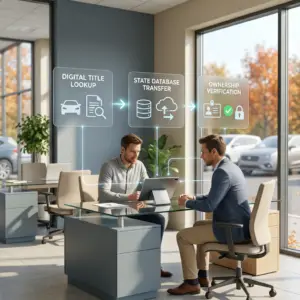
A: When a vehicle arrives with visible damage, our assessment becomes a bit more technical. We aren’t just looking at the surface; we are checking to see if that damage has affected the underlying safety or mechanical integrity of the car. For example, a dent in the fender is one thing, but if that impact shifted the alignment or damaged the **suspension components**, that changes the safety profile for the next owner. We use tools like the **National Motor Vehicle Title Information System (NMVTIS)** to verify the car’s history and ensure there aren’t hidden issues like prior **flood damage** that could compromise the vehicle’s long-term reliability.
I find that most buyers appreciate this level of detail because it builds trust. If you have specific questions about what we look for during an inspection, our frequently asked questions page covers many of the common concerns regarding vehicle condition and title status. We want you to feel confident that the offer you receive is based on real-world data and a thorough physical check. This is especially important for commuters who rely on their vehicles for a daily drive into Youngstown, where vehicle safety and performance are non-negotiable during our harsh Ohio winters.
Q: If my car isn’t currently running, do I have to pay to tow it to the dealership just to get an offer?
A: That is a logistical hurdle that stops a lot of people from selling, but it doesn’t have to be that way. While a physical inspection is necessary for a final, binding offer, we can often provide a preliminary estimate based on detailed photos and a description of the mechanical issues. If the vehicle is located nearby, such as in Downtown Youngstown, we can sometimes coordinate a way to view the car or discuss a pickup if the offer is accepted. We want to skip the hassle of selling privately, and that includes helping you figure out the best way to get a non-running vehicle off your driveway and into our inventory.
The best first step is to reach out to our staff directly to explain the condition of the vehicle. We have dealt with everything from engine failures to transmission issues, and we can guide you on whether it makes sense to move the vehicle to our lot. Our team understands the practical concerns of busy family life, and we aim to be as flexible as possible. By providing us with the **VIN**, we can also check the **National Insurance Crime Bureau (NICB)** database to streamline the paperwork before the car even arrives, making the transition much smoother for you.
Q: What are the smartest ways to prepare a damaged car for sale, and what if I’ve lost the title?
A: When preparing a damaged vehicle, I tell my customers to focus on “low-cost, high-impact” prep. You don’t need to spend thousands at a body shop. Instead, focus on a thorough cleaning, removing personal items, and perhaps addressing small issues like a cracked windshield or a burnt-out bulb. These small steps show that the vehicle was cared for, which can actually improve the overall impression during an appraisal. Regarding paperwork, if you have lost your title, you will typically need to obtain a duplicate from the Ohio Bureau of Motor Vehicles. However, we can often help guide you through that process if you are the legal owner, ensuring all legal requirements are met for a smooth transfer.
For those coming from slightly further away, perhaps across the border near Moon Township, having your documentation organized before you arrive is the best way to ensure you get paid the same day. You can always give us a call to double-check which documents are required for your specific situation. When you have your title or the necessary lien release in hand, stop by our Boardman buying center for a final evaluation. We are here to make the process of selling a damaged car as easy as possible, providing fair market offers without the games or waiting periods often found at other dealerships.
While every effort has been made to ensure the accuracy of the information displayed on this website, the vehicle values, offers, and listings shown may not reflect all accurate vehicle details or current market conditions. Vehicle photos may be representative only and may not match the actual vehicle. All offers, appraisals, and transactions are subject to vehicle inspection, verification, and prior sale. Final purchase amounts may vary based on condition, equipment, history, and market factors. Please contact the Dealership for complete details and confirmation.