Selling a Car with Mechanical Issues: An Interview with Ken Ganley Buying Center Boardman
Selling a vehicle that has seen better days can be a stressful experience for many local families, but understanding the trade-in process can turn a mechanical headache into a straightforward financial solution. We sat down with the General Manager at Ken Ganley Buying Center Boardman, to discuss how his team evaluates vehicles with engine, transmission, or suspension problems and why a damaged car still holds significant value in today’s market.
Q: Many people assume that if their car has a major mechanical problem, a dealership won’t even look at it. Do you actually buy vehicles that have significant issues?
A: We absolutely do, and it is a conversation I have with people almost every single day. Whether a vehicle is struggling with a slipping transmission or it simply will not start at all, we are interested in making an offer because we look at the long-term potential of the chassis and the parts rather than just the immediate problem. The community here in Youngstown has a very resilient spirit, rooted in a long history of manufacturing and hard work, and we mirror that by finding the value in every vehicle regardless of its current state. We want to buy your car, and that applies to any make and any model, even those that need a bit of work to get back on the road.
If you are worried about the logistics of getting a non-running car to us, you can always give our team a quick call to discuss the situation. We aim to be as supportive and transparent as possible because we know that a broken-down car is often more than just a mechanical failure; it is a disruption to a family’s daily routine. If you are ready to move on from a vehicle that is taking up space in your driveway, you can find our showroom address easily online to stop by for a professional appraisal and a fair cash offer the same day.
Q: Is there a specific point where a repair is so expensive that a vehicle is officially considered not worth fixing?
A: While there is no single law that defines when a car is “totaled” mechanically, we generally use a 50 percent rule of thumb. If the cost of the repairs starts to approach half of the vehicle’s total market value, it is usually time to consider a replacement. For example, if you are driving an older SUV worth about $8,000 and the shop quotes you $4,500 for a new **transmission** and **differential** work, you are effectively reinvesting money you might never get back. In Downtown Youngstown, where we see a lot of residents balancing the needs of a busy urban lifestyle near the Covelli Centre, that $4,500 is often better spent as a down payment on a newer, more reliable vehicle with a fresh **powertrain warranty**.
We find that transparency in these moments builds the most trust with our neighbors. You can see how we have handled these situations in the past by looking through customer feedback and stories from others in the Mahoning Valley who were in the same boat. Deciding to stop the cycle of endless repairs is a practical choice that prioritizes your family’s budget and safety. When the repair bill starts looking like a down payment, that is the clearest signal that it is time to trade it in and move forward.
Q: Should a car owner bother getting a professional repair estimate before they bring the car to you for an offer?
A: It is actually a very smart move to have a written estimate in hand because it gives us a concrete starting point for the conversation. When a customer knows exactly what is wrong—whether it is a faulty **turbocharger** or a leaking **head gasket**—it removes the guesswork from the appraisal process. I tell shoppers that having that paperwork ready makes them a more informed seller, which aligns perfectly with our goal of providing a supportive and honest buying experience. It helps us justify the offer we make, as we can see the specific technical requirements needed to refurbish the vehicle for its next life.
“After fifteen years, the question I get most often is the one nobody asks until they’re already in the car.”
If you are still in the research phase and trying to decide your next steps, checking out our latest automotive insights can provide more context on market trends and how we evaluate different mechanical conditions. Once you have that estimate and are ready to see what your car is worth in its current state, you can use our online tools to start the selling process from the comfort of your home. We find that when the math is laid out clearly, most families realize that trading in the vehicle “as-is” to a professional center is much safer and faster than trying to manage a complex private sale.
Q: How does the team actually calculate a fair value when a car has something major wrong with it, like a blown engine?
A: The calculation is actually quite logical and grounded in current market data. We start with the clean market value of the vehicle—what it would be worth if it were sitting on a lot in perfect condition—and then we subtract the internal cost of the repairs. Because we have professional resources, our cost to fix a **blown engine** or a **CVT** is often lower than what a retail customer would pay at a standard shop. This allows us to offer more for a damaged car than a private buyer likely would. For a professional commuting from Moon Township toward Pittsburgh, the value of their time is often the biggest factor, and we aim to respect that by providing a quick, data-driven offer.
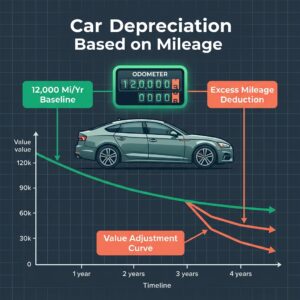
We also have to account for the risk involved in a vehicle that hasn’t been running, as there could be secondary issues we can’t see until the primary repair is finished. Many of the common questions about this process are covered in our frequently asked questions section, which helps explain how we look at factors like mileage and service history alongside the mechanical damage. Families appreciate knowing that we aren’t just pulling a number out of thin air; we are using the same industry standards that define the value of vehicles across the entire region.
Q: What happens if a car can’t pass a state inspection? Is it still legal for you to buy it?
A: Yes, it is perfectly legal for a dealership like ours to purchase a vehicle that fails inspection. In fact, that is one of the best times to bring a car to us. When a vehicle fails for something like **exhaust system leaks** or **advanced safety technology** malfunctions, it can be illegal or at least very difficult to sell it to another private individual who needs to register it for daily use. Because we are a licensed buying center, we can take that vehicle off your hands, handle the necessary paperwork, and assume the responsibility for the repairs or the proper disposal of the car. It takes a huge legal and logistical weight off the owner’s shoulders.
If you find yourself stuck with a vehicle that the local inspection station won’t clear, the best thing you can do is reach out to us directly. You can get in touch with our specialists to explain the specific failure codes or safety issues you are facing. We have seen everything from rusted frames to failed **emissions sensors**, and we are equipped to handle those transitions smoothly. Our goal is to make sure you can walk away with a check in your hand and the peace of mind that the vehicle is being handled by professionals who know the local regulations inside and out.
Q: For someone looking at their own car before bringing it in, what are the “red flag” mechanical items they should be checking?
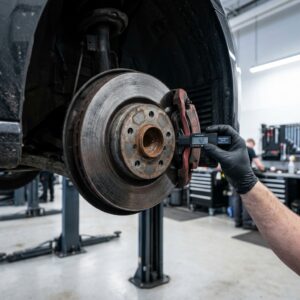
A: I always recommend that people start with a simple visual check of the undercarriage. Look for dripping fluids or heavy oil residue around the **transmission** and **oil pan**, as these often indicate leaks that have been ignored for some time. You should also listen for specific sounds; an **engine misfire** or a loud knocking can signal internal damage that is much more costly than a simple tune-up. Another major one we see often in modern SUVs is the **CVT Judder**, which is a specific shaking sensation during acceleration that often points to a transmission that is nearing the end of its lifespan. These are the “big ticket” items that will most significantly impact the trade-in value.
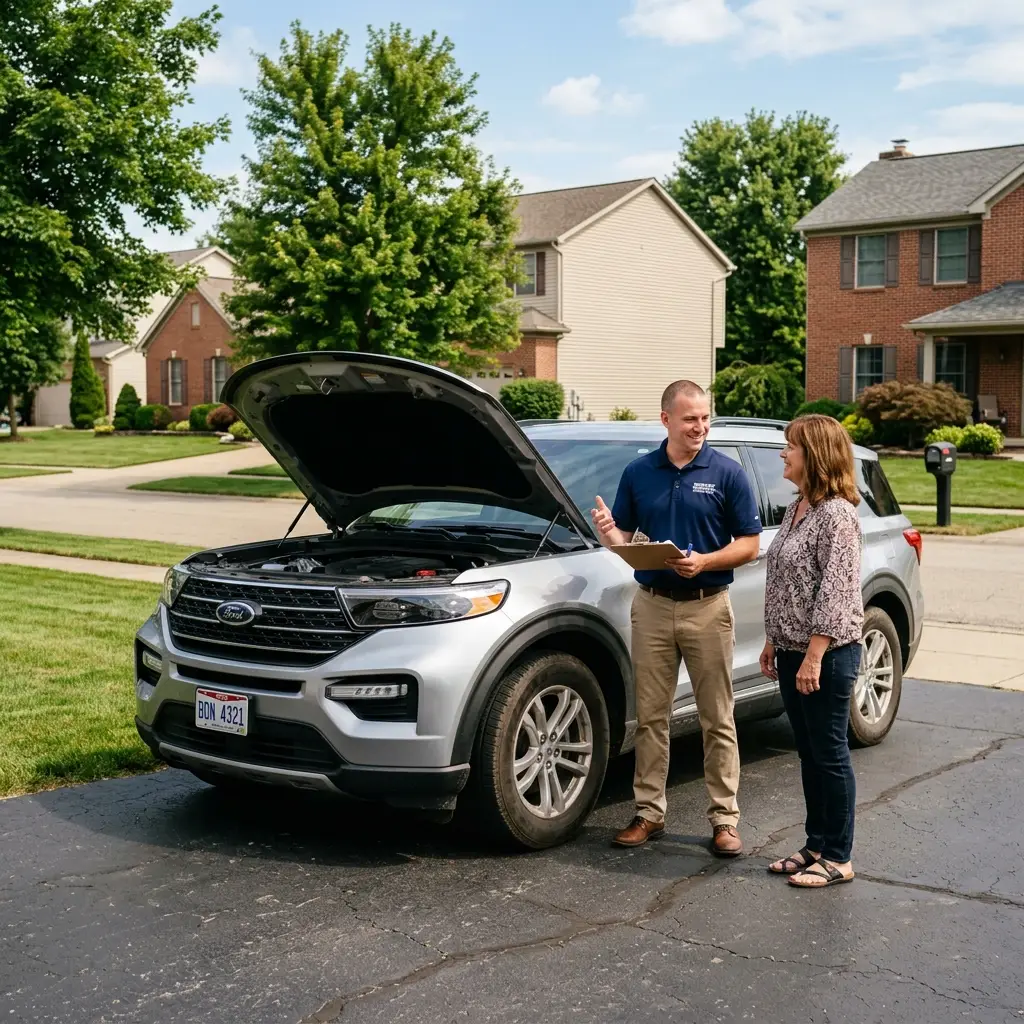
If you notice these issues, don’t feel like you have to hide them. Being upfront helps us move through the appraisal faster. You can reach our team at (330) 427-3656 to describe what you’re seeing and hearing before you even leave your driveway. We are located right here at 7871 Market St in Boardman, and we are ready to help you navigate these mechanical hurdles. Whether the car is barely limping along or needs to be towed in, we are here to provide a professional assessment and a supportive environment for your next automotive move.
Navigating the sale of a vehicle with mechanical problems doesn’t have to be a burden. As previously explained, there is a clear, mathematical path to finding the value in even the most troubled cars. By focusing on transparency and local community needs, Ken Ganley Buying Center Boardman provides a reliable alternative to the stress of private sales or the high costs of unnecessary repairs. If you are ready to trade in your current vehicle for fair market value, our experts are standing by to help you make a clean break from your mechanical issues and get the cash you deserve today.
While every effort has been made to ensure the accuracy of the information displayed on this website, the vehicle values, offers, and listings shown may not reflect all accurate vehicle details or current market conditions. Vehicle photos may be representative only and may not match the actual vehicle. All offers, appraisals, and transactions are subject to vehicle inspection, verification, and prior sale. Final purchase amounts may vary based on condition, equipment, history, and market factors. Please contact the Dealership for complete details and confirmation.