Is It Bad to Let Your Gas Tank Go to Empty? A Comprehensive Guide from Ken Ganley Buying Center Boardman
Running your gas tank down to empty is a question many drivers in Boardman and the surrounding areas—like Austintown Heights, New Franklin, and Hudson—ponder, especially during busy commutes or weekend getaways. While it might seem convenient to wait until the last moment to refuel, understanding the potential risks and impacts on your vehicle can save you costly repairs and unexpected breakdowns. At Ken Ganley Buying Center Boardman, 7871 Market St, Boardman, OH 44512, we’re here to provide clear, practical advice on why keeping your fuel tank adequately filled is essential for your vehicle’s health and your family’s safety.
If you have questions or want to explore how we can assist you with your next vehicle or selling your current one, call us anytime at (330) 427-3656. We are Boardman’s trusted car buying center, offering no waiting, no games — just real cash offers for any make or model.
Table of Contents
- Why Running Your Gas Tank to Empty Can Harm Your Car
Explores the technical reasons behind fuel system damage caused by letting the tank run dry, including sediment buildup and fuel pump strain. - How Low Should You Let Your Fuel Get? Understanding Safe Fuel Levels
Details how far you can safely drive on low fuel, the limitations of fuel gauges, and the impact of local driving conditions in areas like Garfield Heights and Solon. - Real-World Consequences of Running Out of Gas in Boardman and Beyond
Discusses the practical risks of running out of fuel, including stranded situations and costly repairs, with examples from nearby communities. - Best Practices for Fuel Management and Vehicle Care
Offers actionable tips to keep your vehicle’s fuel system healthy and avoid emergencies, with references to industry standards and local climate considerations. - Why Choose Ken Ganley Buying Center Boardman for Your Vehicle Needs
Highlights our commitment to transparency, expert guidance, and fair vehicle buying services tailored for families in Boardman and surrounding townships.
Why Running Your Gas Tank to Empty Can Harm Your Car
When your fuel level drops dangerously low, your vehicle’s fuel system faces several hidden risks that can lead to expensive repairs. In many gasoline-powered vehicles, sediment and debris naturally accumulate at the bottom of the fuel tank over time. This sediment often consists of dirt, rust particles, and residues resulting from the alcohol added to many modern fuels to reduce emissions. When the fuel pump’s intake sits near an almost empty tank bottom, it can start drawing in these contaminants.
This contamination can clog fuel filters, restrict fuel flow, and cause uneven fuel pressure, which compromises engine performance. Over time, persistent exposure to these particles can damage the fuel pump itself, leading to a costly replacement. Repairing or replacing a damaged fuel pump often involves removing the fuel tank—a labor-intensive and expensive process. Our customers from areas like Perry Township and Kent have reported how avoiding low fuel levels prevented such maintenance headaches.
Moreover, running on a near-empty tank forces the fuel pump to work harder to maintain consistent fuel delivery. Unlike many mechanical pumps, your vehicle’s fuel pump is immersed in gasoline to stay cool and lubricated. When the fuel level is low, the pump can overheat, reducing its lifespan and reliability. This is especially important in Ohio’s cold winters, as experienced in communities like New Franklin and Twinsburg, where fuel system strain can be aggravated by temperature extremes.
Understanding these risks underlines why regularly letting your tank run empty is harmful. It’s not just about inconvenience; it’s about protecting the essential components that keep your vehicle running smoothly for your daily trips around Boardman, Akron, or even further afield.
How Low Should You Let Your Fuel Get? Understanding Safe Fuel Levels
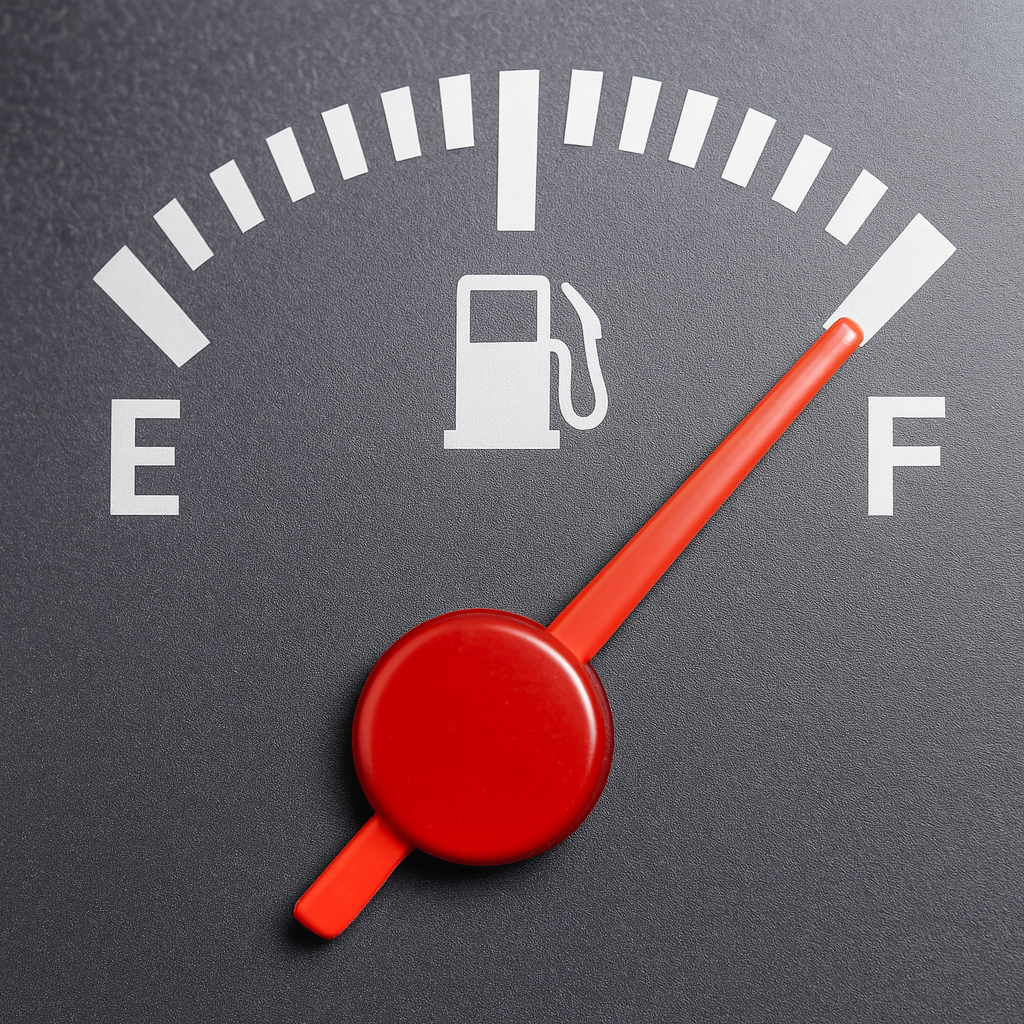
Many drivers wonder, “How low can I safely let my gas tank get?” While modern vehicles often feature a low-fuel warning light and a distance-to-empty (DTE) display, these indicators aren’t always precise. The DTE system estimates remaining miles based on recent driving patterns, fuel efficiency, and tank size but can fluctuate due to traffic, terrain, or weather conditions.
Industry experts recommend refueling when your tank reaches about a quarter full. This buffer helps avoid the risks of sediment intake and fuel pump overheating. For example, drivers commuting between suburbs like Garfield Heights, Maple Heights, and Cleveland Heights should consider local traffic congestion, which can decrease fuel efficiency and require earlier refueling.
In Boardman Township, where many families balance work commutes and school runs, maintaining fuel levels above this threshold ensures reliability and peace of mind. During colder months, retaining at least a quarter tank is even more critical to prevent condensation buildup inside the tank, which can lead to water in the fuel system and corrosion.
Your vehicle owner’s manual will specify your fuel tank capacity, which typically ranges from 12 to 18 gallons for most sedans and SUVs common in the region, including models available at Ken Ganley Buying Center Boardman. Knowing your tank size helps estimate how many miles you can drive once the low-fuel light activates. Generally, the light signals about 1.5 to 2.5 gallons remaining, which equates to roughly 30 to 50 miles under normal driving conditions.
Real-World Consequences of Running Out of Gas in Boardman and Beyond
Running out of gas is more than an inconvenience; it can pose safety risks and lead to costly repairs. Imagine being stuck on a cold winter night in neighborhoods near Austintown Heights or the West Main Street Historic District without fuel. This situation is not only stressful but can also expose drivers and passengers to hazardous conditions.
Beyond the immediate discomfort, when a vehicle runs completely out of gas, the fuel system may draw air into the lines, causing the engine to stall. Restarting after an empty tank often requires a fuel system bleed or reset, which is not always a simple DIY fix. For residents in nearby communities like Solon or Medina City Township, roadside assistance might not be immediately available, prolonging the wait and increasing risk.
Moreover, frequently running your fuel tank empty accelerates wear on the fuel pump and filters, as explained earlier. This can lead to diminished engine performance, reduced fuel efficiency, and eventually, unexpected breakdowns — all costly and inconvenient outcomes. Avoiding this scenario by regular refueling is a practical way to protect your vehicle and your family’s busy lifestyle in Boardman and the greater Mahoning Township area.
Best Practices for Fuel Management and Vehicle Care
Maintaining a healthy fuel system involves a few straightforward habits. First, always plan your refueling to avoid dropping below a quarter tank. This approach prevents sediment intake and keeps your fuel pump submerged and cool. Drivers commuting through areas like North Olmsted, Perry Township, or Medina City Township will appreciate how this simple habit reduces stress and vehicle wear over time.
Second, schedule regular fuel system inspections during your maintenance visits. At Ken Ganley Buying Center Boardman, our service team is ready to help you maintain your vehicle’s fuel system with quality inspections and genuine parts replacements. We encourage customers from neighboring townships such as Hubbard and Liberty Township to book service appointments to ensure peak performance year-round.
Third, if you ever run out of gas, avoid repeatedly trying to restart the vehicle. Instead, call for professional assistance or visit your nearest authorized service center to have the fuel system checked and refilled properly. This caution helps protect your engine and fuel pump from damage caused by air ingestion or sediment clogging.
Finally, winter weather calls for extra caution. Water condensation inside the fuel tank can freeze and block fuel lines, especially in regions like Cleveland Heights or Garfield Heights. Keeping your tank at least half-full during cold months helps minimize this risk, keeping your vehicle reliable during harsh Ohio winters.
Why Choose Ken Ganley Buying Center Boardman for Your Vehicle Needs
At Ken Ganley Buying Center Boardman, we understand the importance of reliability and trust when it comes to vehicles. Whether you’re looking to buy a fuel-efficient SUV perfect for your Boardman commute or want to sell your current vehicle hassle-free, we are here to help. Our team offers any make, any model — get an offer in minutes, reflecting our commitment to transparency and fairness.
We invite you to explore our services online or visit us in person at 7871 Market St for personalized assistance. Families from throughout Boardman Township, including Edinburg Township and Rose Township, trust us for straightforward car buying and selling without the usual wait or games.
If you’re ready to trade in your vehicle or have questions about maintaining your fuel system for optimal performance, give us a call at (330) 427-3656 or use our convenient online resources such as our FAQ’s and Blog for expert advice.
We want to buy your car — any make, any model, paid today. Skip the hassle of selling privately — we’ll buy your car today with no waiting and no games.
© 2026 Ken Ganley Buying Center Boardman