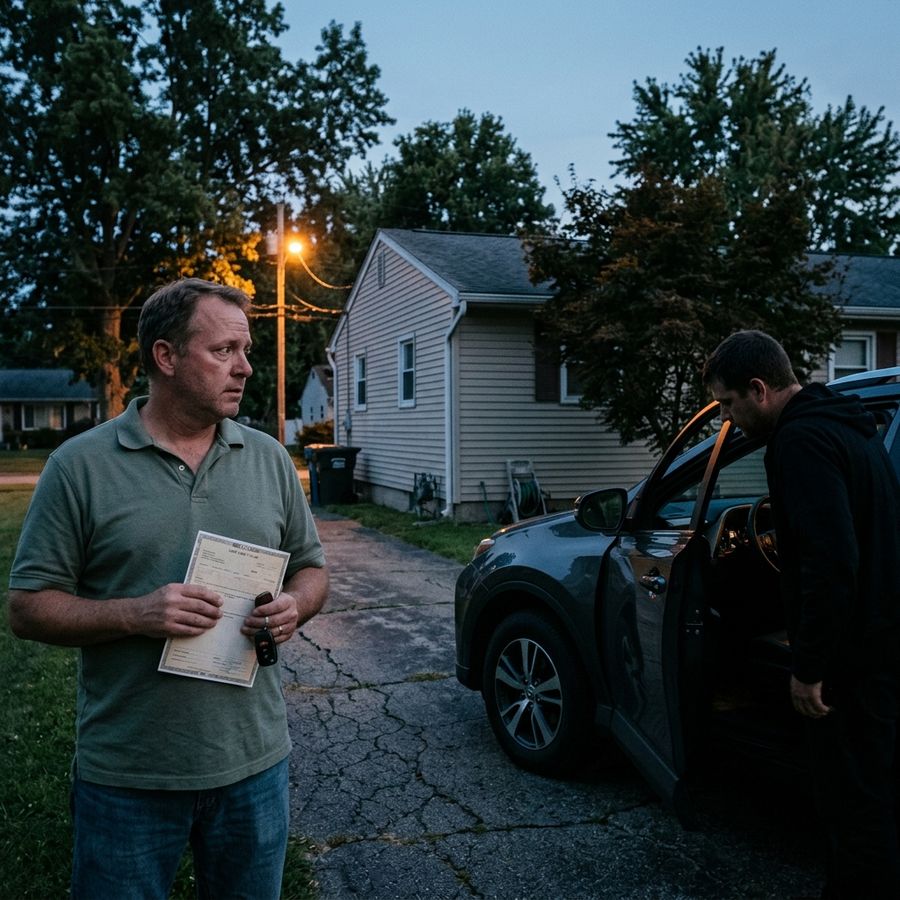
Selling a car privately in Ohio carries significant financial and legal risk that often outweighs the modest extra payout. Private sellers face ongoing liability if the buyer fails to transfer the title at the county Clerk of Courts, potential insurance claims from test-drive accidents, payment fraud through fake cashier’s checks, and personal safety hazards when meeting strangers. Selling directly to a dedicated buying center eliminates these vulnerabilities entirely.
When list prices on third-party marketplaces look attractive, many vehicle owners assume that managing a private sale involves nothing more than handing over the keys in exchange for cash. The administrative and legalities under state law create exposure from the moment a listing goes live. Coordinating schedules with unqualified buyers, taking phone calls at odd hours, and accommodating test drives with individuals whose driving history is completely unknown quickly turns a simple sale into a time-consuming commitment.
Beyond the logistical inconvenience, private transactions present genuine legal exposure. In Ohio, ownership transfer is not complete until official paperwork is processed through the state system. If a buyer drives away with an assigned title but delays visiting the title office, the vehicle remains legally connected to you. If that driver runs through red-light cameras, incurs parking violations, or gets involved in an accident, law enforcement and municipal agencies trace those incidents back to the registered owner on record.
Working with a trusted commercial partner removes those hurdles. At Ken Ganley Buying Center Boardman, we offer a secure process where valuation, title assignment, lien payoff, and payment occur in one structured transaction. To discuss your vehicle’s present value or start the process today, drop by our local showroom location or reach out to our team at (330) 427-3656 for immediate assistance.
Table of Contents
- What Are the Legal Risks of Selling a Car Privately in Ohio?
- What Happens If the Buyer Does Not Transfer the Title in Ohio?
- What Should You Do If a Buyer Crashes During a Test Drive?
- Where Should You Meet Buyers and Find Safe Exchange Zones?
- What Payment Methods Are Safest When Selling a Used Car Privately?
- How Do You Calculate Your Vehicle’s Kelley Blue Book Private Party Value?
- How Do You Properly Cancel Your Insurance After Selling a Car in Ohio?
- How Ken Ganley Buying Center Eliminates Every Private Sale Risk
- Frequently Asked Questions About Selling Your Vehicle Privately
What Are the Legal Risks of Selling a Car Privately in Ohio?
Under Ohio legal standards, the seller remains registered on the state’s official database until the buyer completes title assignment in person at the county Clerk of Courts. Failing to execute every step of the state-mandated transfer process precisely opens the door to ownership disputes, financial penalties, and civil fraud allegations.
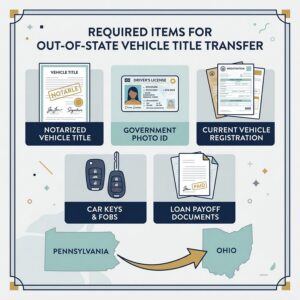
The primary statutory requirement involves the proper execution of the Certificate of Title. Ohio does not recognize bill-of-sale-only transfers for motor vehicles. Handing over a generic bill of sale while leaving the physical title unassigned or incorrectly signed creates an illegal “open title” situation. The seller must sign the title assignment over to the buyer in the presence of an authorized notary public. Any alteration, erasure, or unnotarized signature invalidates the document, preventing the buyer from registering the car and leaving the seller stranded in legal ambiguity.
Federal and state laws strictly enforce mileage reporting for vehicles under 10 years old. Ohio mandates an accurate odometer disclosure statement recorded directly on the title or via a dedicated federal disclosure form. If you miscalculate or approximate the mileage during a private sale, the buyer can later file a civil fraud lawsuit claiming intentional misrepresentation.
Lien releases present another significant compliance hurdle. If your vehicle has an active loan, the financial institution holds the title or an electronic lien record. Attempting to sell a car with an outstanding balance requires paying off the bank first to obtain an official release on bank letterhead or an electronic termination record. Private buyers are rarely willing to provide upfront cash to pay off a seller’s lender without receiving a clean title immediately, causing many private deals to stall or collapse mid-transaction.
For sellers in Youngstown who commute daily through heavy urban traffic and variable Mahoning Valley weather, taking on the burden of private title transfers adds unnecessary stress. Comparing private market valuations against commercial offers reveals that avoiding legal headaches easily offsets minor pricing differences. You can learn more about how private market values compare to trade valuations before deciding which path fits your timeline.
What Happens If the Buyer Does Not Transfer the Title in Ohio?
If an Ohio buyer delays or neglects transferring the title at the Clerk of Courts within 30 days, the state continues to recognize you as the legal owner. This administrative gap exposes you to every ticket, fine, and liability incurred by the new driver.
Ohio law grants buyers a 30-day window to present an assigned, notarized title to the county Clerk of Courts, pay applicable sales tax, and transfer ownership. Many private buyers fail to complete this step promptly to avoid paying sales tax or because they lack valid auto insurance. During this unrecorded period, the vehicle remains tied to your name in the Ohio Bureau of Motor Vehicles registry.
The real-world consequences of an unrecorded transfer mount rapidly:
- Automated traffic enforcement citations, including speed camera and red-light tickets, arrive at your mailbox.
- Unpaid parking fines accumulate under your social security number, potentially impacting your credit score or registration renewal status.
- Impound and towing fees compound daily if the buyer abandons the vehicle or has it towed following a traffic stop.
- Law enforcement agencies hold you accountable if the vehicle is linked to criminal activity or abandoned on public property.
Resolving these issues requires proving to municipal courts or law enforcement agencies that you relinquished control of the car before the infraction occurred. Gathering notarized bill-of-sale copies, bank deposit slips, and witness statements to dispute a traffic fine consumes hours of personal time. Completing the title transfer directly at an authorized buying center prevents these complications because ownership records transfer immediately upon sale.
What Should You Do If a Buyer Crashes During a Test Drive?
If a prospective buyer crashes your vehicle during a test drive, your personal auto insurance policy serves as the primary coverage for property damage and bodily injury claims. Allowing an uninsured or underinsured stranger behind the wheel puts your policy limits, personal assets, and future insurance premiums on the line.
Insurance follows the vehicle rather than the driver in most standard private passenger policies. When you give permission to a potential buyer to test drive your car, your insurance company classifies them as a permissive user. If that individual collides with another vehicle, hits a guardrail, or injures a pedestrian, your comprehensive and collision coverage must absorb the damage subject to your deductible.
If collision damages exceed your policy’s property damage liability limits, the injured parties or third-party drivers can file a lawsuit against you personally as the vehicle owner. Furthermore, filing a major claim resulting from a non-family driver’s negligence can trigger substantial rate increases or policy non-renewal at your next anniversary date.
Mitigating test-drive risks requires strict precautions:
- Verify the driver’s active license by taking a clear photo of their physical driver’s license before handoff.
- Request proof of active personal auto insurance and verify that their policy covers non-owned vehicles.
- Accompany the driver in the passenger seat throughout the entire test route rather than letting them drive alone.
- Establish a designated, low-traffic route away from high-density intersections and highways.
- Record details immediately and contact emergency services if an collision occurs.
Selling your car directly to a commercial buying center eliminates test-drive liability completely. Professional buyers conduct inspections on-site with commercial garage policy coverage in place, removing all personal insurance risk from your shoulders.
Where Should You Meet Buyers and Find Safe Exchange Zones?
Public, well-lit spaces monitored by continuous video surveillance—such as local law enforcement parking lots or bank lobbies—are the safest locations for meeting private buyers. Inviting strangers to your personal residence or meeting in isolated parking lots creates severe safety and security risks.
Hosting potential buyers at your home exposes your property to potential theft. Scammers or bad actors posing as interested buyers use home viewings to inspect your garage layout, check for security cameras, and confirm when family members are away. In worst-case scenarios, fraudulent buyers return later to steal the vehicle using copied keys or targeted break-ins.
Safe exchange locations significantly lower these risks:
- Police department parking facilities feature dedicated, well-lit spaces monitored 24 hours a day by video surveillance cameras.
- Bank lobbies provide a secure indoor environment equipped with security guards, active surveillance, and professional tellers who can verify cash deposits or wire transfers.
- Busy commercial retail hubs offer heavy foot traffic and visible surroundings that deter suspicious activity.
For residents in Boardman Township who regularly shop along the commercial corridors near Boardman Plaza, selecting a public location with high visibility is essential when arranging an initial viewing. Meeting in a quiet office park after business hours or in an unmonitored residential alley should be avoided under all circumstances.
When evaluating your options, reading our guide on local buying centers versus online platforms provides valuable context on why conducting business at an established physical brick-and-mortar location offers far greater security than meeting strangers in public parking lots.
What Payment Methods Are Safest When Selling a Used Car Privately?
Verified bank wire transfers or cash transactions completed directly inside a financial institution’s lobby are the only foolproof payment methods for private auto sales. Accepting unverified payment forms frequently results in complete financial loss and stolen vehicles.
Automotive sale fraud has evolved beyond obvious fake bills. Scammers utilize sophisticated tactics to fake bank documentation, exploit mobile app policies, and print counterfeit certified checks that pass initial visual inspection.
| Payment Method | Security Level | Primary Risk Factor | Recommended Safeguard |
|---|---|---|---|
| :– | :– | :– | :– |
| Cash in Bank Lobby | Highest | Counterfeit bills | Count and deposit cash directly with a bank teller before signing title. |
| Direct Bank Wire | Highest | Transfer delays | Confirm cleared funds with your bank representative before handing over keys. |
| Cashier’s Check | Moderate to Low | Fraudulent checks | Accompany buyer to the issuing bank branch to verify check authenticity. |
| Peer-to-Peer Apps | Low | Chargebacks & clawbacks | Avoid entirely; payment apps can reverse transfers days after handoff. |
| Personal Check | Lowest | Insufficient funds | Do not accept under any circumstances; high bounce risk. |
Cashier’s checks were once considered the gold standard for private vehicle transactions, but high-quality counterfeits are now widespread. A bank teller may accept a fake cashier’s check initially, only for your bank’s fraud department to reject it three days later. By the time the check bounces, the buyer and your vehicle are long gone, and your account is debited for the full amount.
Peer-to-peer payment applications carry structural risks for high-value sales. Most digital payment platforms explicitly prohibit motor vehicle purchases in their terms of service, meaning they offer zero seller protection against unauthorized account claims or fraudulent credit card chargebacks.
Selling to a licensed commercial buying center eliminates payment anxiety completely. Payments are backed by verified corporate accounts, issuing immediate, guaranteed funds without waiting periods or chargeback risks.
How Do You Calculate Your Vehicle’s Kelley Blue Book Private Party Value?
To calculate an accurate Kelley Blue Book private party value, input your vehicle’s exact 17-digit VIN, true mileage, accurate condition tier, and regional zip code into the online pricing tool. Misinterpreting pricing tiers leads to unrealistic expectations and extended market times.
Kelley Blue Book generates distinct valuation bands based on transaction type. The Private Party Value reflects what an individual consumer might pay another individual, while the Trade-In Value reflects what a dealership pays when taking a car toward another purchase. The Kelley Blue Book Fair Purchase Price establishes a realistic target based on actual regional sales data.
Accurate valuation requires realistic self-assessment:
- Excellent Condition: Represents less than 5% of used vehicles. Requires flawless paint, zero mechanical defects, complete service history, and clean tires.
- Very Good Condition: Minor cosmetic imperfections allowed. No mechanical repairs needed, clear title, and strong maintenance history.
- Good Condition: Free of major mechanical problems, but may show standard wear and tear, minor scratches, or worn tire tread.
- Fair Condition: Mechanics need attention, body panels show dents or rust, or tires require replacement.
Most private sellers overestimate their vehicle’s condition, selecting “Excellent” when the vehicle realistically lands in “Good” or “Fair.” Additionally, private party valuations do not account for reconditioning expenses, detailing costs, listing fees, or the cost of sitting on an unsold vehicle for weeks. Factoring in these hidden expenses shows that direct cash offers from a buying center deliver comparable net value with zero hassle.
How Do You Properly Cancel Your Insurance After Selling a Car in Ohio?
You should cancel your auto insurance policy only after the notarized Certificate of Title has been delivered to the buyer and the physical transaction is fully finalized. Terminating coverage prematurely leaves you financially liable for damages if an incident occurs during the final handoff.
Canceling insurance too early is a common oversight. If you cancel your policy in the morning and allow the buyer to drive the vehicle home that afternoon before they transfer registration, any accident that occurs during that transit period falls directly on you without active insurance coverage.
Follow this step-by-step sequence to cancel coverage safely:
- Complete the title assignment in front of a notary public and hand over the physical document to the buyer.
- Remove your physical license plates from the vehicle immediately upon final handoff; never allow a buyer to drive away using your plates.
- Obtain a signed, dated bill of sale and a photocopy of the assigned title for your records.
- Contact your insurance agent or carrier online to request policy cancellation effective on the date of sale.
- Provide your insurer with proof of title transfer or bill of sale documentation to confirm ownership termination.
Following this protocol ensures continuous legal protection and prevents unexpected lapse-of-coverage penalties from the state.
How Ken Ganley Buying Center Eliminates Every Private Sale Risk
Ken Ganley Buying Center Boardman eliminates all private sale risks by issuing direct, instant payment and handling all Ohio BMV title transfer paperwork on-site. We eliminate the uncertainty, safety concerns, and legal liabilities associated with private vehicle sales.
When you sell your car to our team, you bypass every common private sale obstacle:
- Immediate Title Transfer: Our documentation specialists process all state paperwork on the spot, releasing you from legal liability the moment you sign.
- Guaranteed Payment: We provide secure, certified payment immediately—no waiting for checks to clear or worrying about fraudulent transfers.
- Zero Test-Drive Liability: You never have to host strangers in your vehicle or risk insurance claims from test-drive accidents.
- Complete Lien Management: If you still owe money on your auto loan, our finance team works directly with your lender to pay off the balance and secure the title release.
- Safe Environment: Transactions take place inside our comfortable, professional retail center, completely eliminating safety risks.
Whether you drive a late-model sedan, a family SUV, or a work truck, our process is fast, transparent, and fair. You can visit our Boardman car buying center to receive a professional appraisal and walk away with a firm cash offer in minutes.
Frequently Asked Questions About Selling Your Vehicle Privately
Q: Can I sell my vehicle in Ohio if there is still an active lien on the title?
Yes, you can sell a vehicle with an active lien in Ohio, but the outstanding loan balance must be fully satisfied before the title can be transferred to a new owner. In a private sale, this requires paying off the lender out-of-pocket to secure a lien release or coordinating a bank visit with the buyer. At Ken Ganley Buying Center Boardman, we handle the entire lien payoff process directly with your lender, deducting the balance from your cash offer and handling all paperwork for you.
Q: What paperwork must I hand over to the buyer at the time of sale?
You must deliver a properly assigned Ohio Certificate of Title with your signature verified by a notary public, along with an accurate odometer disclosure statement recorded on the title. You should also provide a signed bill of sale detailing the purchase price, purchase date, vehicle identification number, and both parties’ contact information. Never hand over your physical license plates; remove them prior to handing over the keys so the buyer can obtain their own temporary tag from the BMV.
Q: How long does a private buyer have to transfer a title in Ohio?
Ohio law requires the buyer to present the assigned title to the county Clerk of Courts within 30 days of the purchase date to transfer ownership and pay sales tax. However, if the buyer delays visiting the title office beyond that timeframe, the vehicle remains registered to you in state databases. This ongoing delay exposes you to liability for parking tickets, impound fees, and traffic camera violations until the buyer completes the official registration process.
Q: Why should I avoid accepting a cashier’s check from a private buyer?
High-quality counterfeit cashier’s checks are increasingly common in private automotive transactions. Banks often make funds available initially before fully clearing the instrument through the issuing institution. If the check is flagged as fraudulent days later, your bank reverses the credit, leaving you without your funds and without your vehicle. Unless you physically accompany the buyer to their bank branch to watch the teller issue the check, cashier’s checks carry substantial financial risk.
Q: How does selling to a dedicated buying center protect my privacy?
Selling directly to a professional buying center keeps your personal contact information, home address, and financial details completely private. You avoid posting public listings online, responding to unvetted text messages, or hosting strangers at your home. Every transaction takes place in a secure business environment where licensed staff manage title documentation, issue verified payments, and update ownership records instantly.
If you are ready to skip the stress, security hazards, and legal uncertainties of listing your car privately, our team is standing by to help. Visit our convenient location on Market Street, give us a call at (330) 427-3656, or explore our detailed answers to common selling questions to see how effortless selling your vehicle can be.
© 2026 Ken Ganley Buying Center Boardman. All rights reserved.
While every effort has been made to ensure the accuracy of the information displayed on this website, the vehicle values, offers, and listings shown may not reflect all accurate vehicle details or current market conditions. Vehicle photos may be representative only and may not match the actual vehicle. All offers, appraisals, and transactions are subject to vehicle inspection, verification, and prior sale. Final purchase amounts may vary based on condition, equipment, history, and market factors. Please contact the Dealership for complete details and confirmation.