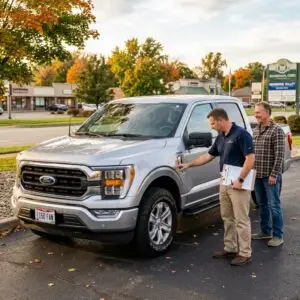
To sell a car with a lost title in Ohio, you must first obtain a physical replacement title from a county Clerk of Courts Title Office using BMV Form 3774 before transferring ownership. Private buyers cannot legally register a vehicle without a physical title certificate. However, selling your vehicle directly to a licensed automotive buying center allows you to complete duplicate title applications on site, clear the administrative backlog, and complete the sale during a single appointment.
Selling a vehicle privately with a missing title requires extra steps that can delay your sale by days or weeks. When a physical title is lost, stolen, or damaged beyond recognition, Ohio law requires the registered owner to replace it before transferring ownership to a private individual. Private buyers cannot obtain registration or license plates from the Registrar of Motor Vehicles without presenting a legally assigned physical title that matches state records.
Working directly with a dedicated vehicle purchasing facility eliminates the friction of navigating title offices on your own. Licensed buying centers maintain authorization to process duplicate title paperwork, verify state electronic title records, and manage lien cancellations directly with financial institutions. Drivers navigating daily errands near Boardman Township retail hubs often prefer bringing title paperwork directly to a local buyer to handle complex paperwork on the spot.
If you are ready to start the selling process or need immediate assistance verifying your title status, give our buying desk (330) 427-3656 or visit our Boardman location for a quick evaluation.
Table of Contents
- How Do You Get a Duplicate Ohio Car Title Before Selling?
- How Does Ohio Handle Titles With Multiple Owners Connected by AND Versus OR?
- How Do Pennsylvania Title Transfer and Joint Ownership Rules Differ From Ohio?
- What Happens to Original Titles After Replacement and How Does Duplicate Notation Work?
- Questions Buyers and Sellers Ask About Vehicle Title Transfers
- Sell or Trade In Your Vehicle Hassle-Free in Boardman Today
How Do You Get a Duplicate Ohio Car Title Before Selling?
Obtaining a duplicate vehicle title in Ohio requires filling out the Application for a Duplicate Certificate of Title ( BMV 3774), paying a state processing fee between $18 and $23 depending on the county, and submitting the form to any county Clerk of Courts Title Office. In-person applications yield a physical replacement document on the same day, while mailed applications require notarized signatures and take roughly two weeks to process.
The application process requires exact vehicle details, including the Vehicle Identification Number (VIN), current mileage, and the full legal names of all titled owners. When submitting by mail, every registered owner must sign the application in front of a notary public before mailing the document alongside the fee payment. In-person applicants can have their signatures witnessed directly by title office personnel, provided they present valid government-issued photo identification.
Odometer disclosure compliance is a critical part of the title replacement procedure. Ohio requires an accurate odometer reading without tenths of a mile for vehicles under 10 model years old. Recording inaccurate mileage or failing to submit a complete disclosure can halt document issuance at the clerk’s office. Commuters driving throughout Youngstown often prefer resolving missing paperwork quickly so they can apply their vehicle trade-in value toward our used vehicle inventory selection without unnecessary delays.
The standard steps to secure a replacement document through state channels include:
- Downloading and completing BMV Form 3774 with accurate vehicle identification and current mileage figures.
- Having all listed vehicle owners sign the document in the presence of a notary public or title office deputy clerk.
- Submitting the completed form and county processing fee ($18 to $23) in person for same-day service or by mail.
- Receiving the new physical certificate marked with official duplicate notation to complete the sale assignment.
How Does Ohio Handle Titles With Multiple Owners Connected by AND Versus OR?
Ohio legally differentiates joint ownership rules based on whether the conjunction “AND” or “OR” joins the names on the certificate of title. When a title lists co-owners connected by “AND,” every named individual must sign both the duplicate title application and the transfer assignment section in front of a notary public. Conversely, an “OR” conjunction allows either listed co-owner to independently sign documents, apply for replacement titles, and assign ownership to a buyer.
Understanding how joint ownership works prevents unexpected legal hurdles when selling a shared family vehicle. If two spouses or family members are listed with “AND,” the state considers them joint tenants whose unanimous consent is required for any legal transfer. If one owner is absent or unable to attend the sale, the transaction cannot proceed without a formal Power of Attorney granting signing rights to the attending party.
When an Ohio title explicitly designates With Rights of Survivorship (WROS) alongside joint ownership names, full legal title automatically transfers to the surviving owner upon the death of a co-owner. The surviving owner simply presents the original title certificate and a certified copy of the death certificate to the Clerk of Courts Title Office to issue a clean title in their name alone, bypassing probate court entirely.
Sellers who come in with two names on their title connected by AND often ask whether both co-owners need to be present at the buying center — having both individuals attend with valid photo IDs lets us complete notarization in a single appointment.
How Do Pennsylvania Title Transfer and Joint Ownership Rules Differ From Ohio?
Pennsylvania title transfer procedures mandate that both the seller and buyer complete notarized signatures on the physical title assignment and PennDOT Form MV-4ST through an authorized tag agent or motor vehicle dealer. Unlike Ohio, Pennsylvania strictly enforces joint owner signature requirements on nearly all co-owned vehicles regardless of conjunction wording, while enforcing mandatory odometer disclosure rules for vehicles under 20 model years old.
Navigating cross-border sales between Ohio and Pennsylvania requires close attention to each state’s documentation standards. Pennsylvania does not permit private individuals to complete title transfers without an authorized PennDOT agent, notary, or licensed dealer overseeing the transaction. If an active lien exists on a Pennsylvania-titled car, the owner must secure a formal lien release and submit Form MV-380 to PennDOT to clear the record before issuing a clean duplicate title for transfer.
In cases involving inherited vehicles in Pennsylvania, heirs must use Form MV-39 to assign the title to a buyer or surviving family member. This form must be submitted alongside official death certificates, short certificates from the probate court, and the existing title through an authorized tag service or licensed dealership desk.
Key differences between Ohio and Pennsylvania vehicle transfers include:
- Notarization Location: Pennsylvania requires transfers to occur at an authorized PennDOT agent or dealer location, whereas Ohio allows independent notary signing before title clerk submission.
- Joint Signature Rules: Pennsylvania generally requires all co-owners to sign transfer paperwork, whereas Ohio permits a single owner to sign when “OR” joins the names.
- Odometer Exemption Limits: Pennsylvania requires mandatory odometer statements on Form MV-4ST for vehicles up to 20 model years old, compared to Ohio’s 10-model-year threshold.
What Happens to Original Titles After Replacement and How Does Duplicate Notation Work?
Issuing a duplicate vehicle title permanently invalidates the original certificate within state motor vehicle record systems. When a state agency processes BMV Form 3774 in Ohio or Form MV-380 in Pennsylvania, the database cancels the old document control number and flags the new certificate with a formal duplicate title notation.
Finding a misplaced original title weeks after receiving a replacement does not restore its legal authority. State titling systems reject transfers attempted with canceled certificates because the document control number no longer aligns with the active vehicle record. Attempting to use a voided title causes administrative rejections at the clerk’s office, stalling vehicle sales and trade-in processing.
If you recover a lost original title after receiving a replacement, state titling authorities instruct owners to destroy the old document immediately. Destroying canceled certificates prevents accidental confusion during future ownership transfers and guarantees that only the current, legally valid duplicate certificate is used for assignment.
Questions Buyers and Sellers Ask About Vehicle Title Transfers
Q: Does Ohio allow automatic title transfers to a co-owner after death?
Yes, Ohio allows vehicle titles issued With Rights of Survivorship (WROS) to transfer directly to a surviving joint owner without probate court involvement. The surviving co-owner presents the existing title and a certified death certificate to any county Clerk of Courts Title Office to receive a updated title in their name alone.
Q: How do I handle a vehicle title transfer in Pennsylvania if the owner is deceased?
Pennsylvania mandates using PennDOT Form MV-39 to transfer ownership of a deceased resident’s vehicle. The inheriting party must present the completed form, original title certificate, death certificate, and official probate court documents through an authorized tag service, notary, or licensed vehicle buying desk.
Q: What should I do if I find my lost original title after receiving a duplicate?
You should destroy the recovered original document immediately. Once a state issues a replacement certificate, the original title is permanently marked as canceled in the state database, making it legally void and unusable for vehicle sales.
Q: How does an active financial lien affect getting a duplicate title?
An active lien prevents the state from issuing a clean title until the lender releases the claim. You must obtain an official lien release letter from your lender, which is submitted alongside duplicate applications like Pennsylvania Form MV-380 or Ohio duplicate forms to clear the title record prior to sale.
Q: Why should I sell my car to a dedicated buying center instead of a private buyer?
Selling to a dedicated buying center simplifies complex titling scenarios like duplicate requests, out-of-state transfers, and co-ownership signatures. Our team manages state paperwork, notarization, and lender payoffs directly, saving you time and eliminating private buyer financing delays. You can learn more about comparing national options with a local buying center or review our frequently asked questions guide for additional details.
Sell or Trade In Your Vehicle Hassle-Free in Boardman Today
Resolving title challenges like duplicate document requests, co-ownership signatures, or lien cancellations does not have to complicate selling your car. Our experienced vehicle buying team specializes in handling state documentation, verifying electronic title records, and managing lender communication so you can sell your vehicle quickly and securely.
Whether you have a misplaced title, a joint ownership certificate, or an active auto loan, we streamline every step of the transaction under one roof. We provide fair market offers, instant check payments, and on-site notary support to ensure your sale is completed smoothly.
Take the guesswork out of selling your vehicle by visiting our guide on selling a car in Ohio. When you are ready for a current offer, stop by our Market Street location or call our team directly at (330) 427-3656 to get started today.
© 2026 Ken Ganley Buying Center Boardman. All rights reserved.
While every effort has been made to ensure the accuracy of the information displayed on this website, the vehicle values, offers, and listings shown may not reflect all accurate vehicle details or current market conditions. Vehicle photos may be representative only and may not match the actual vehicle. All offers, appraisals, and transactions are subject to vehicle inspection, verification, and prior sale. Final purchase amounts may vary based on condition, equipment, history, and market factors. Please contact the Dealership for complete details and confirmation.