Car sellers can avoid vehicle sale scams entirely by bypassing open social media classifieds and selling directly to a licensed automotive buying center. Selling directly to an established buying center guarantees secure funds verification, professional in-person title transfers, verified lien payoffs, and physical transactions conducted in a controlled environment, completely eliminating exposure to fake cashier’s checks, digital payment rollbacks, and identity theft.
Online social marketplaces have increasingly become target-rich environments for fraudulent buyers. Federal Trade Commission data shows that U.S. consumers lost more money to scams originating on Facebook in 2025 than on any other social media platform, making unvetted peer-to-peer automotive transactions particularly hazardous. Private sellers listing vehicles on open platforms frequently face sophisticated cyber schemes designed to extract money, personal bank details, or vehicle titles before the seller realizes the transaction is fraudulent.
By contrast, working with a brick-and-mortar evaluation facility transforms a unpredictable private listing into a regulated financial transaction. When you work with professional inventory acquisition specialists, every payment is issued by an established corporate account, eliminating the risk of bounced personal or cashier’s checks. Furthermore, state commerce officials warn that private vehicle transactions carry risks of unverified liens and title transfer errors that can leave original owners legally liable for vehicles long after money has changed hands.
Selling directly to a physical location ensures all legal documentation, bill of sale filings, and state title transfers are executed accurately on the spot. If you want to bypass the risk of online listing fraud entirely, visiting our physical location on Market Street allows you to complete an appraisal safely, or you can give our appraisal team a quick call to discuss your vehicle details before coming in.
Table of Contents
- What Are the Most Common Financial Scams on Facebook Marketplace Auto Listings?
- How Do Fake Cashier Checks and Fraudulent Electronic Payment App Scams Work?
- What Security Risks Are Associated with Meeting Private Buyers for Test Drives?
- How Do Digital Vehicle Valuation Tools Detect Mileage Fraud and Title Red Flags?
- What Vehicle Details Are Required to Calculate an Accurate Online Valuation?
- How Do Physical Inspections and Vehicle History Reports Adjust Final Cash Offers?
- How Does a Three-Step Buying Center Process Eliminate Private Sale Risks in Boardman Township?
- What Steps Should You Take if You Fall Victim to an Auto Sale Scam?
- Frequently Asked Questions About Secure Car Appraisals
- Secure Your Instant Cash Offer at Ken Ganley Buying Center Today
What Are the Most Common Financial Scams on Facebook Marketplace Auto Listings?
The most common financial scams on Facebook Marketplace auto listings involve fake cashier checks with overpayment requests, unverified digital peer-to-peer payment rollbacks, fake vehicle history report websites designed to steal credit card data, and Google Voice verification code phishing schemes. These tactics exploit the lack of payment verification on social platforms to extract cash or personal data from unsuspecting sellers.
One widespread scheme involves fake vehicle history reports. Federal investigations have uncovered at least 15 fraudulent vehicle history operations targeting online car sellers and buyers. In this scam, a prospective buyer refuses to inspect the vehicle unless the seller purchases a history report from a specific, obscure website link provided by the buyer. Sellers who click the link and enter their credit card information pay an average of about $350 for a fake report while unknowingly handing sensitive financial credentials over to cybercriminals. Automotive fraud experts strongly advise sellers to independently obtain vehicle reports from trusted national databases rather than clicking links sent by unverified accounts.
Another prevalent threat is the Google Voice authentication scam. A fraudulent buyer contacts a seller pretending to be interested in the listing but claims they need to verify the seller is a real person. The scammer requests the seller’s phone number and sends a text containing a verification code, asking the seller to read the code back. In reality, the scammer uses that code to set up a Google Voice account tied to the seller’s phone number, which is then used to perpetrate further scams under the victim’s identity.
Pricing manipulation and bait-and-switch listings also dominate online marketplace channels. Consumer guidance indicates that comparing private asking prices against established Kelley Blue Book values is critical; any listing or offer priced more than roughly 30% away from market baseline represents a major red flag. Working-class sellers commuting through Youngstown who post vehicles online expecting quick cash often encounter these high-pressure, unverified accounts. Bypassing unvetted social listings eliminates these cyber risks, and sellers seeking an upgrade can browse our pre-owned vehicle inventory to see how professional pricing models reflect true market value.
How Do Fake Cashier Checks and Fraudulent Electronic Payment App Scams Work?
Fake cashier checks and payment app scams work by exploiting standard banking clearance delays to trick sellers into issuing refunds before the initial transaction is flagged as fraudulent. Scammers deliver a forged bank check or stolen electronic payment for an amount higher than the vehicle’s agreed purchase price, then urgently request that the seller transfer back the excess funds via wire or gift cards before the bank uncovers the counterfeit instrument.
Federal Deposit Insurance Corporation consumer alerts emphasize that advanced graphic technology allows criminals to replicate official bank watermarks, logo designs, and security threads with convincing accuracy. When a seller deposits a counterfeit cashier’s check, federal banking regulations require the financial institution to make funds available within one to two business days. Sellers often mistake this temporary availability for final settlement. Days later, when the clearing system processes the check and identifies it as counterfeit, the bank reverses the credit, leaving the seller responsible for the full check amount plus any funds wired back to the scammer.
Electronic peer-to-peer payment applications carry similar financial vulnerabilities. Scammers frequently fund app payments using stolen credit cards or compromised bank accounts. After taking possession of the vehicle or receiving an overpayment refund, the legitimate account holder discovers the unauthorized charge and files a fraud claim. The payment platform subsequently reverses the transaction, deducting the full amount from the seller’s account.
- Check Overpayment Scheme: A buyer sends a check exceeding the asking price and asks for a partial refund via money transfer.
- P2P Account Reversal: Payments sent through digital wallet apps using stolen accounts are clawed back after fraud investigations.
- Fake Escrow Services: Buyers insist on using fraudulent third-party payment hold services that capture funds without releasing them.
- Immediate Pressure Tactics: Scammers push sellers to transfer excess funds before banking verification windows close.
What Security Risks Are Associated with Meeting Private Buyers for Test Drives?
Meeting private buyers for test drives creates significant personal security risks, including physical robbery, carjacking, staged accidents, and vehicle damage caused by uninsured drivers. Conducting test drives with unknown individuals away from secure, monitored commercial locations leaves sellers vulnerable without identity verification or liability protection.
Allowing a stranger to enter your vehicle presents severe physical and legal exposure. Private sellers rarely verify a prospective buyer’s driver’s license status, motor vehicle record, or auto insurance coverage before handing over the keys. If an uninsured private buyer causes an accident during a test drive, the vehicle owner’s personal auto insurance policy is typically held primary, exposing the seller to rate increases, deductible costs, and potential personal liability claims.
Law enforcement agencies frequently issue safety bulletins advising online sellers never to meet buyers in isolated locations or conduct sales after dark. Even when meeting in public parking lots, sellers risk vehicle theft if a buyer requests to check the engine while the vehicle is running or demands a solo test drive. Reviewing our breakdown on how local buying centers compare to national buyers highlights how professional appraisal facilities conduct test drives on secure routes with full corporate liability insurance and verified staff.
How Do Digital Vehicle Valuation Tools Detect Mileage Fraud and Title Red Flags?
Digital vehicle valuation tools detect mileage fraud and title red flags by cross-referencing national state DMV databases, commercial history records, auction filings, and service logs against a vehicle’s unique identification number. These automated systems flag odometer rollbacks, outstanding liens, salvage or flood brands, and structural damage history before an appraisal offer is generated.
Odometer tampering has evolved from mechanical cable manipulation to digital software overrides in modern instrument clusters. Professional valuation software combats digital rollback schemes by analyzing timestamped mileage entries recorded during annual state safety inspections, title transfers, and dealer acquisition check-ins. If an entry shows a vehicle had 85,000 miles during a registration renewal in 2024 but currently displays 52,000 miles, the software triggers an immediate fraud alert.
Title status verification is equally critical for establishing legitimate ownership. State commerce authorities highlight that fraudulent titles are frequently used on open marketplaces to hide existing bank liens, salvage histories, or flood damage. Professional appraisal tools connect directly with the National Motor Vehicle Title Information System and the National Highway Traffic Safety Administration VIN decoder. This digital cross-reference instantly verifies the original manufacturing specs, confirms active lienholders, and flags any title brands that reduce structural integrity or resale value.
| Verification Channel | Primary Safety Function | Fraud Risk Prevented |
|---|---|---|
| NMVTIS Database | Confirms legal title state and brand history | Salvage, flood, and junk title concealment |
| NHTSA VIN Decoder | Verifies factory year, make, model, and engine spec | VIN cloning and vehicle swapping |
| Timestamped Mileage Logs | Tracks chronological odometer progression | Digital and mechanical odometer rollbacks |
| Active Lien Registry | Identifies outstanding bank balances | Illegal sales of unreleased lien vehicles |
What Vehicle Details Are Required to Calculate an Accurate Online Valuation?
Generating an accurate online vehicle valuation requires submitting the vehicle identification number or license plate number, exact odometer mileage, trim level, drivetrain configuration, factory option packages, and an honest assessment of physical and mechanical condition. Providing precise vehicle specifics allows digital pricing algorithms to evaluate factory equipment and baseline market demand against real-time transaction data.
The vehicle identification number serves as the foundational data point for any valuation. Entering a valid 17-digit VIN automatically populates exact factory specifications, such as whether a vehicle is equipped with standard front-wheel drive or optional all-wheel drive, specific safety technology suites, or upgraded engine configurations. Generalized valuation tools that rely only on year, make, and model often misprice vehicles by omitting thousands of dollars in factory option packages.
Accurate condition input is equally vital for narrowing the valuation range. Pricing systems calculate baseline values on average wear, but declaring specific cosmetic flaws, tire wear, or interior condition prevents unexpected adjustments during physical verification.
- Exact VIN or License Plate: Unlocks factory build sheets and baseline safety features.
- Current Odometer Reading: Establishes mileage depreciation relative to age curves.
- Specific Trim Level: Accurately accounts for interior materials, technology, and wheels.
- Drivetrain Details: Differentiates standard drivetrains from specialized traction systems.
- Known Reconditioning Needs: Factors body panel wear, glass chips, and tire depth into initial calculations.
How Do Physical Inspections and Vehicle History Reports Adjust Final Cash Offers?
Physical inspections and vehicle history reports adjust initial online quotes by verifying observable body condition, mechanical operation, tire tread depth, paint integrity, and documented maintenance history. While an online estimate establishes a baseline range, a physical walk-around and short test drive confirm actual reconditioning needs or premium features that increase or decrease the final cash payout.
During an in-person appraisal, trained vehicle evaluators inspect structural components, fluid conditions, brake wear, and paint depth to ensure the vehicle has not suffered unrecorded frame damage or poor-quality body repairs. Mechanical operation during a brief road test checks transmission shift quality, steering alignment, suspension noise, and dashboard warning indicators. Identifying well-maintained mechanical systems and original paint panels protects the total value of your vehicle.
Vehicle history reports complement the physical check by documenting previous ownership patterns and maintenance rigor. A vehicle showing a clean single-owner history with documented routine care commands higher valuation positioning than an identical model with multiple previous owners and incomplete history logs. Conversely, unrecorded accident repairs or open safety recalls flagged during history verifications require reconditioning cost adjustments before a firm, written cash payout can be finalized.
How Does a Three-Step Buying Center Process Eliminate Private Sale Risks in Boardman Township?
A professional three-step buying center process eliminates private sale risks by replacing unverified online buyers with a transparent, physical evaluation, guaranteed institutional funding, and complete legal title processing. By submitting vehicle details, completing a fifteen-minute physical inspection, and receiving a firm written offer on the spot, sellers eliminate fraud exposure, test drive hazards, and administrative delays.
In the commercial hub of Boardman Township, sellers can complete the entire transaction in under an hour. The process begins online or over the phone, where basic vehicle parameters are submitted to generate an initial market-based estimate. This eliminates time wasted responding to unserious messages, lowball offers, or phishing attempts on social media platforms.
The second step takes place at our dedicated acquisition facility, where inventory specialists conduct a transparent fifteen-minute walk-around and short test drive. Evaluators check exterior panels, tire wear, cabin condition, and drivetrain response while verifying title details. In the final step, the appraiser presents a firm, written instant cash offer backed by real-time market data.
If your vehicle has an active auto loan, our finance team contacts your lender directly to obtain an official 10-day payoff quote. If your vehicle’s appraised value exceeds your loan balance, we issue a payment check for your positive equity on the spot. If you owe more than the current market value, creating negative equity, our specialists guide you through clearing the remaining balance via certified funds to release the title smoothly. To experience a safe, straightforward sale without private marketplace hassles, start the appraisal process directly through our home page.
- Submit Vehicle Information: Input your VIN, mileage, and trim details online to generate an initial estimate.
- In-Person Physical Appraisal: Visit our facility for a 15-minute physical walk-around and mechanical inspection.
- Firm Offer & Payout: Accept your written offer, let our team handle lien payoffs or title transfers, and walk away with certified payment.
What Steps Should You Take if You Fall Victim to an Auto Sale Scam?
If you fall victim to an auto sale scam, you should immediately file a report with local law enforcement, contact your financial institution to freeze compromised accounts, notify the FBI Internet Crime Complaint Center (IC3), and report the fraudulent listing to the FTC and state attorney general. Taking immediate action helps contain financial loss, document the fraud for insurance or banking claims, and assist law enforcement in tracking cybercriminals.
Contacting your bank or credit card issuer is the critical first step. If you deposited a fraudulent cashier’s check or shared account credentials, notify your bank’s fraud department immediately so they can place holds on affected accounts and block unauthorized wire transfers. If a peer-to-peer payment app was used, submit a formal transaction dispute explaining that the payment was fraudulent.
Next, document every interaction with the scammer. Save screenshots of social media profiles, chat logs, vehicle listing URLs, phone numbers, and copies of any fake checks or report links sent to you. File a detailed report online at the FBI IC3 portal and through the FTC fraud reporting platform. Providing comprehensive digital evidence enables federal cybercrime task forces to map fraud rings and prevent ongoing scams targeting other vehicle owners.
Frequently Asked Questions About Secure Car Appraisals
Q: Can I sell my car to a buying center if I still owe money on my auto loan?
Yes, you can sell a vehicle with an active auto loan directly to a buying center. Appraisal specialists contact your lender to obtain an official 10-day payoff balance, handle all title processing paperwork, and issue payment. If your car’s market value exceeds your loan amount, you receive a check for the positive equity. If you have negative equity, you can pay the remaining balance using certified funds during your transaction to cleanly release the bank lien.
Q: What paperwork do I need to bring to complete an in-person vehicle sale?
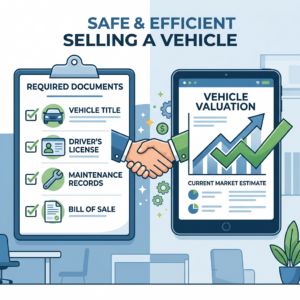
To complete a vehicle sale in a single visit, bring the original physical title, current vehicle registration paperwork, a valid state-issued photo ID for every owner listed on the title, and all original factory key fobs. If you have an active auto loan, bring your current lender account details. Bringing maintenance records and receipts also helps substantiate documented vehicle care. To review a full checklist of selling requirements, explore our detailed guide to selling your vehicle.
Q: How long is a written cash appraisal offer valid?
Written cash appraisal offers from professional buying centers typically remain valid for 7 days or 500 additional miles. This guarantee gives sellers ample time to evaluate the written offer, gather necessary documentation, and coordinate transportation without high-pressure sales tactics. For additional details on appraisal validity, browse our full frequently asked questions page.
Q: Do I need to buy a replacement vehicle when selling to a dedicated buying center?
No purchase is required. Dedicated buying centers operate independently of new or pre-owned vehicle sales departments. Their sole focus is acquiring quality inventory directly from private owners for direct cash payouts, meaning you can accept your offer and walk away with a check regardless of whether you plan to buy another vehicle.
Q: How does a buying center handle vehicles with co-owners or estate titles?
For vehicles with joint ownership, all individuals named on the title must be present with valid state photo identification to sign title transfer documents, unless a legally binding power of attorney is provided. In estate scenarios, bringing certified probate court documentation, death certificates, and executor paperwork allows title specialists to execute legal state title transfers in full compliance with state regulations.
Secure Your Instant Cash Offer at Ken Ganley Buying Center Today
Selling your vehicle should be a safe, transparent, and rewarding experience that delivers true market value without subjecting you to online listing scams, unverified payment risks, or dangerous test drive encounters. Bypassing peer-to-peer social marketplaces in favor of a dedicated evaluation center provides absolute financial security and greater confidence.
Ken Ganley Buying Center Boardman can help reduce private selling stress by delivering cash offers subject to inspection, immediate bank payoff handling, and professional title management right here in your local community. Our experienced inventory acquisition specialists are dedicated to providing fair market valuations backed by real-time data in a comfortable, professional environment.
Ready to turn your current car, truck, or SUV into cash today? Get directions to our Boardman showroom to start your fifteen-minute appraisal, or give our team a call at (330) 427-3656 to discuss your vehicle details and discuss your written offer with our team.
© 2026 Ken Ganley Buying Center Boardman. All rights reserved.
While every effort has been made to ensure the accuracy of the information displayed on this website, the vehicle values, offers, and listings shown may not reflect all accurate vehicle details or current market conditions. Vehicle photos may be representative only and may not match the actual vehicle. All offers, appraisals, and transactions are subject to vehicle inspection, verification, and prior sale. Final purchase amounts may vary based on condition, equipment, history, and market factors. Please contact the Dealership for complete details and confirmation.