How to Sell Your Car in Boardman When You Owe More Than It’s Worth
## Understanding What It Means to Be Underwater on Your Car Loan
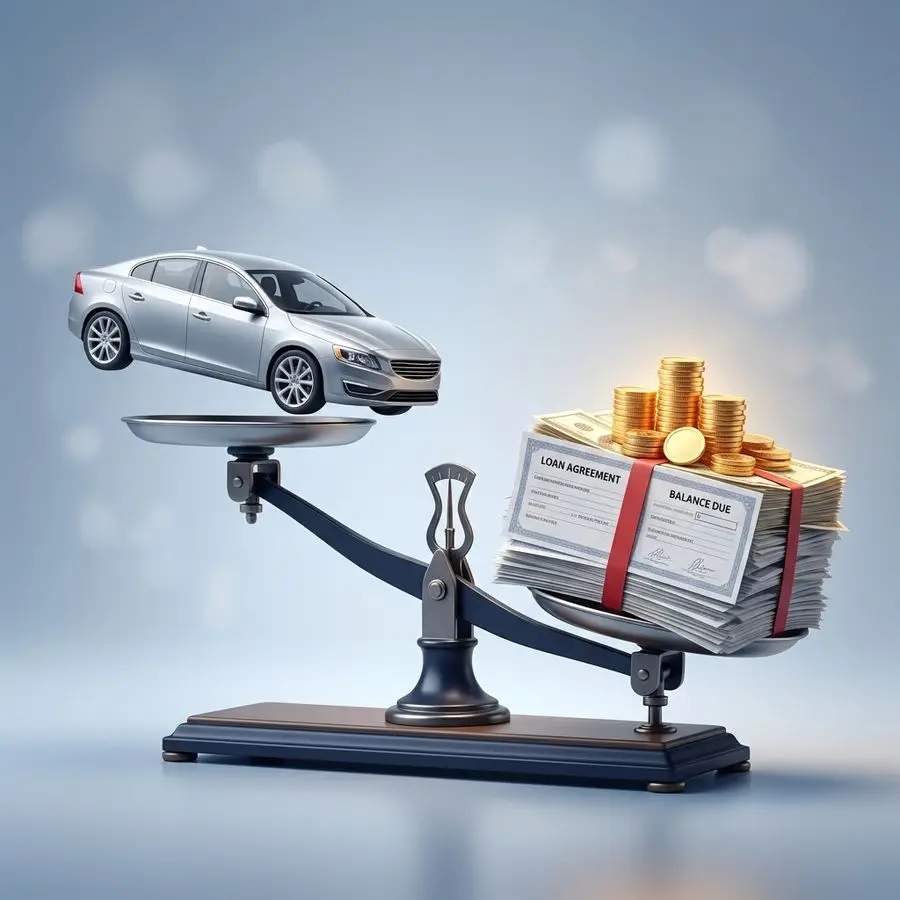
One of the first things I discuss with visitors walking through our doors is how common it is to feel stuck in an auto loan. As the Customer Relations Manager here at Ken Ganley Buying Center Boardman, I have spent 28 years helping local drivers navigate the complexities of buying, selling, and trading vehicles. Many people find themselves in a situation where their vehicle’s current market value is lower than the remaining balance on their finance agreement. This scenario is widely known as having negative equity, or being “underwater” or “upside-down” on your loan.
This financial gap typically occurs due to several factors, such as rapid initial vehicle depreciation, making a low down payment at the time of purchase, or choosing a long-term financing plan like a 72-month or 84-month term. When you stretch out payments over six or seven years, the vehicle often depreciates faster than you can pay down the principal balance. Additionally, rolling over unpaid balances from a previous vehicle into a new contract is a primary driver of this issue, leaving buyers with a loan balance that far exceeds what the car is actually worth on the open market.
If you find yourself in this situation, you can easily find us at our convenient Market Street location to discuss your options. Our team is always ready to help you navigate these tricky financial waters, so feel free to give us a quick call to start the conversation. If you’re ready to take the next step, you can use our online portal to sell your car directly to us without the usual stress.
Let’s talk about how to figure out exactly where you stand before making any decisions so you can choose the best path forward.
Table of Contents
- How to Calculate Your Negative Equity Before Selling Your Vehicle
- Securing a Precise Vehicle Valuation for an Accurate Appraisal
- How the Lien Payoff Process Works When Selling to a Buying Center
- Practical Strategies to Resolve Negative Equity on Your Trade-In
- Determining Whether Keeping Your Upside-Down Vehicle Is the Smarter Choice
How to Calculate Your Negative Equity Before Selling Your Vehicle
A frequent misconception is that the balance shown on your monthly billing statement is the exact amount required to clear your debt. In reality, you must obtain an official 10-day payoff quote from your lender, which accounts for daily interest accumulation and any outstanding administrative fees. Once you have this precise payoff number, the next step is to secure an accurate estimate of what your vehicle is worth in its current condition. Subtracting the vehicle’s actual trade-in value from your total payoff amount reveals your exact negative equity. For many working-class families navigating daily commutes across the rolling hills of Youngstown, calculating this gap is the first step toward regaining financial flexibility.
To illustrate this, let’s look at a straightforward mathematical example. If your lender’s official payoff quote is $22,000, but a professional appraisal values your vehicle at $18,000, you have exactly $4,000 in negative equity. This means that even if you sell the vehicle for its full market value, you still owe the bank $4,000 to release the lien and transfer the title. Understanding this exact figure allows you to make an informed decision rather than guessing at the dealership.
We pride ourselves on helping local drivers find clear, transparent paths forward, and you can see how we’ve assisted others by reading our customer reviews online.
Now, when it comes to getting that all-important valuation, accuracy is key.
Securing a Precise Vehicle Valuation for an Accurate Appraisal
Have you ever wondered why online valuation tools sometimes spit out numbers that do not match real-world dealership offers? While digital estimators provide a helpful starting point, they cannot assess the physical, mechanical, and cosmetic condition of your specific vehicle. A professional, in-person appraisal is the only way to get a guaranteed offer that a buying center will honor. Our appraisers perform a detailed walkaround, checking the exterior, interior, tires, and mechanical systems before taking a short test drive to ensure everything runs smoothly.
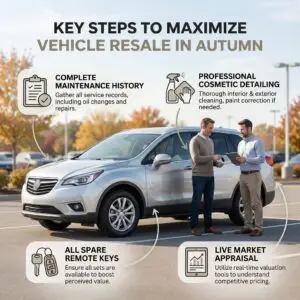
We also pull a comprehensive vehicle history report and analyze current market data to see what similar models are selling for in the region. This ensures our offer is grounded in real-time market trends, giving you a competitive and fair price. When you bring your vehicle to us, bringing along both sets of keys, the owner’s manual, and any maintenance records can help maximize your final offer by proving the vehicle has been well-maintained.
If you want to schedule an in-person appraisal or have questions about the process, you can contact our team directly.
Another important thing to know about is how the paperwork is handled when there is still a loan on the vehicle.
How the Lien Payoff Process Works When Selling to a Buying Center
Imagine a scenario where you want to hand over the keys to a buyer, but your bank holds the paper title in a vault until the last dollar of your loan is paid. This “catch-22” makes selling a financed vehicle privately incredibly difficult, as most private buyers are hesitant to hand over cash without receiving the title immediately. When you sell to a professional buying center, we act as the intermediary to simplify the process. We contact your lender directly to secure the official payoff, submit the payment, and handle all the necessary Ohio state title transfer paperwork.
Once the lender receives the payoff, they release the lien, allowing the title to be updated and transferred legally. If your vehicle’s value is higher than what you owe, we pay off the bank and write you a check for the remaining equity on the spot. If you owe more than the car is worth, we will help you coordinate the payment of the difference to ensure the loan is fully closed and the title is cleared.
For more details on how we handle active liens and other common paperwork hurdles, you can check out our detailed FAQ’s page.
Here’s what you need to know about the practical strategies available to resolve that negative equity gap.
Practical Strategies to Resolve Negative Equity on Your Trade-In
While some financial guides suggest there is only one correct way to handle a loan shortfall, the reality is that different budgets require completely different strategies. The cleanest and most cost-effective option is to pay the negative equity difference in cash upfront. This prevents the remaining debt from being rolled into your next loan, saving you from paying interest on an old vehicle for years. This scenario is particularly familiar to suburban commuters in Moon Township who rack up highway miles traveling back and forth to corporate offices near the airport, which can accelerate vehicle wear and depreciation.
If paying cash is not feasible, another common route is rolling the negative equity into a new auto loan. While this allows you to exit your current vehicle, it increases your new loan balance and monthly payments, meaning you will likely start your next loan upside-down as well. To help protect yourself in this situation, we highly recommend considering gap insurance, which covers the difference between what an insurer pays after a total loss and what you still owe on the loan.
We regularly share helpful financial tips and market insights on our blog to help local drivers make informed decisions.
One thing I always tell customers about is the importance of timing and whether holding onto your car is the better financial move.
Determining Whether Keeping Your Upside-Down Vehicle Is the Smarter Choice
Lately, I have noticed more people realizing that the most financially sound move is simply to stay behind the wheel of their current vehicle a bit longer. If your car is reliable, safe, and your monthly payments fit comfortably within your budget, keeping the vehicle is often the wisest path. Continuing to make regular payments allows you to chip away at the principal balance, gradually shifting your negative equity into positive territory as the loan ages.
You can also make extra payments directly toward the principal balance to accelerate this process and get above water faster. However, if your current vehicle no longer fits your family’s safety needs, or if the payments are becoming unsustainable, our team is here to help you find a structured, transparent solution. We focus on realistic valuations and honest communication to ensure you can make the transition with confidence.
When you are ready to explore your options, you can get directions to our showroom to speak with us in person. You can also give our friendly team a quick call to discuss your vehicle’s details before driving in.
© 2026 Ken Ganley Buying Center Boardman. All rights reserved.
While every effort has been made to ensure the accuracy of the information displayed on this website, the vehicle values, offers, and listings shown may not reflect all accurate vehicle details or current market conditions. Vehicle photos may be representative only and may not match the actual vehicle. All offers, appraisals, and transactions are subject to vehicle inspection, verification, and prior sale. Final purchase amounts may vary based on condition, equipment, history, and market factors. Please contact the Dealership for complete details and confirmation.
While every effort has been made to ensure the accuracy of the information displayed on this website, the vehicle values, offers, and listings shown may not reflect all accurate vehicle details or current market conditions. Vehicle photos may be representative only and may not match the actual vehicle. All offers, appraisals, and transactions are subject to vehicle inspection, verification, and prior sale. Final purchase amounts may vary based on condition, equipment, history, and market factors. Please contact the Dealership for complete details and confirmation.