Is It Time to Sell or Keep Repairing? Expert Q&A With Derek Gainey
Every vehicle owner eventually faces the difficult decision of whether to authorize another expensive repair or finally move on to a newer model. To help clear up the financial and mechanical confusion, we sat down with Derek Gainey, the Customer Relations Manager at Ken Ganley Buying Center Boardman, who brings 28 years of automotive experience to the table. In this interview, Derek shares the exact formulas, warning signs, and market realities that will help you make the smartest decision for your family’s budget and daily commute.
Q: When is it time to stop investing in maintenance on my car and just sell it?
A: Many of our customers wrestle with this exact dilemma when their vehicles start showing their age. As a general rule of thumb, we advise drivers that once annual maintenance and repair bills start running above about ten percent of the vehicle’s current market value every year, it is a strong economic signal that it is time to stop pouring money into the car. Continuing to fund repairs on a rapidly depreciating asset is rarely a winning financial strategy.
According to the industry auto ownership guidance, the best economic window to sell a vehicle before repair costs begin to ramp up dramatically is roughly 5–8 years of age and before reaching 80,000–100,000 miles. During this period, the vehicle’s resale value remains relatively strong, and most cars have not yet hit their most expensive wear-item failures.
For drivers commuting daily through the rolling hills of Youngstown, an unreliable vehicle is more than just an inconvenience. Navigating winter weather or daily highway commutes with a car that might break down at any moment creates unnecessary stress and safety risks. If you find yourself in this position, you can stop by our Boardman showroom, give us a call at (330) 427-3656, or choose to sell your vehicle directly to us to transition into a more dependable ride.
Q: How do I compare a major repair estimate with my vehicle’s current value?
A: One of the first things I advise people to look at is the relationship between a single repair bill and the vehicle’s actual worth. When a single major repair—like an engine or transmission replacement—approaches or exceeds the vehicle’s private-party value, most owners are financially better off selling or trading the car rather than authorizing the repair. This recommendation is backed by industry guidance, which emphasizes that the high cost of such major overhauls is highly unlikely to be recovered when you eventually sell the vehicle.
Think about it this way: spending thousands of dollars to replace a transmission on a car worth only slightly more than the repair bill does not double the car’s value. It simply brings a non-running car back to its baseline market value. You are essentially locked into a vehicle that is still depreciating and will likely require more repairs in the near future.
Instead of letting a mechanic tie up your hard-earned money in an older vehicle, that same repair budget could serve as a substantial down payment on a newer, safer, and more reliable vehicle. If you are currently staring at a massive repair estimate and want to discuss your options, you can reach out to our team for honest, pressure-free guidance.
Q: How do you calculate the current fair market value of a car needing repairs?
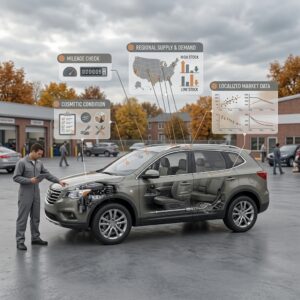
A: When I’m helping a vehicle owner calculate these numbers, we start with the vehicle’s clean market value and work backward. You can determine this by finding the private-party or trade-in value of the car in clean, fully functional condition using reliable valuation databases. From there, you subtract the estimated cost of the repairs needed to return the vehicle to that optimal condition.
This calculation gives you a realistic picture of what your car is actually worth in its current state. It is important to remember that routine depreciation slows significantly after a vehicle reaches the 8–10-year mark. However, as noted in a industry article, the likelihood and cost of major repairs continue to rise sharply after this point. This means the cost-to-keep ratio tips heavily in favor of changing vehicles once those repair bills start arriving.
“Once you are spending more on repairs than the vehicle is actually worth on the open market, you are no longer maintaining an asset—you are subsidizing its depreciation.”
Many local drivers find that getting a professional trade appraisal is the most accurate way to establish this baseline. You can read through our customer reviews to see how we have helped other local owners navigate these calculations with complete transparency and fair-market cash offers.
Q: What are the key technical warning signs that a vehicle is reaching the end of its reliable lifespan?
A: I often hear from drivers who want to know if their car is on its last legs before a catastrophic breakdown occurs. Industry mileage classifications consider 100,000–150,000 miles as high mileage and over 150,000 miles as very high mileage. Once a vehicle enters these brackets, major components are far more likely to need replacement, and buyers heavily discount the vehicle’s value, making repeated big repairs harder to justify.
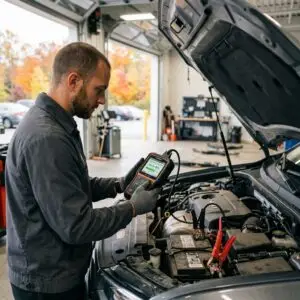
There are several critical mechanical warning signs that indicate a vehicle is nearing the end of its reliable lifespan. A slipping automatic transmission is a major red flag, often characterized by delayed acceleration, high engine RPMs with low vehicle speed, harsh or erratic shifting, or the transmission unexpectedly popping into neutral. Another severe issue is a failing head gasket, which can cause engine overheating, white sweet-smelling exhaust smoke, bubbles in the radiator, or a milky white substance under the oil cap.
When a driver brings in a high-mileage vehicle, our team usually looks at the transmission health and head gasket before we even discuss a trade-in value. A suburban family driving around the Ohio River valley in Moon Township needs to know their SUV will start every single time, and recognizing these warning signs early can save you from being stranded. You can read more about these mechanical indicators on our automotive blog to stay informed about your vehicle’s health.
Q: What if my car fails inspection because of rust or major safety issues?
A: From my experience, a failed safety or emissions inspection is often the final straw for an older vehicle. If an aging, high-mileage car cannot pass a required safety or emissions inspection without repair costs that exceed its market value, it is generally more economical to dispose of or scrap the vehicle than to attempt a full repair. This is because the car cannot be legally driven or sold as a roadworthy vehicle without those repairs.
According to Mechanic Insights 2026 safety-based replacement criteria, recognized red-flag conditions that justify replacing a vehicle immediately instead of investing in further repairs include serious structural rust, unreliable brakes or steering, repeated stalling, or major crash or flood damage. A severely rusted subframe, for example, is generally considered a safety hazard and a structural total loss unless it is a simple bolt-on component that can be completely replaced.
Selling a compromised vehicle privately in Ohio also comes with strict legal responsibilities. Sellers must provide a properly assigned certificate of title and disclose the actual mileage status, while dealers must ensure any used vehicle offered for sale meets basic safety requirements. If you want to know more about how we handle trade-ins that have failed inspection, feel free to browse our frequently asked questions page.
Q: How does the cost of repeated repairs compare to the average monthly payment for a new vehicle?
A: Working with families has shown me that predictability is often the most important factor in a household budget. When you are driving an older vehicle, your monthly transportation costs are completely unpredictable. You might go three months with no issues, only to be hit with a sudden fifteen-hundred-dollar repair bill the following month.
To put this into perspective, the average monthly payment for a new vehicle in the United States ranges from $700 to $730 for a purchase, while the average monthly lease payment ranges from $480 to $550. While a new monthly payment is an ongoing commitment, it is a fixed, predictable cost that fits neatly into a monthly budget.
More importantly, a newer vehicle comes with the peace of mind of a factory warranty. This means that if a major component like the engine or transmission experiences an issue, the repair is covered, protecting you from unexpected out-of-pocket expenses. When you add up the cost of repeated repairs, towing fees, and the cost of renting a temporary vehicle, upgrading to a newer model is often the more economical path over a twelve-month period.
Q: How do I get an accurate, current value for my car before making a final decision?
A: Here at Ken Ganley Buying Center Boardman, we believe in making the trade-in and selling process as transparent and stress-free as possible. We want to buy your car, regardless of its make, model, or current condition, and we are prepared to pay you today. Skip the hassle of selling privately, dealing with online tire-kickers, or paying for repairs just to make the car presentable to a private buyer.
We offer a straightforward, no-nonsense process with no waiting and straightforward service—just competitive offers. Whether your car is running perfectly or currently needs mechanical attention, we will provide you with a fair-market valuation based on its actual condition.
If you are ready to get a current, accurate value for your vehicle so you can make an informed decision, we invite you to visit our Boardman location today. You can also give us a quick call to speak with one of our valuation specialists and take the first step toward upgrading your daily drive.
© 2026 Ken Ganley Buying Center Boardman. All rights reserved.
While every effort has been made to ensure the accuracy of the information displayed on this website, the vehicle values, offers, and listings shown may not reflect all accurate vehicle details or current market conditions. Vehicle photos may be representative only and may not match the actual vehicle. All offers, appraisals, and transactions are subject to vehicle inspection, verification, and prior sale. Final purchase amounts may vary based on condition, equipment, history, and market factors. Please contact the Dealership for complete details and confirmation.
While every effort has been made to ensure the accuracy of the information displayed on this website, the vehicle values, offers, and listings shown may not reflect all accurate vehicle details or current market conditions. Vehicle photos may be representative only and may not match the actual vehicle. All offers, appraisals, and transactions are subject to vehicle inspection, verification, and prior sale. Final purchase amounts may vary based on condition, equipment, history, and market factors. Please contact the Dealership for complete details and confirmation.